

248
adu It
old
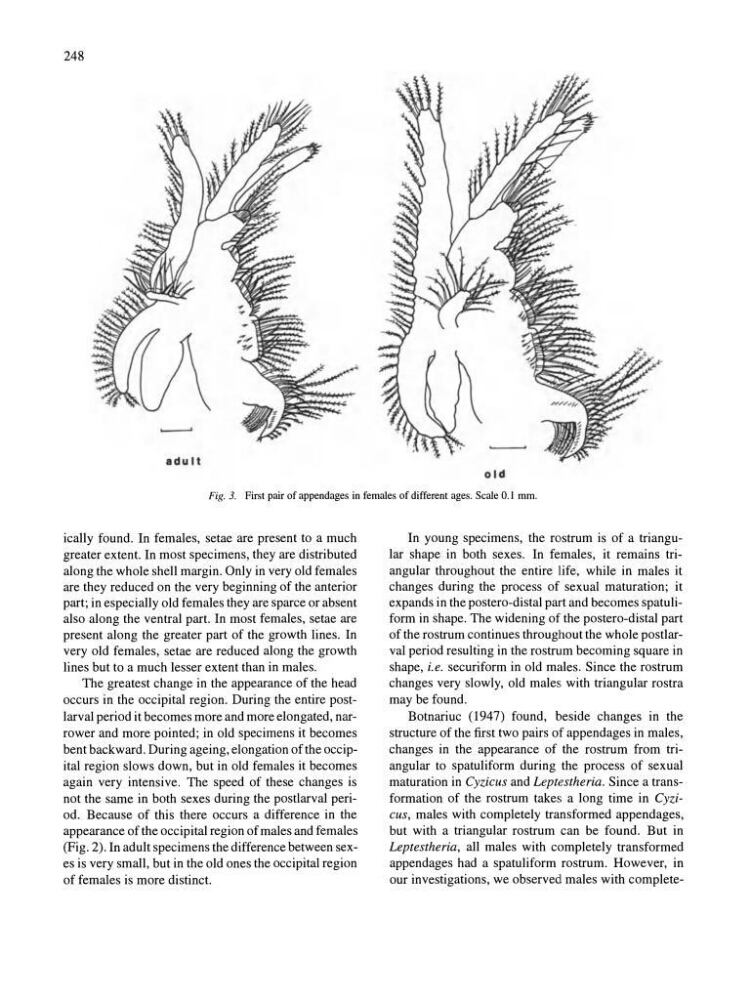
Fig. 3. First pair of appendages in females of different ages. Scale 0.1 mm.
ically found. In females, setae are present to a much
greater extent. In most specimens, they are distributed
along the whole shell margin. Only in very old females
are they reduced on the very beginning of the anterior
part; in especially old females they are sparce or absent
also along the ventral part. In most females, setae are
present along the greater part of the growth lines. In
very old females, setae are reduced along the growth
lines but to a much lesser extent than in males.
The greatest change in the appearance of the head
occurs in the occipital region. During the entire postlarval period it becomes more and more elongated, narrower and more pointed; in old specimens it becomes
bent backward. During ageing, elongation of the occipital region slows down, but in old females it becomes
again very intensive. The speed of these changes is
not the same in both sexes during the postlarval period. Because of this there occurs a difference in the
appearance of the occipital region of males and females
(Fig. 2). In adult specimens the difference between sexes is very small, but in the old ones the occipital region
of females is more distinct.
In young specimens, the rostrum is of a triangular shape in both sexes. In females, it remains triangular throughout the entire life, while in males it
changes during the process of sexual maturation; it
expands in the postero-distal part and becomes spatuliform in shape. The widening of the postero-distal part
of the rostrum continues throughout the whole postJarval period resulting in the rostrum becoming square in
shape, i.e. securiform in old males. Since the rostrum
changes very slowly, old males with triangular rostra
may be found .
Botnariuc (1947) found, beside changes in the
structure of the first two pairs of appendages in males,
changes in the appearance of the rostrum from triangular to spatuliform during the process of sexual
maturation in Cyzicus and Leptestheria. Since a transformation of the rostrum takes a long time in Cyzicus, males with completely transformed appendages,
but with a triangular rostrum can be found. But in
Leptestheria, all males with completely transformed
appendages had a spatuliform rostrum. However, in
our investigations, we observed males with complete-
adu It
old
Fig. 3. First pair of appendages in females of different ages. Scale 0.1 mm.
ically found. In females, setae are present to a much
greater extent. In most specimens, they are distributed
along the whole shell margin. Only in very old females
are they reduced on the very beginning of the anterior
part; in especially old females they are sparce or absent
also along the ventral part. In most females, setae are
present along the greater part of the growth lines. In
very old females, setae are reduced along the growth
lines but to a much lesser extent than in males.
The greatest change in the appearance of the head
occurs in the occipital region. During the entire postlarval period it becomes more and more elongated, narrower and more pointed; in old specimens it becomes
bent backward. During ageing, elongation of the occipital region slows down, but in old females it becomes
again very intensive. The speed of these changes is
not the same in both sexes during the postlarval period. Because of this there occurs a difference in the
appearance of the occipital region of males and females
(Fig. 2). In adult specimens the difference between sexes is very small, but in the old ones the occipital region
of females is more distinct.
In young specimens, the rostrum is of a triangular shape in both sexes. In females, it remains triangular throughout the entire life, while in males it
changes during the process of sexual maturation; it
expands in the postero-distal part and becomes spatuliform in shape. The widening of the postero-distal part
of the rostrum continues throughout the whole postJarval period resulting in the rostrum becoming square in
shape, i.e. securiform in old males. Since the rostrum
changes very slowly, old males with triangular rostra
may be found .
Botnariuc (1947) found, beside changes in the
structure of the first two pairs of appendages in males,
changes in the appearance of the rostrum from triangular to spatuliform during the process of sexual
maturation in Cyzicus and Leptestheria. Since a transformation of the rostrum takes a long time in Cyzicus, males with completely transformed appendages,
but with a triangular rostrum can be found. But in
Leptestheria, all males with completely transformed
appendages had a spatuliform rostrum. However, in
our investigations, we observed males with complete-