

247
FEMALES
MALES
• d u It
old
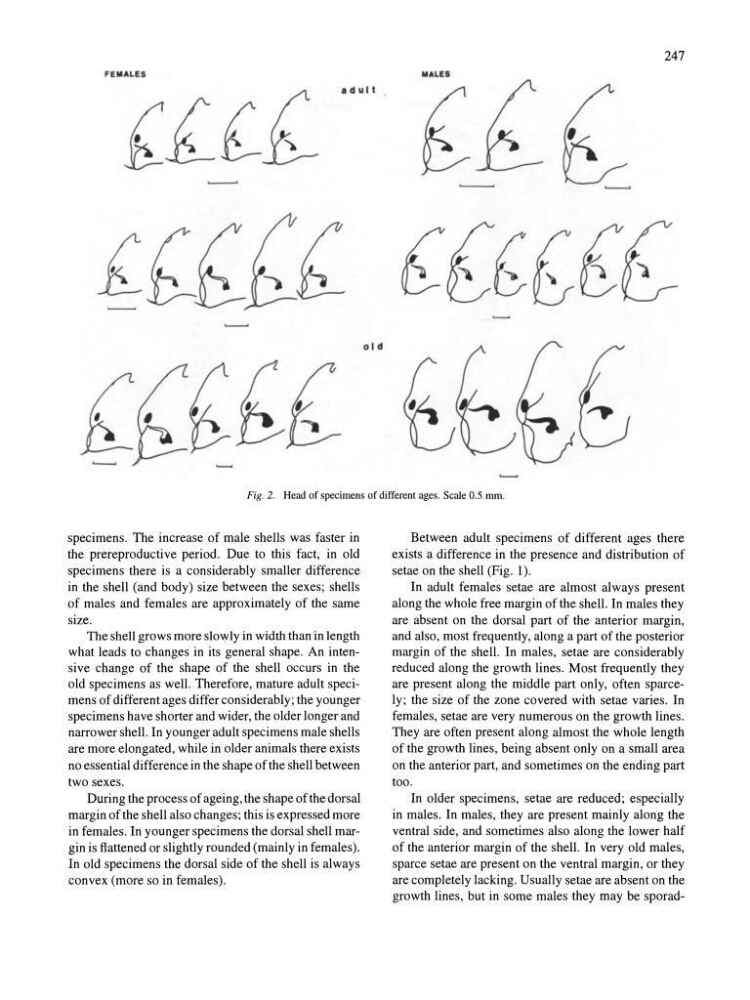
Fig. 2. Head of specimens of different ages. Scale 0.5 mm.
specimens. The increase of male shells was faster in
the prereproductive period. Due to this fact, in old
specimens there is a considerably smaller difference
in the shell (and body) size between the sexes; shells
of males and females are approximately of the same
size.
The shell grows more slowly in width than in length
what leads to changes in its general shape. An intensive change of the shape of the shell occurs in the
old specimens as well. Therefore, mature adult specimens of different ages differ considerably; the younger
specimens have shorter and wider, the older longer and
narrower shell. In younger adult specimens male shells
are more elongated, while in older animals there exists
no essential difference in the shape of the shell between
two sexes.
During the process of ageing, the shape of the dorsal
margin of the shell also changes; this is expressed more
in females. In younger specimens the dorsal shell margin is flattened or slightly rounded (mainly in females).
In old specimens the dorsal side of the shell is always
convex (more so in females).
Between adult specimens of different ages there
exists a difference in the presence and distribution of
setae on the shell (Fig. 1).
In adult females setae are almost always present
along the whole free margin of the shell. In males they
are absent on the dorsal part of the anterior margin,
and also, most frequently, along a part of the posterior
margin of the shell. In males, setae are considerably
reduced along the growth lines. Most frequently they
are present along the middle part only, often sparcely; the size of the zone covered with setae varies. In
females, setae are very numerous on the growth lines.
They are often present along almost the whole length
of the growth lines, being absent only on a small area
on the anterior part, and sometimes on the ending part
too.
In older specimens, setae are reduced; especially
in males. In males, they are present mainly along the
ventral side, and sometimes also along the lower half
of the anterior margin of the shell. In very old males,
sparce setae are present on the ventral margin, or they
are completely lacking. Usually setae are absent on the
growth lines, but in some males they may be sporad-
FEMALES
MALES
• d u It
old
Fig. 2. Head of specimens of different ages. Scale 0.5 mm.
specimens. The increase of male shells was faster in
the prereproductive period. Due to this fact, in old
specimens there is a considerably smaller difference
in the shell (and body) size between the sexes; shells
of males and females are approximately of the same
size.
The shell grows more slowly in width than in length
what leads to changes in its general shape. An intensive change of the shape of the shell occurs in the
old specimens as well. Therefore, mature adult specimens of different ages differ considerably; the younger
specimens have shorter and wider, the older longer and
narrower shell. In younger adult specimens male shells
are more elongated, while in older animals there exists
no essential difference in the shape of the shell between
two sexes.
During the process of ageing, the shape of the dorsal
margin of the shell also changes; this is expressed more
in females. In younger specimens the dorsal shell margin is flattened or slightly rounded (mainly in females).
In old specimens the dorsal side of the shell is always
convex (more so in females).
Between adult specimens of different ages there
exists a difference in the presence and distribution of
setae on the shell (Fig. 1).
In adult females setae are almost always present
along the whole free margin of the shell. In males they
are absent on the dorsal part of the anterior margin,
and also, most frequently, along a part of the posterior
margin of the shell. In males, setae are considerably
reduced along the growth lines. Most frequently they
are present along the middle part only, often sparcely; the size of the zone covered with setae varies. In
females, setae are very numerous on the growth lines.
They are often present along almost the whole length
of the growth lines, being absent only on a small area
on the anterior part, and sometimes on the ending part
too.
In older specimens, setae are reduced; especially
in males. In males, they are present mainly along the
ventral side, and sometimes also along the lower half
of the anterior margin of the shell. In very old males,
sparce setae are present on the ventral margin, or they
are completely lacking. Usually setae are absent on the
growth lines, but in some males they may be sporad-