

164
100
80
E 60
1
.....
IV
>
.....
>
L
40
:::J
UJ
20
!
0
0.0
0.2
0.4
0.6
0.8
1.0
1.2
N0 2 -N concentration (mg 1- 1 )
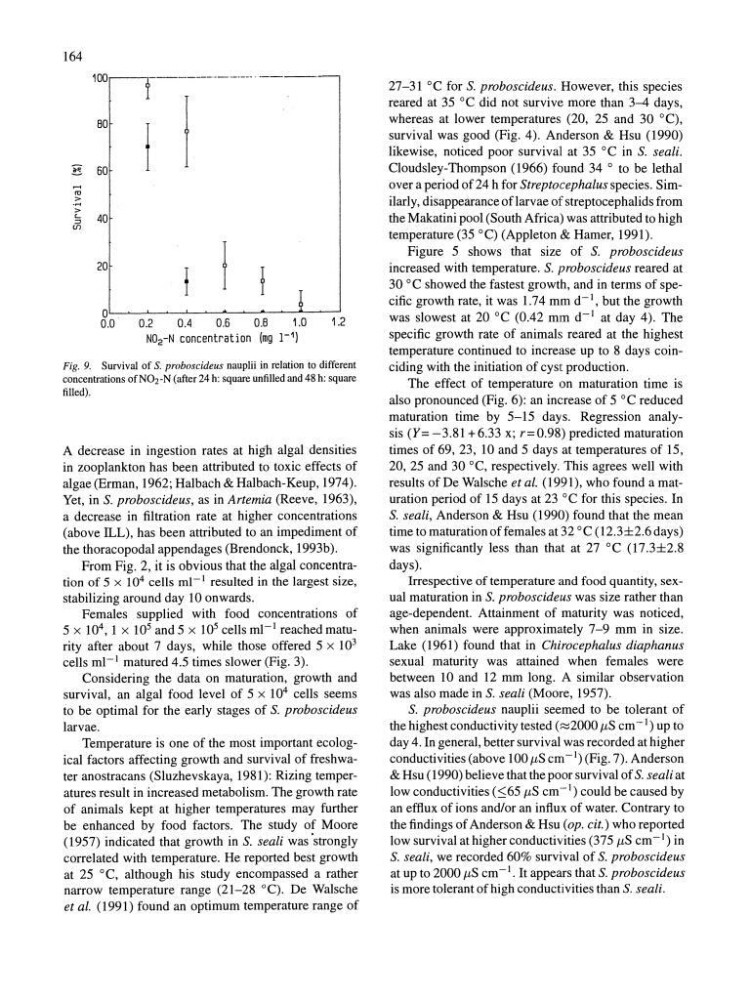
Fig. 9. Survival of S. proboscideus nauplii in relation to different
concentrations ofN02-N (after 24 h: square unfilled and 48 h: square
filled).
A decrease in ingestion rates at high algal densities
in zooplankton has been attributed to toxic effects of
algae (Erman, 1962; Halbach & Halbach-Keup, 1974).
Yet, in S. proboscideus, as in Artemia (Reeve, 1963),
a decrease in filtration rate at higher concentrations
(above ILL), has been attributed to an impediment of
the thoracopodal appendages (Brendonck, 1993b).
From Fig. 2, it is obvious that the algal concentration of 5 x 10 4 cells ml- I resulted in the largest size,
stabilizing around day 10 onwards.
Females supplied with food concentrations of
5 x 10 4 , 1 X 10 5 and 5 x 10 5 cells ml- I reached maturity after about 7 days, while those offered 5 x 10 3
cells ml- I matured 4.5 times slower (Fig. 3).
Considering the data on maturation, growth and
survival, an algal food level of 5 x 10 4 cells seems
to be optimal for the early stages of S. proboscideus
larvae.
Temperature is one of the most important ecological factors affecting growth and survival of freshwater anostracans (Sluzhevskaya, 1981): Rizing temperatures result in increased metabolism. The growth rate
of animals kept at higher temperatures may further
be enhanced by food factors. The study of Moore
(1957) indicated that growth in S. seali was 'strongly
correlated with temperature. He reported best growth
at 25°C, although his study encompassed a rather
narrow temperature range (21-28 0c). De Walsche
et at. (1991) found an optimum temperature range of
27-31 °C for S. proboscideus. However, this species
reared at 35°C did not survive more than 3-4 days,
whereas at lower temperatures (20, 25 and 30 0C),
survival was good (Fig. 4). Anderson & Hsu (1990)
likewise, noticed poor survival at 35°C in S. sea Ii.
Cloudsley-Thompson (1966) found 34 ° to be lethal
over a period of 24 h for Streptocephalus species. Similarly, disappearance of larvae of streptocephalids from
the Makatini pool (South Africa) was attributed to high
temperature (35°C) (Appleton & Hamer, 1991).
Figure 5 shows that size of S. proboscideus
increased with temperature. S. proboscideus reared at
30°C showed the fastest growth, and in terms of specific growth rate, it was 1.74 mm d- I , but the growth
was slowest at 20°C (0.42 mm d- I at day 4). The
specific growth rate of animals reared at the highest
temperature continued to increase up to 8 days coinciding with the initiation of cyst production.
The effect of temperature on maturation time is
also pronounced (Fig. 6): an increase of 5 °C reduced
maturation time by 5-15 days. Regression analysis (y= -3.81 +6.33 x; r=0.98) predicted maturation
times of 69, 23, 10 and 5 days at temperatures of 15,
20, 25 and 30°C, respectively. This agrees well with
results of De Walsche et at. (1991), who found a maturation period of 15 days at 23°C for this species. In
S. sea Ii, Anderson & Hsu (1990) found that the mean
time to maturation offemales at 32°C (12.3±2.6 days)
was significantly less than that at 27°C (17.3±2.8
days).
Irrespective of temperature and food quantity, sexual maturation in S. proboscideus was size rather than
age-dependent. Attainment of maturity was noticed,
when animals were approximately 7-9 mm in size.
Lake (1961) found that in Chirocephalus diaphanus
sexual maturity was attained when females were
between 10 and 12 mm long. A similar observation
was also made in S. sea Ii (Moore, 1957).
S. proboscideus nauplii seemed to be tolerant of
the highest conductivity tested (:::::2000 J.LS cm -I) up to
day 4. In general, better survival was recorded at higher
conductivities (above 100 J.LS cm -I) (Fig. 7). Anderson
& Hsu (1990) believe that the poor survival of S. sea Ii at
low conductivities (:::;65 J.LS cm-- I ) could be caused by
an efflux of ions and/or an influx of water. Contrary to
the findings of Anderson & Hsu (op. cit.) who reported
low survival at higher conductivities (375 J.LS cm- I ) in
S. seali, we recorded 60% survival of S. proboscideus
at up to 2000 J.LS cm- I . It appears that S. proboscideus
is more tolerant of high conductivities than S. seali.
100
80
E 60
1
.....
IV
>
.....
>
L
40
:::J
UJ
20
!
0
0.0
0.2
0.4
0.6
0.8
1.0
1.2
N0 2 -N concentration (mg 1- 1 )
Fig. 9. Survival of S. proboscideus nauplii in relation to different
concentrations ofN02-N (after 24 h: square unfilled and 48 h: square
filled).
A decrease in ingestion rates at high algal densities
in zooplankton has been attributed to toxic effects of
algae (Erman, 1962; Halbach & Halbach-Keup, 1974).
Yet, in S. proboscideus, as in Artemia (Reeve, 1963),
a decrease in filtration rate at higher concentrations
(above ILL), has been attributed to an impediment of
the thoracopodal appendages (Brendonck, 1993b).
From Fig. 2, it is obvious that the algal concentration of 5 x 10 4 cells ml- I resulted in the largest size,
stabilizing around day 10 onwards.
Females supplied with food concentrations of
5 x 10 4 , 1 X 10 5 and 5 x 10 5 cells ml- I reached maturity after about 7 days, while those offered 5 x 10 3
cells ml- I matured 4.5 times slower (Fig. 3).
Considering the data on maturation, growth and
survival, an algal food level of 5 x 10 4 cells seems
to be optimal for the early stages of S. proboscideus
larvae.
Temperature is one of the most important ecological factors affecting growth and survival of freshwater anostracans (Sluzhevskaya, 1981): Rizing temperatures result in increased metabolism. The growth rate
of animals kept at higher temperatures may further
be enhanced by food factors. The study of Moore
(1957) indicated that growth in S. seali was 'strongly
correlated with temperature. He reported best growth
at 25°C, although his study encompassed a rather
narrow temperature range (21-28 0c). De Walsche
et at. (1991) found an optimum temperature range of
27-31 °C for S. proboscideus. However, this species
reared at 35°C did not survive more than 3-4 days,
whereas at lower temperatures (20, 25 and 30 0C),
survival was good (Fig. 4). Anderson & Hsu (1990)
likewise, noticed poor survival at 35°C in S. sea Ii.
Cloudsley-Thompson (1966) found 34 ° to be lethal
over a period of 24 h for Streptocephalus species. Similarly, disappearance of larvae of streptocephalids from
the Makatini pool (South Africa) was attributed to high
temperature (35°C) (Appleton & Hamer, 1991).
Figure 5 shows that size of S. proboscideus
increased with temperature. S. proboscideus reared at
30°C showed the fastest growth, and in terms of specific growth rate, it was 1.74 mm d- I , but the growth
was slowest at 20°C (0.42 mm d- I at day 4). The
specific growth rate of animals reared at the highest
temperature continued to increase up to 8 days coinciding with the initiation of cyst production.
The effect of temperature on maturation time is
also pronounced (Fig. 6): an increase of 5 °C reduced
maturation time by 5-15 days. Regression analysis (y= -3.81 +6.33 x; r=0.98) predicted maturation
times of 69, 23, 10 and 5 days at temperatures of 15,
20, 25 and 30°C, respectively. This agrees well with
results of De Walsche et at. (1991), who found a maturation period of 15 days at 23°C for this species. In
S. sea Ii, Anderson & Hsu (1990) found that the mean
time to maturation offemales at 32°C (12.3±2.6 days)
was significantly less than that at 27°C (17.3±2.8
days).
Irrespective of temperature and food quantity, sexual maturation in S. proboscideus was size rather than
age-dependent. Attainment of maturity was noticed,
when animals were approximately 7-9 mm in size.
Lake (1961) found that in Chirocephalus diaphanus
sexual maturity was attained when females were
between 10 and 12 mm long. A similar observation
was also made in S. sea Ii (Moore, 1957).
S. proboscideus nauplii seemed to be tolerant of
the highest conductivity tested (:::::2000 J.LS cm -I) up to
day 4. In general, better survival was recorded at higher
conductivities (above 100 J.LS cm -I) (Fig. 7). Anderson
& Hsu (1990) believe that the poor survival of S. sea Ii at
low conductivities (:::;65 J.LS cm-- I ) could be caused by
an efflux of ions and/or an influx of water. Contrary to
the findings of Anderson & Hsu (op. cit.) who reported
low survival at higher conductivities (375 J.LS cm- I ) in
S. seali, we recorded 60% survival of S. proboscideus
at up to 2000 J.LS cm- I . It appears that S. proboscideus
is more tolerant of high conductivities than S. seali.