

110
7d -7SoC
t
77S
1.7 d
4.4d
I
I
4d -18°C
_ ....
3d -25°C
"3.9 d
125
7.9d
t
I
3h 40°C
...279
27h 20°C
t
...4.5 d
7.5d
I
I
140
0
40
100
hours
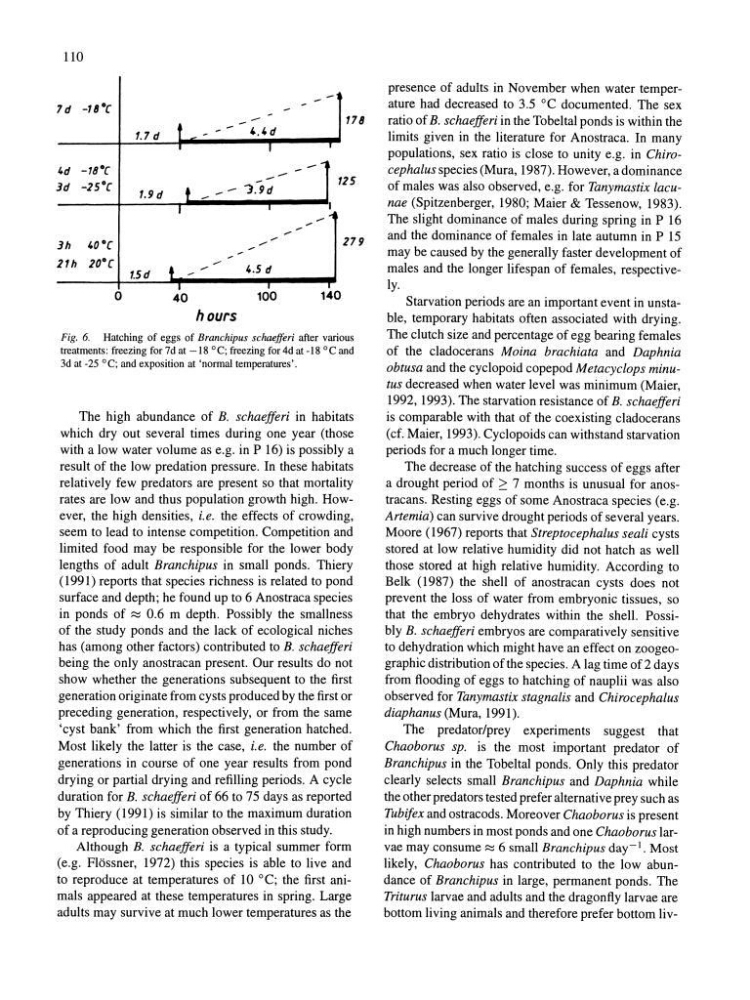
Fig. 6. Hatching of eggs of Branchipus schaefferi after various
treatments: freezing for 7d at -18°C; freezing for 4d at -18°C and
3d at -25 °C; and exposition at 'normal temperatures'.
The high abundance of B. schaefferi in habitats
which dry out several times during one year (those
with a low water volume as e.g. in P 16) is possibly a
result of the low predation pressure. In these habitats
relatively few predators are present so that mortality
rates are low and thus population growth high. However, the high densities, i.e. the effects of crowding,
seem to lead to intense competition. Competition and
limited food may be responsible for the lower body
lengths of adult Branchipus in small ponds. Thiery
(1991) reports that species richness is related to pond
surface and depth; he found up to 6 Anostraca species
in ponds of ~ 0.6 m depth. Possibly the smallness
of the study ponds and the lack of ecological niches
has (among other factors) contributed to B. schaefferi
being the only anostracan present. Our results do not
show whether the generations subsequent to the first
generation originate from cysts produced by the first or
preceding generation, respectively, or from the same
'cyst bank' from which the first generation hatched.
Most likely the latter is the case, i.e. the number of
generations in course of one year results from pond
drying or partial drying and refilling periods. A cycle
duration for B. schaefferi of 66 to 75 days as reported
by Thiery (1991) is similar to the maximum duration
of a reproducing generation observed in this study.
Although B. schaefferi is a typical summer form
(e.g. Flossner, 1972) this species is able to live and
to reproduce at temperatures of 10 °C; the first animals appeared at these temperatures in spring. Large
adults may survive at much lower temperatures as the
presence of adults in November when water temperature had decreased to 3.5 °C documented. The sex
ratio of B. schaefferi in the Tobeltal ponds is within the
limits given in the literature for Anostraca. In many
populations, sex ratio is close to unity e.g. in Chirocephalus species (Mura, 1987). However, a dominance
of males was also observed, e.g. for Tanymastix lacunae (Spitzenberger, 1980; Maier & Tessenow, 1983).
The slight dominance of males during spring in P 16
and the dominance of females in late autumn in P 15
may be caused by the generally faster development of
males and the longer lifespan of females, respectively.
Starvation periods are an important event in unstable, temporary habitats often associated with drying.
The clutch size and percentage of egg bearing females
of the cladocerans Moina brachiata and Daphnia
obtusa and the cyclopoid copepod Metacyclops minutus decreased when water level was minimum (Maier,
1992, 1993). The starvation resistance of B. schaefferi
is comparable with that of the coexisting cladocerans
(cf. Maier, 1993). Cyclopoids can withstand starvation
periods for a much longer time.
The decrease of the hatching success of eggs after
a drought period of 2: 7 months is unusual for anostracans. Resting eggs of some Anostraca species (e.g.
Artemia) can survive drought periods of several years.
Moore (1967) reports that Streptocephalus sea Ii cysts
stored at low relative humidity did not hatch as well
those stored at high relative humidity. According to
Belk (1987) the shell of anostracan cysts does not
prevent the loss of water from embryonic tissues, so
that the embryo dehydrates within the shell. Possibly B. schaefferi embryos are comparatively sensitive
to dehydration which might have an effect on zoogeographic distribution of the species. A lag time of2 days
from flooding of eggs to hatching of nauplii was also
observed for Tanymastix stagnalis and Chirocephalus
diaphanus (Mura, 1991).
The predator/prey experiments suggest that
Chaoborus sp. is the most important predator of
Branchipus in the Tobeltal ponds. Only this predator
clearly selects small Branchipus and Daphnia while
the other predators tested prefer alternative prey such as
Tubifex and ostracods. Moreover Chaoborus is present
in high numbers in most ponds and one Chaoborus larvae may consume ~ 6 small Branchipus day-I. Most
likely, Chaoborus has contributed to the low abundance of Branchipus in large, permanent ponds. The
Triturus larvae and adults and the dragonfly larvae are
bottom living animals and therefore prefer bottom liv-
7d -7SoC
t
77S
1.7 d
4.4d
I
I
4d -18°C
_ ....
3d -25°C
"3.9 d
125
7.9d
t
I
3h 40°C
...279
27h 20°C
t
...4.5 d
7.5d
I
I
140
0
40
100
hours
Fig. 6. Hatching of eggs of Branchipus schaefferi after various
treatments: freezing for 7d at -18°C; freezing for 4d at -18°C and
3d at -25 °C; and exposition at 'normal temperatures'.
The high abundance of B. schaefferi in habitats
which dry out several times during one year (those
with a low water volume as e.g. in P 16) is possibly a
result of the low predation pressure. In these habitats
relatively few predators are present so that mortality
rates are low and thus population growth high. However, the high densities, i.e. the effects of crowding,
seem to lead to intense competition. Competition and
limited food may be responsible for the lower body
lengths of adult Branchipus in small ponds. Thiery
(1991) reports that species richness is related to pond
surface and depth; he found up to 6 Anostraca species
in ponds of ~ 0.6 m depth. Possibly the smallness
of the study ponds and the lack of ecological niches
has (among other factors) contributed to B. schaefferi
being the only anostracan present. Our results do not
show whether the generations subsequent to the first
generation originate from cysts produced by the first or
preceding generation, respectively, or from the same
'cyst bank' from which the first generation hatched.
Most likely the latter is the case, i.e. the number of
generations in course of one year results from pond
drying or partial drying and refilling periods. A cycle
duration for B. schaefferi of 66 to 75 days as reported
by Thiery (1991) is similar to the maximum duration
of a reproducing generation observed in this study.
Although B. schaefferi is a typical summer form
(e.g. Flossner, 1972) this species is able to live and
to reproduce at temperatures of 10 °C; the first animals appeared at these temperatures in spring. Large
adults may survive at much lower temperatures as the
presence of adults in November when water temperature had decreased to 3.5 °C documented. The sex
ratio of B. schaefferi in the Tobeltal ponds is within the
limits given in the literature for Anostraca. In many
populations, sex ratio is close to unity e.g. in Chirocephalus species (Mura, 1987). However, a dominance
of males was also observed, e.g. for Tanymastix lacunae (Spitzenberger, 1980; Maier & Tessenow, 1983).
The slight dominance of males during spring in P 16
and the dominance of females in late autumn in P 15
may be caused by the generally faster development of
males and the longer lifespan of females, respectively.
Starvation periods are an important event in unstable, temporary habitats often associated with drying.
The clutch size and percentage of egg bearing females
of the cladocerans Moina brachiata and Daphnia
obtusa and the cyclopoid copepod Metacyclops minutus decreased when water level was minimum (Maier,
1992, 1993). The starvation resistance of B. schaefferi
is comparable with that of the coexisting cladocerans
(cf. Maier, 1993). Cyclopoids can withstand starvation
periods for a much longer time.
The decrease of the hatching success of eggs after
a drought period of 2: 7 months is unusual for anostracans. Resting eggs of some Anostraca species (e.g.
Artemia) can survive drought periods of several years.
Moore (1967) reports that Streptocephalus sea Ii cysts
stored at low relative humidity did not hatch as well
those stored at high relative humidity. According to
Belk (1987) the shell of anostracan cysts does not
prevent the loss of water from embryonic tissues, so
that the embryo dehydrates within the shell. Possibly B. schaefferi embryos are comparatively sensitive
to dehydration which might have an effect on zoogeographic distribution of the species. A lag time of2 days
from flooding of eggs to hatching of nauplii was also
observed for Tanymastix stagnalis and Chirocephalus
diaphanus (Mura, 1991).
The predator/prey experiments suggest that
Chaoborus sp. is the most important predator of
Branchipus in the Tobeltal ponds. Only this predator
clearly selects small Branchipus and Daphnia while
the other predators tested prefer alternative prey such as
Tubifex and ostracods. Moreover Chaoborus is present
in high numbers in most ponds and one Chaoborus larvae may consume ~ 6 small Branchipus day-I. Most
likely, Chaoborus has contributed to the low abundance of Branchipus in large, permanent ponds. The
Triturus larvae and adults and the dragonfly larvae are
bottom living animals and therefore prefer bottom liv-