

48
Activity Patterns
Dec
Jan
Oct
Mar
Sep
Apr
Jul
Jun
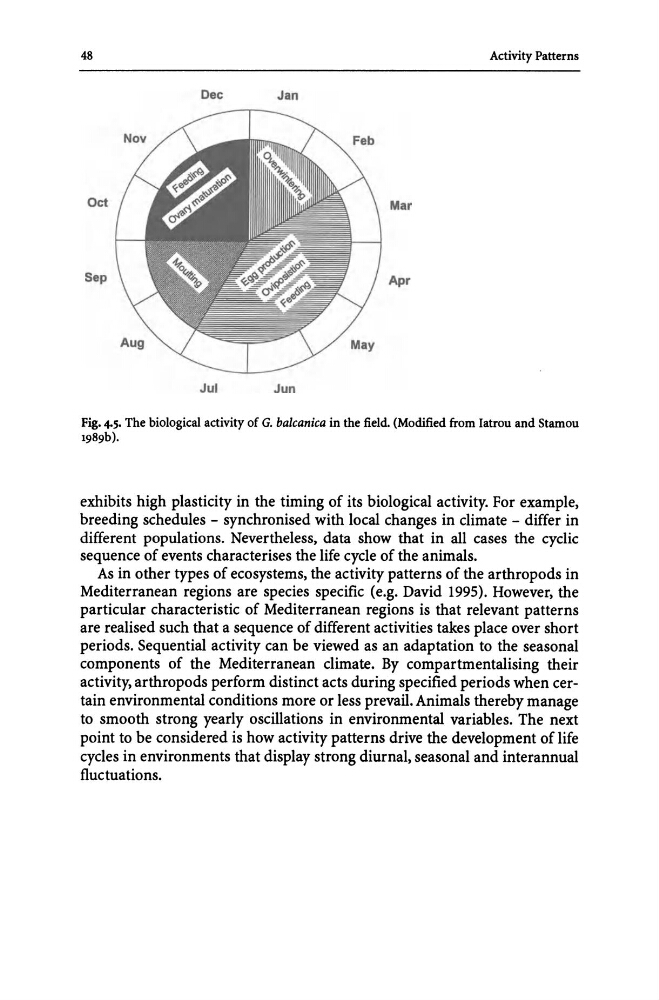
Fig. 405. The biological activity of G. balcanica in the field. (Modified from Iatrou and Stamou
1989b).
exhibits high plasticity in the timing of its biological activity. For example,
breeding schedules - synchronised with local changes in climate - differ in
different populations. Nevertheless, data show that in all cases the cyclic
sequence of events characterises the life cycle of the animals.
As in other types of ecosystems, the activity patterns of the arthropods in
Mediterranean regions are species specific (e.g. David 1995). However, the
particular characteristic of Mediterranean regions is that relevant patterns
are realised such that a sequence of different activities takes place over short
periods. Sequential activity can be viewed as an adaptation to the seasonal
components of the Mediterranean climate. By compartmentalising their
activity, arthropods perform distinct acts during specified periods when certain environmental conditions more or less prevail. Animals thereby manage
to smooth strong yearly oscillations in environmental variables. The next
point to be considered is how activity patterns drive the development of life
cycles in environments that display strong diurnal, seasonal and interannual
fluctuations.
Activity Patterns
Dec
Jan
Oct
Mar
Sep
Apr
Jul
Jun
Fig. 405. The biological activity of G. balcanica in the field. (Modified from Iatrou and Stamou
1989b).
exhibits high plasticity in the timing of its biological activity. For example,
breeding schedules - synchronised with local changes in climate - differ in
different populations. Nevertheless, data show that in all cases the cyclic
sequence of events characterises the life cycle of the animals.
As in other types of ecosystems, the activity patterns of the arthropods in
Mediterranean regions are species specific (e.g. David 1995). However, the
particular characteristic of Mediterranean regions is that relevant patterns
are realised such that a sequence of different activities takes place over short
periods. Sequential activity can be viewed as an adaptation to the seasonal
components of the Mediterranean climate. By compartmentalising their
activity, arthropods perform distinct acts during specified periods when certain environmental conditions more or less prevail. Animals thereby manage
to smooth strong yearly oscillations in environmental variables. The next
point to be considered is how activity patterns drive the development of life
cycles in environments that display strong diurnal, seasonal and interannual
fluctuations.