

Acclimation to Constant Temperature
35
~o
~ 65
:;:
...
.,.
~ JS
23'C
d" 55
2
2:
"- 30
"
45
"
E
~
"
35
.:!
25
-;
-; 25
~ 20
;;
i
:l!:
15
15
0
10
20
30
40
50
60
70
0
10
20
30
40
50
60
70
Time (h)
Time (h)
30
30
~
~I 15
I5"C
"N "5
2 -
c
.=;
~ 20
v 20
v
~
~
.=
.:! 15
~
15
1 10
i
i
5
10
20
30
40
SO
60
70
0
10
20
30
40
SO
60
70
Time (h)
Time (h)
25
::
::
15
,.
10'C
..
d" 20
d" 13
2:
2:
"
~
IS
.:
.: 9
"0
"0
!
10
..Q
~
i
i
5
0
10
20
30
40
SO
60
70
10
20
30
40
SO
60
70
Time (h)
Time (h)
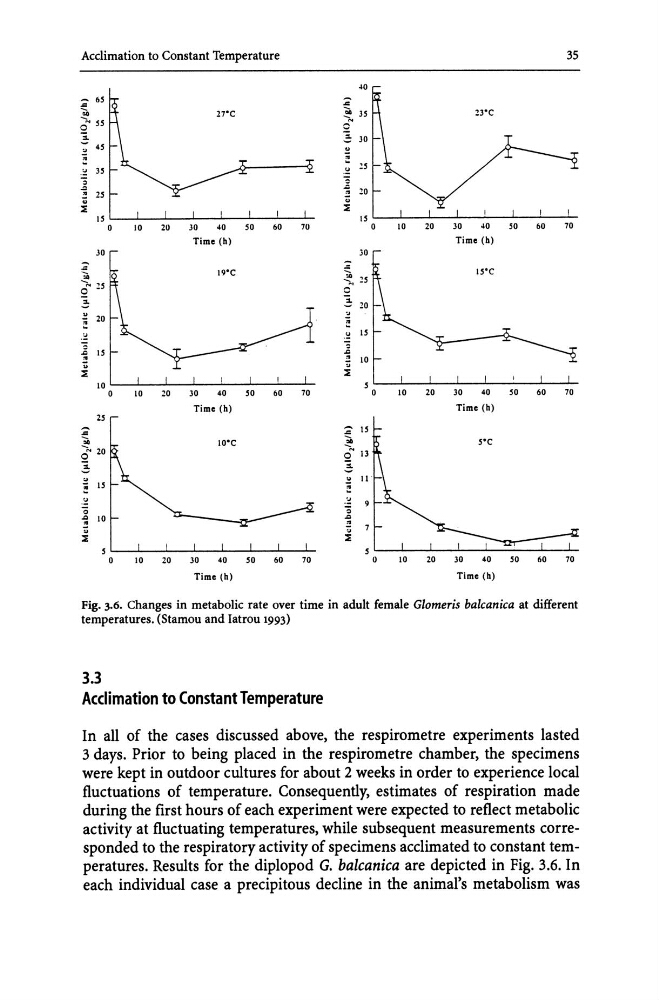
Fig. 3.6. Changes in metabolic rate over time in adult female Glomeris balcanica at different
temperatures. (Stamou and Iatrou 1993)
3.3
Acclimation to Constant Temperature
In all of the cases discussed above, the respirometre experiments lasted
3 days. Prior to being placed in the respirometre chamber, the specimens
were kept in outdoor cultures for about 2 weeks in order to experience local
fluctuations of temperature. Consequently, estimates of respiration made
during the first hours of each experiment were expected to reflect metabolic
activity at fluctuating temperatures, while subsequent measurements corresponded to the respiratory activity of specimens acclimated to constant temperatures. Results for the diplopod G. balcanica are depicted in Fig. 3.6. In
each individual case a precipitous decline in the animal's metabolism was
35
~o
~ 65
:;:
...
.,.
~ JS
23'C
d" 55
2
2:
"- 30
"
45
"
E
~
"
35
.:!
25
-;
-; 25
~ 20
;;
i
:l!:
15
15
0
10
20
30
40
50
60
70
0
10
20
30
40
50
60
70
Time (h)
Time (h)
30
30
~
~I 15
I5"C
"N "5
2 -
c
.=;
~ 20
v 20
v
~
~
.=
.:! 15
~
15
1 10
i
i
5
10
20
30
40
SO
60
70
0
10
20
30
40
SO
60
70
Time (h)
Time (h)
25
::
::
15
,.
10'C
..
d" 20
d" 13
2:
2:
"
~
IS
.:
.: 9
"0
"0
!
10
..Q
~
i
i
5
0
10
20
30
40
SO
60
70
10
20
30
40
SO
60
70
Time (h)
Time (h)
Fig. 3.6. Changes in metabolic rate over time in adult female Glomeris balcanica at different
temperatures. (Stamou and Iatrou 1993)
3.3
Acclimation to Constant Temperature
In all of the cases discussed above, the respirometre experiments lasted
3 days. Prior to being placed in the respirometre chamber, the specimens
were kept in outdoor cultures for about 2 weeks in order to experience local
fluctuations of temperature. Consequently, estimates of respiration made
during the first hours of each experiment were expected to reflect metabolic
activity at fluctuating temperatures, while subsequent measurements corresponded to the respiratory activity of specimens acclimated to constant temperatures. Results for the diplopod G. balcanica are depicted in Fig. 3.6. In
each individual case a precipitous decline in the animal's metabolism was