

11 Vibrio parahaemolyticus Risk Management in Japan
131
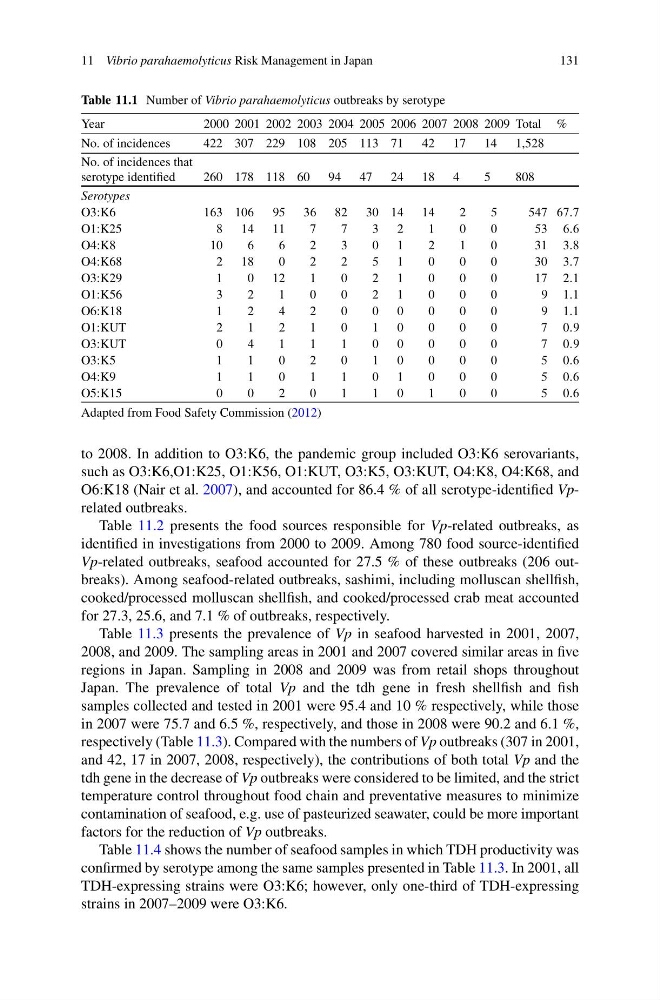
Table 11.1 Number of Vibrio parahaemolyticus outbreaks by serotype
Year
2000 2001 2002 2003 2004 2005 2006 2007 2008 2009 Total %
No. of incidences
422 307 229 108 205 113 71 42 17 14 1,528
No. of incidences that
serotype identified
260 178 118 60 94 47 24 18 4
5
808
Serotypes
O3:K6
163 106 95 36 82 30 14 14
2
5
547 67:7
O1:K25
8 14 11
7
7
3 2
1
0
0
53 6:6
O4:K8
10
6
6
2
3
0 1
2
1
0
31 3:8
O4:K68
2 18
0
2
2
5 1
0
0
0
30 3:7
O3:K29
1
0 12
1
0
2 1
0
0
0
17 2:1
O1:K56
3
2
1
0
0
2 1
0
0
0
9 1:1
O6:K18
1
2
4
2
0
0 0
0
0
0
9 1:1
O1:KUT
2
1
2
1
0
1 0
0
0
0
7 0:9
O3:KUT
0
4
1
1
1
0 0
0
0
0
7 0:9
O3:K5
1
1
0
2
0
1 0
0
0
0
5 0:6
O4:K9
1
1
0
1
1
0 1
0
0
0
5 0:6
O5:K15
0
0
2
0
1
1 0
1
0
0
5 0:6
Adapted from Food Safety Commission (2012)
to 2008. In addition to O3:K6, the pandemic group included O3:K6 serovariants,
such as O3:K6,O1:K25, O1:K56, O1:KUT, O3:K5, O3:KUT, O4:K8, O4:K68, and
O6:K18 (Nair et al. 2007), and accounted for 86.4 % of all serotype-identified Vprelated outbreaks.
Table 11.2 presents the food sources responsible for Vp-related outbreaks, as
identified in investigations from 2000 to 2009. Among 780 food source-identified
Vp-related outbreaks, seafood accounted for 27.5 % of these outbreaks (206 outbreaks). Among seafood-related outbreaks, sashimi, including molluscan shellfish,
cooked/processed molluscan shellfish, and cooked/processed crab meat accounted
for 27.3, 25.6, and 7.1 % of outbreaks, respectively.
Table 11.3 presents the prevalence of Vp in seafood harvested in 2001, 2007,
2008, and 2009. The sampling areas in 2001 and 2007 covered similar areas in five
regions in Japan. Sampling in 2008 and 2009 was from retail shops throughout
Japan. The prevalence of total Vp and the tdh gene in fresh shellfish and fish
samples collected and tested in 2001 were 95.4 and 10 % respectively, while those
in 2007 were 75.7 and 6.5 %, respectively, and those in 2008 were 90.2 and 6.1 %,
respectively (Table 11.3). Compared with the numbers of Vp outbreaks (307 in 2001,
and 42, 17 in 2007, 2008, respectively), the contributions of both total Vp and the
tdh gene in the decrease of Vp outbreaks were considered to be limited, and the strict
temperature control throughout food chain and preventative measures to minimize
contamination of seafood, e.g. use of pasteurized seawater, could be more important
factors for the reduction of Vp outbreaks.
Table 11.4 shows the number of seafood samples in which TDH productivity was
confirmed by serotype among the same samples presented in Table 11.3. In 2001, all
TDH-expressing strains were O3:K6; however, only one-third of TDH-expressing
strains in 2007–2009 were O3:K6.
131
Table 11.1 Number of Vibrio parahaemolyticus outbreaks by serotype
Year
2000 2001 2002 2003 2004 2005 2006 2007 2008 2009 Total %
No. of incidences
422 307 229 108 205 113 71 42 17 14 1,528
No. of incidences that
serotype identified
260 178 118 60 94 47 24 18 4
5
808
Serotypes
O3:K6
163 106 95 36 82 30 14 14
2
5
547 67:7
O1:K25
8 14 11
7
7
3 2
1
0
0
53 6:6
O4:K8
10
6
6
2
3
0 1
2
1
0
31 3:8
O4:K68
2 18
0
2
2
5 1
0
0
0
30 3:7
O3:K29
1
0 12
1
0
2 1
0
0
0
17 2:1
O1:K56
3
2
1
0
0
2 1
0
0
0
9 1:1
O6:K18
1
2
4
2
0
0 0
0
0
0
9 1:1
O1:KUT
2
1
2
1
0
1 0
0
0
0
7 0:9
O3:KUT
0
4
1
1
1
0 0
0
0
0
7 0:9
O3:K5
1
1
0
2
0
1 0
0
0
0
5 0:6
O4:K9
1
1
0
1
1
0 1
0
0
0
5 0:6
O5:K15
0
0
2
0
1
1 0
1
0
0
5 0:6
Adapted from Food Safety Commission (2012)
to 2008. In addition to O3:K6, the pandemic group included O3:K6 serovariants,
such as O3:K6,O1:K25, O1:K56, O1:KUT, O3:K5, O3:KUT, O4:K8, O4:K68, and
O6:K18 (Nair et al. 2007), and accounted for 86.4 % of all serotype-identified Vprelated outbreaks.
Table 11.2 presents the food sources responsible for Vp-related outbreaks, as
identified in investigations from 2000 to 2009. Among 780 food source-identified
Vp-related outbreaks, seafood accounted for 27.5 % of these outbreaks (206 outbreaks). Among seafood-related outbreaks, sashimi, including molluscan shellfish,
cooked/processed molluscan shellfish, and cooked/processed crab meat accounted
for 27.3, 25.6, and 7.1 % of outbreaks, respectively.
Table 11.3 presents the prevalence of Vp in seafood harvested in 2001, 2007,
2008, and 2009. The sampling areas in 2001 and 2007 covered similar areas in five
regions in Japan. Sampling in 2008 and 2009 was from retail shops throughout
Japan. The prevalence of total Vp and the tdh gene in fresh shellfish and fish
samples collected and tested in 2001 were 95.4 and 10 % respectively, while those
in 2007 were 75.7 and 6.5 %, respectively, and those in 2008 were 90.2 and 6.1 %,
respectively (Table 11.3). Compared with the numbers of Vp outbreaks (307 in 2001,
and 42, 17 in 2007, 2008, respectively), the contributions of both total Vp and the
tdh gene in the decrease of Vp outbreaks were considered to be limited, and the strict
temperature control throughout food chain and preventative measures to minimize
contamination of seafood, e.g. use of pasteurized seawater, could be more important
factors for the reduction of Vp outbreaks.
Table 11.4 shows the number of seafood samples in which TDH productivity was
confirmed by serotype among the same samples presented in Table 11.3. In 2001, all
TDH-expressing strains were O3:K6; however, only one-third of TDH-expressing
strains in 2007–2009 were O3:K6.