

132
H. Toyofuku
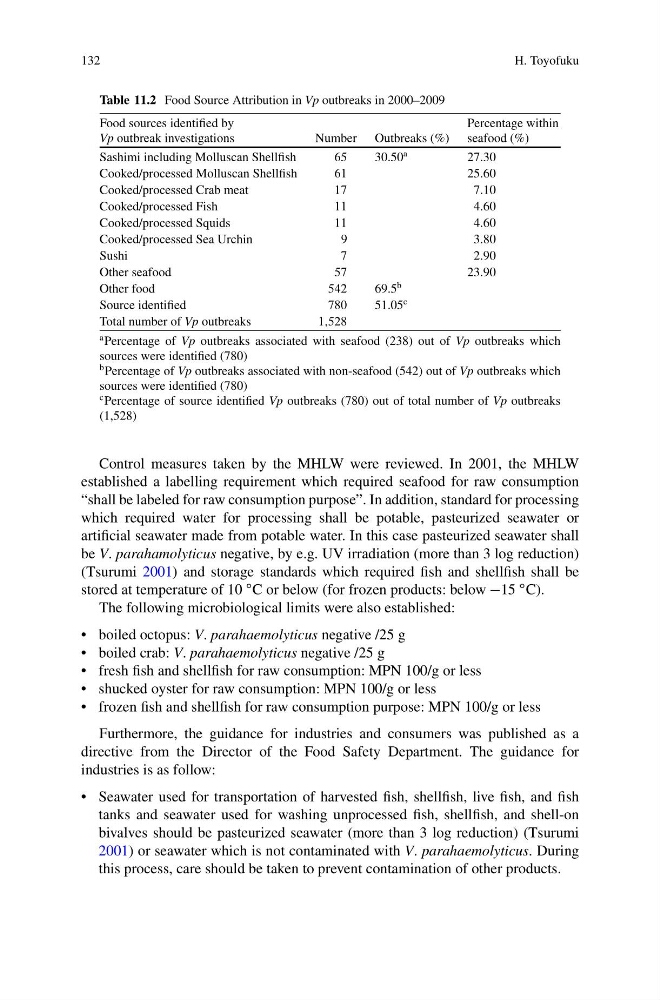
Table 11.2 Food Source Attribution in Vp outbreaks in 2000–2009
Food sources identified by
Vp outbreak investigations
Number Outbreaks (%)
Percentage within
seafood (%)
Sashimi including Molluscan Shellfish
65
30.50
a
27.30
Cooked/processed Molluscan Shellfish
61
25.60
Cooked/processed Crab meat
17
7.10
Cooked/processed Fish
11
4.60
Cooked/processed Squids
11
4.60
Cooked/processed Sea Urchin
9
3.80
Sushi
7
2.90
Other seafood
57
23.90
Other food
542
69.5
b
Source identified
780
51.05
c
Total number of Vp outbreaks
1;528
a Percentage of Vp outbreaks associated with seafood (238) out of Vp outbreaks which
sources were identified (780)
b Percentage of Vp outbreaks associated with non-seafood (542) out of Vp outbreaks which
sources were identified (780)
c Percentage of source identified Vp outbreaks (780) out of total number of Vp outbreaks
(1,528)
Control measures taken by the MHLW were reviewed. In 2001, the MHLW
established a labelling requirement which required seafood for raw consumption
“shall be labeled for raw consumption purpose”. In addition, standard for processing
which required water for processing shall be potable, pasteurized seawater or
artificial seawater made from potable water. In this case pasteurized seawater shall
be V. parahamolyticus negative, by e.g. UV irradiation (more than 3 log reduction)
(Tsurumi 2001) and storage standards which required fish and shellfish shall be
stored at temperature of 10
ı C or below (for frozen products: below 15
ı C).
The following microbiological limits were also established:
• boiled octopus: V. parahaemolyticus negative /25 g
• boiled crab: V. parahaemolyticus negative /25 g
• fresh fish and shellfish for raw consumption: MPN 100/g or less
• shucked oyster for raw consumption: MPN 100/g or less
• frozen fish and shellfish for raw consumption purpose: MPN 100/g or less
Furthermore, the guidance for industries and consumers was published as a
directive from the Director of the Food Safety Department. The guidance for
industries is as follow:
• Seawater used for transportation of harvested fish, shellfish, live fish, and fish
tanks and seawater used for washing unprocessed fish, shellfish, and shell-on
bivalves should be pasteurized seawater (more than 3 log reduction) (Tsurumi
2001) or seawater which is not contaminated with V. parahaemolyticus. During
this process, care should be taken to prevent contamination of other products.
H. Toyofuku
Table 11.2 Food Source Attribution in Vp outbreaks in 2000–2009
Food sources identified by
Vp outbreak investigations
Number Outbreaks (%)
Percentage within
seafood (%)
Sashimi including Molluscan Shellfish
65
30.50
a
27.30
Cooked/processed Molluscan Shellfish
61
25.60
Cooked/processed Crab meat
17
7.10
Cooked/processed Fish
11
4.60
Cooked/processed Squids
11
4.60
Cooked/processed Sea Urchin
9
3.80
Sushi
7
2.90
Other seafood
57
23.90
Other food
542
69.5
b
Source identified
780
51.05
c
Total number of Vp outbreaks
1;528
a Percentage of Vp outbreaks associated with seafood (238) out of Vp outbreaks which
sources were identified (780)
b Percentage of Vp outbreaks associated with non-seafood (542) out of Vp outbreaks which
sources were identified (780)
c Percentage of source identified Vp outbreaks (780) out of total number of Vp outbreaks
(1,528)
Control measures taken by the MHLW were reviewed. In 2001, the MHLW
established a labelling requirement which required seafood for raw consumption
“shall be labeled for raw consumption purpose”. In addition, standard for processing
which required water for processing shall be potable, pasteurized seawater or
artificial seawater made from potable water. In this case pasteurized seawater shall
be V. parahamolyticus negative, by e.g. UV irradiation (more than 3 log reduction)
(Tsurumi 2001) and storage standards which required fish and shellfish shall be
stored at temperature of 10
ı C or below (for frozen products: below 15
ı C).
The following microbiological limits were also established:
• boiled octopus: V. parahaemolyticus negative /25 g
• boiled crab: V. parahaemolyticus negative /25 g
• fresh fish and shellfish for raw consumption: MPN 100/g or less
• shucked oyster for raw consumption: MPN 100/g or less
• frozen fish and shellfish for raw consumption purpose: MPN 100/g or less
Furthermore, the guidance for industries and consumers was published as a
directive from the Director of the Food Safety Department. The guidance for
industries is as follow:
• Seawater used for transportation of harvested fish, shellfish, live fish, and fish
tanks and seawater used for washing unprocessed fish, shellfish, and shell-on
bivalves should be pasteurized seawater (more than 3 log reduction) (Tsurumi
2001) or seawater which is not contaminated with V. parahaemolyticus. During
this process, care should be taken to prevent contamination of other products.