

10 Probabilistic Exposure Assessment to Phycotoxins by Recreational. . .
121
6.6
1.6
7.2
22.0
9.5
2.6
5.1
7.7
1.8
0.4
0.2
0.8
0.2
0.4
11.3
20.2
11.3
18.7
36.6
34.1
18.5
2.5
8.2
25.9
15.6
25.9
1.0
0
5
10
15
20
25
30
35
40
DA
OA
SPX
% of contribution
Harvested oysters
Harvested mussels
Harvested cockles
Harvested carpet shell clams
Harvested razor clams
Purchased oysters
Purchased mussels
Purchased cockles
Purchased carpet shell clams
Purchased king scallops
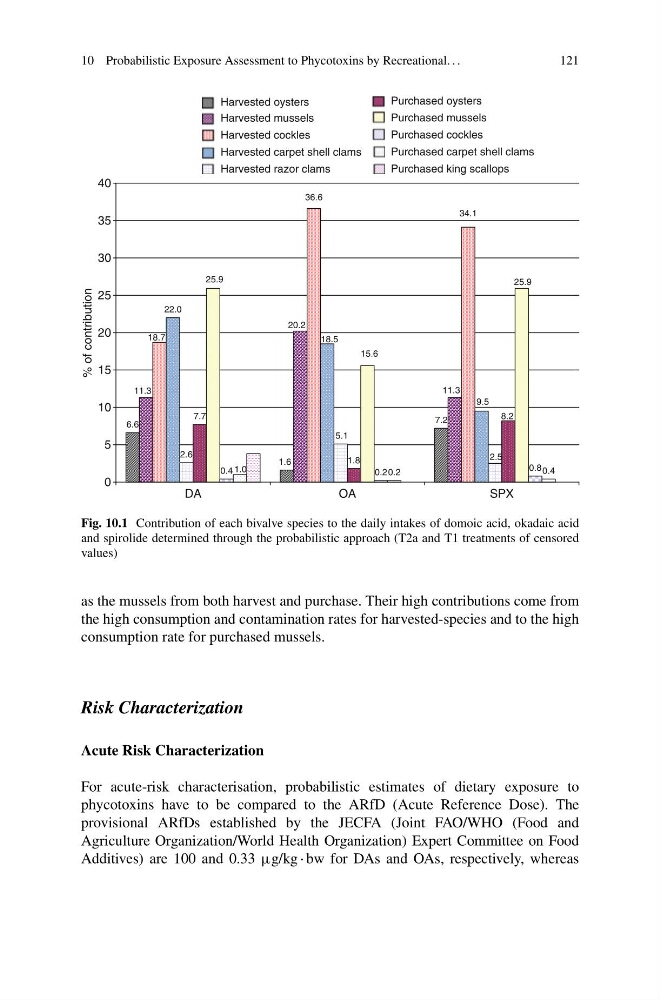
Fig. 10.1 Contribution of each bivalve species to the daily intakes of domoic acid, okadaic acid
and spirolide determined through the probabilistic approach (T2a and T1 treatments of censored
values)
as the mussels from both harvest and purchase. Their high contributions come from
the high consumption and contamination rates for harvested-species and to the high
consumption rate for purchased mussels.
Risk Characterization
Acute Risk Characterization
For acute-risk characterisation, probabilistic estimates of dietary exposure to
phycotoxins have to be compared to the ARfD (Acute Reference Dose). The
provisional ARfDs established by the JECFA (Joint FAO/WHO (Food and
Agriculture Organization/World Health Organization) Expert Committee on Food
Additives) are 100 and 0.33 g/kg bw for DAs and OAs, respectively, whereas
121
6.6
1.6
7.2
22.0
9.5
2.6
5.1
7.7
1.8
0.4
0.2
0.8
0.2
0.4
11.3
20.2
11.3
18.7
36.6
34.1
18.5
2.5
8.2
25.9
15.6
25.9
1.0
0
5
10
15
20
25
30
35
40
DA
OA
SPX
% of contribution
Harvested oysters
Harvested mussels
Harvested cockles
Harvested carpet shell clams
Harvested razor clams
Purchased oysters
Purchased mussels
Purchased cockles
Purchased carpet shell clams
Purchased king scallops
Fig. 10.1 Contribution of each bivalve species to the daily intakes of domoic acid, okadaic acid
and spirolide determined through the probabilistic approach (T2a and T1 treatments of censored
values)
as the mussels from both harvest and purchase. Their high contributions come from
the high consumption and contamination rates for harvested-species and to the high
consumption rate for purchased mussels.
Risk Characterization
Acute Risk Characterization
For acute-risk characterisation, probabilistic estimates of dietary exposure to
phycotoxins have to be compared to the ARfD (Acute Reference Dose). The
provisional ARfDs established by the JECFA (Joint FAO/WHO (Food and
Agriculture Organization/World Health Organization) Expert Committee on Food
Additives) are 100 and 0.33 g/kg bw for DAs and OAs, respectively, whereas