

164
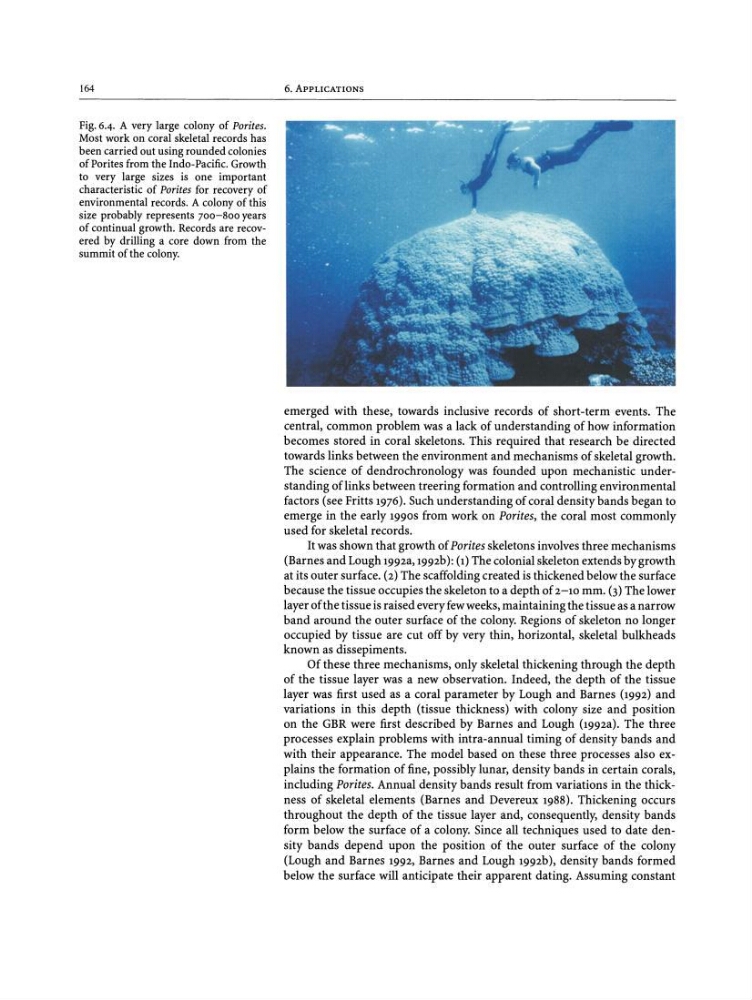
Fig. 6.4. A very large colony of Porites.
Most work on coral skeletal recordshas
been carried out usingroundedcolonies
of Porites from the Indo-Pacific. Growth
to very large sizes is one important
characteristic of Porites for recovery of
environmental records. A colony of this
size probably represents 700-800 years
of continual growth. Records are recovered by drilling a core down from the
summit of the colony.
6. ApPLICATIONS
emerged with these, towards inclusive records of short-term events. The
central, common problem was a lack of understanding of how information
becomes stored in coral skeletons. This required that research be directed
towards links between the environment and mechanisms of skeletal growth .
The science of dendrochronology was founded upon mechanistic understanding oflinks between treering formation and controlling environmental
factors (see Fritts 1976). Such understanding of coral density bands began to
emerge in the early 1990S from work on Porites, the coral most commonly
used for skeletal records .
It was shown that growth of Poritesskeletons involves three mechanisms
(Barnes and Lough 1992a,1992b): (1)The colonial skeleton extends by growth
at its outer surface. (2) The scaffolding created is thickened below the surface
because the tissue occupies the skeleton to a depth of 2-10 mm. (3) The lower
layer of the tissue is raised every fewweeks, maintaining the tissue as a narrow
band around the outer surface of the colony. Regions of skeleton no longer
occupied by tissue are cut off by very thin, horizontal, skeletal bulkheads
known as dissepiments.
Of these three mechanisms, only skeletal thickening through the depth
of the tissue layer was a new observation. Indeed, the depth of the tissue
layer was first used as a coral parameter by Lough and Barnes (1992) and
variations in this depth (tissue thickness) with colony size and position
on the GBR were first described by Barnes and Lough (1992a). The three
processes explain problems with intra-annual timing of density bands and
with their appearance. The model based on these three processes also explains the formation of fine, possibly lunar, density bands in certain corals,
including Porites. Annual density bands result from variations in the thickness of skeletal elements (Barnes and Devereux 1988). Thickening occurs
throughout the depth of the tissue layer and, consequently, density bands
form below the surface of a colony. Since all techniques used to date density bands depend upon the position of the outer surface of the colony
(Lough and Barnes 1992, Barnes and Lough 1992b), density bands formed
below the surface will anticipate their apparent dating. Assuming constant
Fig. 6.4. A very large colony of Porites.
Most work on coral skeletal recordshas
been carried out usingroundedcolonies
of Porites from the Indo-Pacific. Growth
to very large sizes is one important
characteristic of Porites for recovery of
environmental records. A colony of this
size probably represents 700-800 years
of continual growth. Records are recovered by drilling a core down from the
summit of the colony.
6. ApPLICATIONS
emerged with these, towards inclusive records of short-term events. The
central, common problem was a lack of understanding of how information
becomes stored in coral skeletons. This required that research be directed
towards links between the environment and mechanisms of skeletal growth .
The science of dendrochronology was founded upon mechanistic understanding oflinks between treering formation and controlling environmental
factors (see Fritts 1976). Such understanding of coral density bands began to
emerge in the early 1990S from work on Porites, the coral most commonly
used for skeletal records .
It was shown that growth of Poritesskeletons involves three mechanisms
(Barnes and Lough 1992a,1992b): (1)The colonial skeleton extends by growth
at its outer surface. (2) The scaffolding created is thickened below the surface
because the tissue occupies the skeleton to a depth of 2-10 mm. (3) The lower
layer of the tissue is raised every fewweeks, maintaining the tissue as a narrow
band around the outer surface of the colony. Regions of skeleton no longer
occupied by tissue are cut off by very thin, horizontal, skeletal bulkheads
known as dissepiments.
Of these three mechanisms, only skeletal thickening through the depth
of the tissue layer was a new observation. Indeed, the depth of the tissue
layer was first used as a coral parameter by Lough and Barnes (1992) and
variations in this depth (tissue thickness) with colony size and position
on the GBR were first described by Barnes and Lough (1992a). The three
processes explain problems with intra-annual timing of density bands and
with their appearance. The model based on these three processes also explains the formation of fine, possibly lunar, density bands in certain corals,
including Porites. Annual density bands result from variations in the thickness of skeletal elements (Barnes and Devereux 1988). Thickening occurs
throughout the depth of the tissue layer and, consequently, density bands
form below the surface of a colony. Since all techniques used to date density bands depend upon the position of the outer surface of the colony
(Lough and Barnes 1992, Barnes and Lough 1992b), density bands formed
below the surface will anticipate their apparent dating. Assuming constant