

108
4. SIMULATING GROWTH AND FORM
10 .0
12.0
14.0
6 .0
8 .0
density
(b)
2.0
2.0 '--~-'-~-'--~-'-~- '--~~~-'--~-'---'
0.0
8.0
.E
0.0 6.0
';j
..:::
4·0
t = o
(a)
I , ~,ooo
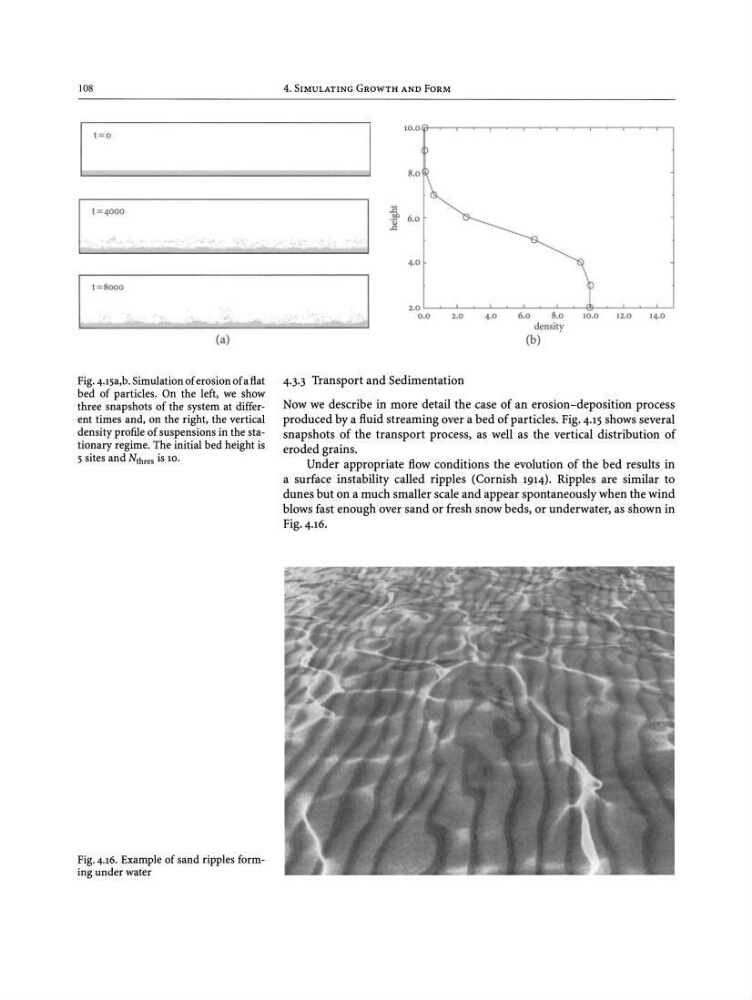
Fig. 4.15a,b. Simulation of erosion of a flat
bed of particles. On the left, we show
three snapshots of the system at different times and , on the right, the vertical
density profile of suspensions in the stationary regime. The initial bed height is
5 sites and Nthres is 10.
4.3.3 Transport and Sedimentation
Now we describe in more detail the case of an erosion-deposition process
produced by a fluid streaming over a bed of particles. Fig. 4.15 shows several
snapshots of the transport process, as well as the vertical distribution of
eroded grains.
Under appropriate flow conditions the evolution of the bed results in
a surface instability called ripples (Cornish 1914). Ripples are similar to
dunes but on a much smaller scale and appear spontaneously when the wind
blows fast enough over sand or fresh snow beds, or underwater, as shown in
Fig. 4.16.
Fig. 4.16. Example of sand ripples forming under water
4. SIMULATING GROWTH AND FORM
10 .0
12.0
14.0
6 .0
8 .0
density
(b)
2.0
2.0 '--~-'-~-'--~-'-~- '--~~~-'--~-'---'
0.0
8.0
.E
0.0 6.0
';j
..:::
4·0
t = o
(a)
I , ~,ooo
Fig. 4.15a,b. Simulation of erosion of a flat
bed of particles. On the left, we show
three snapshots of the system at different times and , on the right, the vertical
density profile of suspensions in the stationary regime. The initial bed height is
5 sites and Nthres is 10.
4.3.3 Transport and Sedimentation
Now we describe in more detail the case of an erosion-deposition process
produced by a fluid streaming over a bed of particles. Fig. 4.15 shows several
snapshots of the transport process, as well as the vertical distribution of
eroded grains.
Under appropriate flow conditions the evolution of the bed results in
a surface instability called ripples (Cornish 1914). Ripples are similar to
dunes but on a much smaller scale and appear spontaneously when the wind
blows fast enough over sand or fresh snow beds, or underwater, as shown in
Fig. 4.16.
Fig. 4.16. Example of sand ripples forming under water