

4.3. MODELING FLUID FLOW USING LATTICE GASES AND THE LATTICE BOLTZMANN MODEL
107
1=100
1=6000
1=100
a rep=25°
1=6000
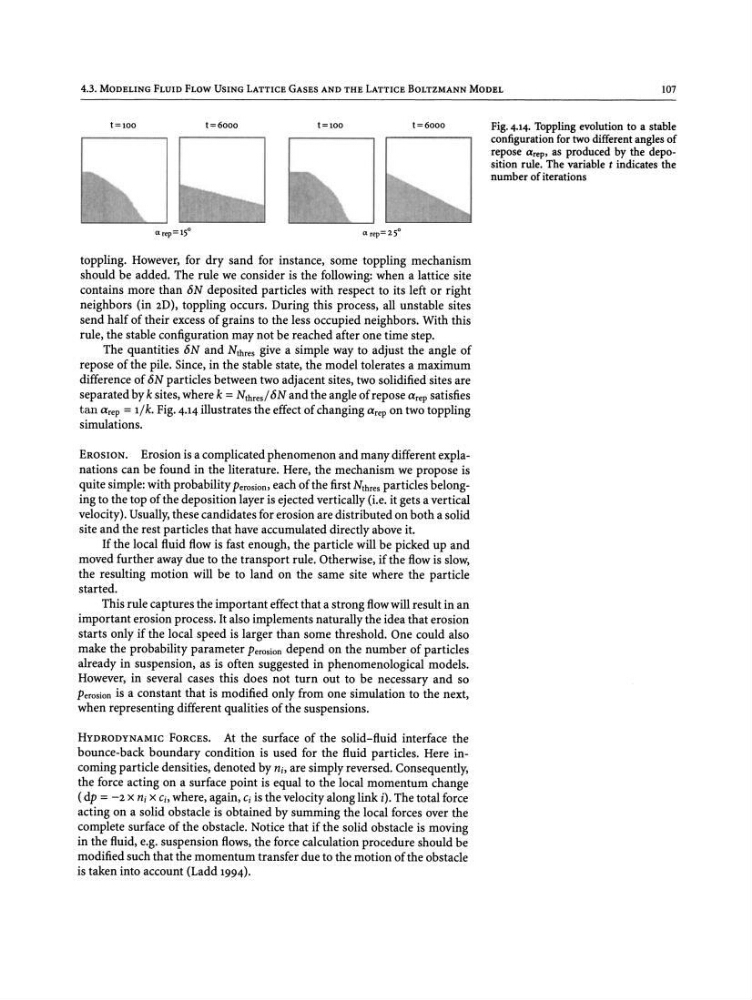
Fig.4.14. Toppling evolution to a stable
configurationfor two differentangles of
repose a rep , as produced by the deposition rule. The variable t indicates the
number of iterations
toppling. However, for dry sand for instance, some toppling mechanism
should be added. The rule we consider is the following: when a lattice site
contains more than fJN deposited particles with respect to its left or right
neighbors (in 2D), toppling occurs. During this process, all unstable sites
send half of their excess of grains to the less occupied neighbors. With this
rule, the stable configuration may not be reached after one time step.
The quantities fJN and Nthres give a simple way to adjust the angle of
repose of the pile. Since, in the stable state, the model tolerates a maximum
difference of fJNparticles between two adjacent sites , two solidified sites are
separated by k sites, where k = Nthresl fJNand the angle of repose a rep satisfies
tan a rep = 11k . Fig. 4 .14 illustrates the effect of changing a rep on two toppling
simulations.
EROSION. Erosion is a complicated phenomenon and many different explanations can be found in the literature. Here, the mechanism we propose is
quite simple: with probability perosion , each of the first Nthres particles belonging to the top of the deposition layer is ejected vertically (i.e, it gets a vertical
velocity). Usually, these candidates for erosion are distributed on both a solid
site and the rest particles that have accumulated directly above it.
If the local fluid flow is fast enough, the particle will be picked up and
moved further away due to the transport rule. Otherwise, if the flow is slow,
the resulting motion will be to land on the same site where the particle
started.
This rule captures the important effect that a strong flow will result in an
important erosion process. It also implements naturally the idea that erosion
starts only if the local speed is larger than some threshold. One could also
make the probability parameter perosion depend on the number of particles
already in suspension, as is often suggested in phenomenological models.
However, in several cases this does not turn out to be necessary and so
p erosion is a constant that is modified only from one simulation to the next,
when representing different qualities of the suspensions.
HYDRODYNAMIC FORCES. At the surface of the solid-fluid interface the
bounce-back boundary condition is used for the fluid particles. Here incoming particle densities, denoted by ni, are simply reversed. Consequently,
the force acting on a surface point is equal to the local momentum change
( dp = -2 X n, x ci, where, again, ci is the velocity along link i). The total force
acting on a solid obstacle is obtained by summing the local forces over the
complete surface of the obstacle. Notice that if the solid obstacle is moving
in the fluid, e.g. suspension flows, the force calculation procedure should be
modified such that the momentum transfer due to the motion of the obstacle
is taken into account (Ladd 1994).
107
1=100
1=6000
1=100
a rep=25°
1=6000
Fig.4.14. Toppling evolution to a stable
configurationfor two differentangles of
repose a rep , as produced by the deposition rule. The variable t indicates the
number of iterations
toppling. However, for dry sand for instance, some toppling mechanism
should be added. The rule we consider is the following: when a lattice site
contains more than fJN deposited particles with respect to its left or right
neighbors (in 2D), toppling occurs. During this process, all unstable sites
send half of their excess of grains to the less occupied neighbors. With this
rule, the stable configuration may not be reached after one time step.
The quantities fJN and Nthres give a simple way to adjust the angle of
repose of the pile. Since, in the stable state, the model tolerates a maximum
difference of fJNparticles between two adjacent sites , two solidified sites are
separated by k sites, where k = Nthresl fJNand the angle of repose a rep satisfies
tan a rep = 11k . Fig. 4 .14 illustrates the effect of changing a rep on two toppling
simulations.
EROSION. Erosion is a complicated phenomenon and many different explanations can be found in the literature. Here, the mechanism we propose is
quite simple: with probability perosion , each of the first Nthres particles belonging to the top of the deposition layer is ejected vertically (i.e, it gets a vertical
velocity). Usually, these candidates for erosion are distributed on both a solid
site and the rest particles that have accumulated directly above it.
If the local fluid flow is fast enough, the particle will be picked up and
moved further away due to the transport rule. Otherwise, if the flow is slow,
the resulting motion will be to land on the same site where the particle
started.
This rule captures the important effect that a strong flow will result in an
important erosion process. It also implements naturally the idea that erosion
starts only if the local speed is larger than some threshold. One could also
make the probability parameter perosion depend on the number of particles
already in suspension, as is often suggested in phenomenological models.
However, in several cases this does not turn out to be necessary and so
p erosion is a constant that is modified only from one simulation to the next,
when representing different qualities of the suspensions.
HYDRODYNAMIC FORCES. At the surface of the solid-fluid interface the
bounce-back boundary condition is used for the fluid particles. Here incoming particle densities, denoted by ni, are simply reversed. Consequently,
the force acting on a surface point is equal to the local momentum change
( dp = -2 X n, x ci, where, again, ci is the velocity along link i). The total force
acting on a solid obstacle is obtained by summing the local forces over the
complete surface of the obstacle. Notice that if the solid obstacle is moving
in the fluid, e.g. suspension flows, the force calculation procedure should be
modified such that the momentum transfer due to the motion of the obstacle
is taken into account (Ladd 1994).