

a)
HO
e)
HO
HO
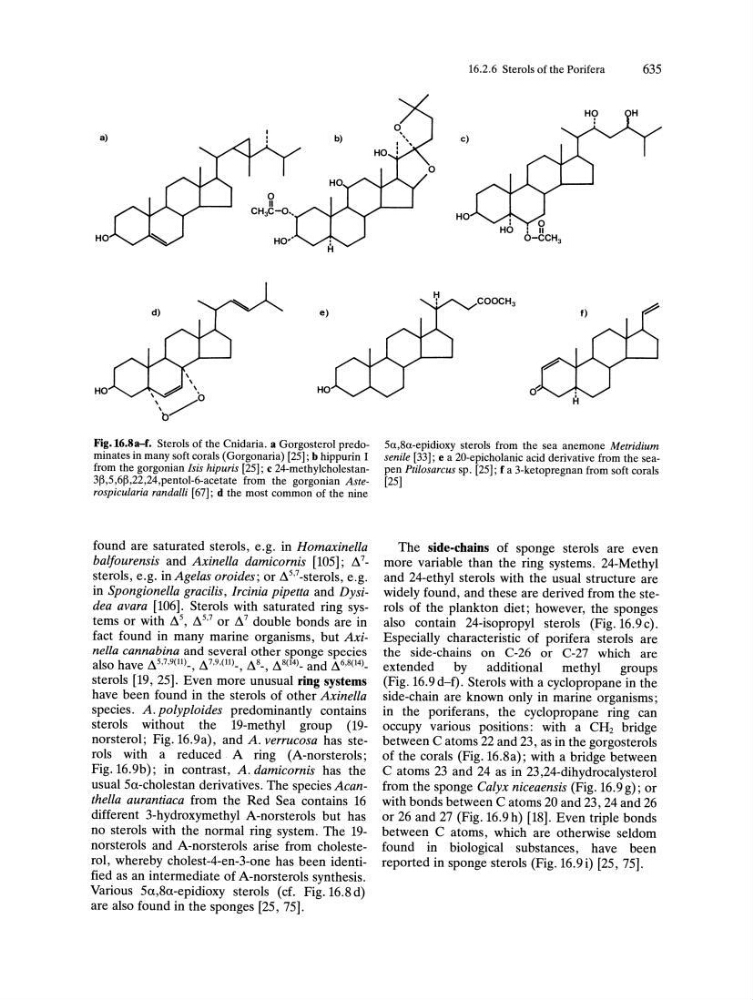
Fig.16.8a-f. Sterols of the Cnidaria. a Gorgosterol predominates in many soft corals (Gorgonaria) [25]; b hippurin I
from the gorgonian Isis hip uris [25]; c 24-methylcholestan3~,5,6~,22,24,pentol-6-acetate from the gorgonian Asterospicu/aria randalli [67]; d the most common of the nine
found are saturated sterols, e.g. in Homaxinella
balfourensis and Axinella damicornis [105]; ,~?sterols, e.g. in Agelas oroides; or i15,7-sterols, e.g.
in Spongionella gracilis, Ircinia pipetta and Dysidea avara [106]. Sterols with saturated ring systems or with i1 5 , i1 5 ,7 or i17 double bonds are in
fact found in many marine organisms, but Axinella cannabina and several other sponge species
also have i15,7,9(1l)_, i17,9,(1l)_, i18_, i18(14)_ and i16,8(14)_
sterols [19, 25]. Even more unusual ring systems
have been found in the sterols of other Axinella
species. A. polyploides predominantly contains
sterols without the 19-methyl group (19norsterol; Fig. 16.9a), and A. verrucosa has sterols with a reduced A ring (A-norsterols;
Fig.16.9b); in contrast, A. damicornis has the
usual 5a-cholestan derivatives. The species Acanthella aurantiaca from the Red Sea contains 16
different 3-hydroxymethyl A-norsterols but has
no sterols with the normal ring system. The 19norsterols and A-norsterols arise from cholesterol, whereby cholest-4-en-3-one has been identified as an intermediate of A-norsterols synthesis.
Various 5a,Sa-epidioxy sterols (ct. Fig. 16.S d)
are also found in the sponges [25, 75].
16.2.6 Sterols of the Porifera
635
c)
HO
5a,8a-epidioxy sterols from the sea anemone Metridium
senile [33]; e a 20-epicholanic acid derivative from the seapen Ptilosarcus sp. [25]; fa 3-ketopregnan from soft corals
[25]
The side-chains of sponge sterols are even
more variable than the ring systems. 24-Methyl
and 24-ethyl sterols with the usual structure are
widely found, and these are derived from the sterols of the plankton diet; however, the sponges
also contain 24-isopropyl sterols (Fig. 16.9c).
Especially characteristic of porifera sterols are
the side-chains on C-26 or C-27 which are
extended by
additional methyl
groups
(Fig. 16.9 d-f). Sterols with a cyclopropane in the
side-chain are known only in marine organisms;
in the poriferans, the cyclopropane ring can
occupy various positions: with a CHz bridge
between C atoms 22 and 23, as in the gorgosterols
of the corals (Fig. 16.Sa); with a bridge between
C atoms 23 and 24 as in 23,24-dihydrocalysterol
from the sponge Calyx niceaensis (Fig. 16.9 g); or
with bonds between C atoms 20 and 23,24 and 26
or 26 and 27 (Fig. 16.9 h) [IS]. Even triple bonds
between C atoms, which are otherwise seldom
found in biological substances, have been
reported in sponge sterols (Fig. 16.9i) [25, 75].
HO
e)
HO
HO
Fig.16.8a-f. Sterols of the Cnidaria. a Gorgosterol predominates in many soft corals (Gorgonaria) [25]; b hippurin I
from the gorgonian Isis hip uris [25]; c 24-methylcholestan3~,5,6~,22,24,pentol-6-acetate from the gorgonian Asterospicu/aria randalli [67]; d the most common of the nine
found are saturated sterols, e.g. in Homaxinella
balfourensis and Axinella damicornis [105]; ,~?sterols, e.g. in Agelas oroides; or i15,7-sterols, e.g.
in Spongionella gracilis, Ircinia pipetta and Dysidea avara [106]. Sterols with saturated ring systems or with i1 5 , i1 5 ,7 or i17 double bonds are in
fact found in many marine organisms, but Axinella cannabina and several other sponge species
also have i15,7,9(1l)_, i17,9,(1l)_, i18_, i18(14)_ and i16,8(14)_
sterols [19, 25]. Even more unusual ring systems
have been found in the sterols of other Axinella
species. A. polyploides predominantly contains
sterols without the 19-methyl group (19norsterol; Fig. 16.9a), and A. verrucosa has sterols with a reduced A ring (A-norsterols;
Fig.16.9b); in contrast, A. damicornis has the
usual 5a-cholestan derivatives. The species Acanthella aurantiaca from the Red Sea contains 16
different 3-hydroxymethyl A-norsterols but has
no sterols with the normal ring system. The 19norsterols and A-norsterols arise from cholesterol, whereby cholest-4-en-3-one has been identified as an intermediate of A-norsterols synthesis.
Various 5a,Sa-epidioxy sterols (ct. Fig. 16.S d)
are also found in the sponges [25, 75].
16.2.6 Sterols of the Porifera
635
c)
HO
5a,8a-epidioxy sterols from the sea anemone Metridium
senile [33]; e a 20-epicholanic acid derivative from the seapen Ptilosarcus sp. [25]; fa 3-ketopregnan from soft corals
[25]
The side-chains of sponge sterols are even
more variable than the ring systems. 24-Methyl
and 24-ethyl sterols with the usual structure are
widely found, and these are derived from the sterols of the plankton diet; however, the sponges
also contain 24-isopropyl sterols (Fig. 16.9c).
Especially characteristic of porifera sterols are
the side-chains on C-26 or C-27 which are
extended by
additional methyl
groups
(Fig. 16.9 d-f). Sterols with a cyclopropane in the
side-chain are known only in marine organisms;
in the poriferans, the cyclopropane ring can
occupy various positions: with a CHz bridge
between C atoms 22 and 23, as in the gorgosterols
of the corals (Fig. 16.Sa); with a bridge between
C atoms 23 and 24 as in 23,24-dihydrocalysterol
from the sponge Calyx niceaensis (Fig. 16.9 g); or
with bonds between C atoms 20 and 23,24 and 26
or 26 and 27 (Fig. 16.9 h) [IS]. Even triple bonds
between C atoms, which are otherwise seldom
found in biological substances, have been
reported in sponge sterols (Fig. 16.9i) [25, 75].