

592
15 Lipids
lipids in species- and group-specific proportions
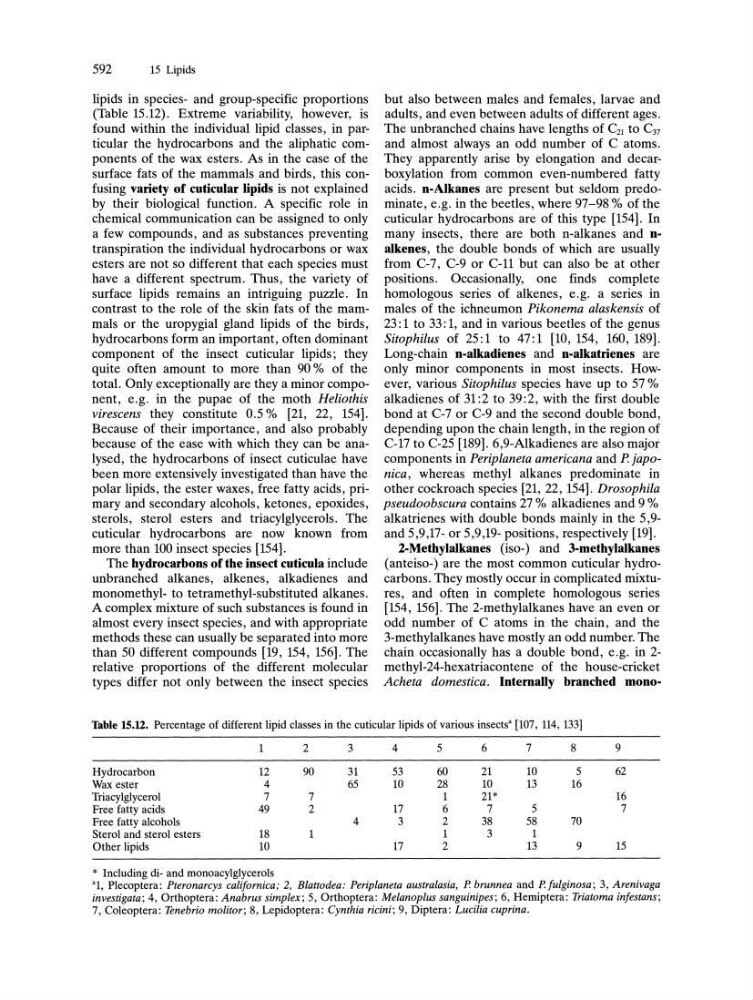
(Table 15.12). Extreme variability, however, is
found within the individual lipid classes, in particular the hydrocarbons and the aliphatic components of the wax esters. As in the case of the
surface fats of the mammals and birds, this confusing variety of cuticular lipids is not explained
by their biological function. A specific role in
chemical communication can be assigned to only
a few compounds, and as substances preventing
transpiration the individual hydrocarbons or wax
esters are not so different that each species must
have a different spectrum. Thus, the variety of
surface lipids remains an intriguing puzzle. In
contrast to the role of the skin fats of the mammals or the uropygial gland lipids of the birds,
hydrocarbons form an important, often dominant
component of the insect cuticular lipids; they
quite often amount to more than 90 % of the
total. Only exceptionally are they a minor component, e.g. in the pupae of the moth Heliothis
virescens they constitute 0.5 % [21, 22, 154].
Because of their importance, and also probably
because of the ease with which they can be analysed, the hydrocarbons of insect cuticulae have
been more extensively investigated than have the
polar lipids, the ester waxes, free fatty acids, primary and secondary alcohols, ketones, epoxides,
sterols, sterol esters and triacylglycerols. The
cuticular hydrocarbons are now known from
more than 100 insect species [154].
The hydrocarbous of the iusect cuticula include
unbranched alkanes, alkenes, alkadienes and
monomethyl- to tetramethyl-substituted alkanes.
A complex mixture of such substances is found in
almost every insect species, and with appropriate
methods these can usually be separated into more
than 50 different compounds [19, 154, 156]. The
relative proportions of the different molecular
types differ not only between the insect species
but also between males and females, larvae and
adults, and even between adults of different ages.
The unbranched chains have lengths of C2l to C37
and almost always an odd number of C atoms.
They apparently arise by elongation and decarboxylation from common even-numbered fatty
acids. u-Alkaues are present but seldom predominate, e.g. in the beetles, where 97-98 % of the
cuticular hydrocarbons are of this type [154]. In
many insects, there are both n-alkanes and ualkenes, the double bonds of which are usually
from C-7, C-9 or C-ll but can also be at other
positlOns. Occasionally, one finds complete
homologous series of alkenes, e.g. a series in
males of the ichneumon Pikonema alas kens is of
23: 1 to 33: 1, and in various beetles of the genus
Sitophilus of 25:1 to 47:1 [10,154, 160,189].
Long-chain n-alkadienes and n-alkatrienes are
only minor components in most insects. However, various Sitophilus species have up to 57 %
alkadienes of 31:2 to 39:2, with the first double
bond at C-7 or C-9 and the second double bond,
depending upon the chain length, in the region of
C-17 to C-25 [189]. 6,9-Alkadienes are also major
components in Periplaneta americana and P. japonica, whereas methyl alkanes predominate in
other cockroach species [21, 22, 154]. Drosophila
pseudoobscura contains 27 % alkadienes and 9 %
alkatrienes with double bonds mainly in the 5,9and 5,9,17- or 5,9,19- positions, respectively [19].
2-Methylalkanes (iso-) and 3-methylalkanes
(anteiso-) are the most common cuticular hydrocarbons. They mostly occur in complicated mixtures, and often in complete homologous series
[154, 156]. The 2-methylalkanes have an even or
odd number of C atoms in the chain, and the
3-methylalkanes have mostly an odd number. The
chain occasionally has a double bond, e.g. in 2methyl-24-hexatriacontene of the house-cricket
Acheta domestica. Internally branched monoTable 15.12. Percentage of different lipid classes in the cuticular lipids of various insects a [107, 114, 133]
1
2
3
4
5
6
7
8
9
Hydrocarbon
12
90
31
53
60
21
10
5
62
Wax ester
4
65
10
28
10
13
16
Triacylglycerol
7
7
1
21*
16
Free fatty acids
49
2
17
6
7
5
7
Free fatty alcohols
4
3
2
38
58
70
Sterol and sterol esters
18
1
1
3
1
Other lipids
10
17
2
13
9
15
* Including di- and monoacylglycerols
aI, Plecoptera: Pteronarcys californica; 2, Blattodea: Periplaneta australasia, P. brunnea and P.fulginosa; 3, Arenivaga
investigata; 4, Orthoptera: Anabrus simplex; 5, Orthoptera: Melanoplus sanguinipes; 6, Hemiptera: Triatoma infestans;
7, Coleoptera: Tenebrio molitor; 8, Lepidoptera: Cynthia ricini; 9, Diptera: Lucilia cuprina.