

552
14 Glycolysis
SUCCina~SUCCinYI-COA _
Methylmalonyl-CoA
(
J E _ B i o t i n . : [ c o ,
CoA
ADP +Pi
E-Biotin-CO,
proPiona~ Propionyl-CoA
ATP
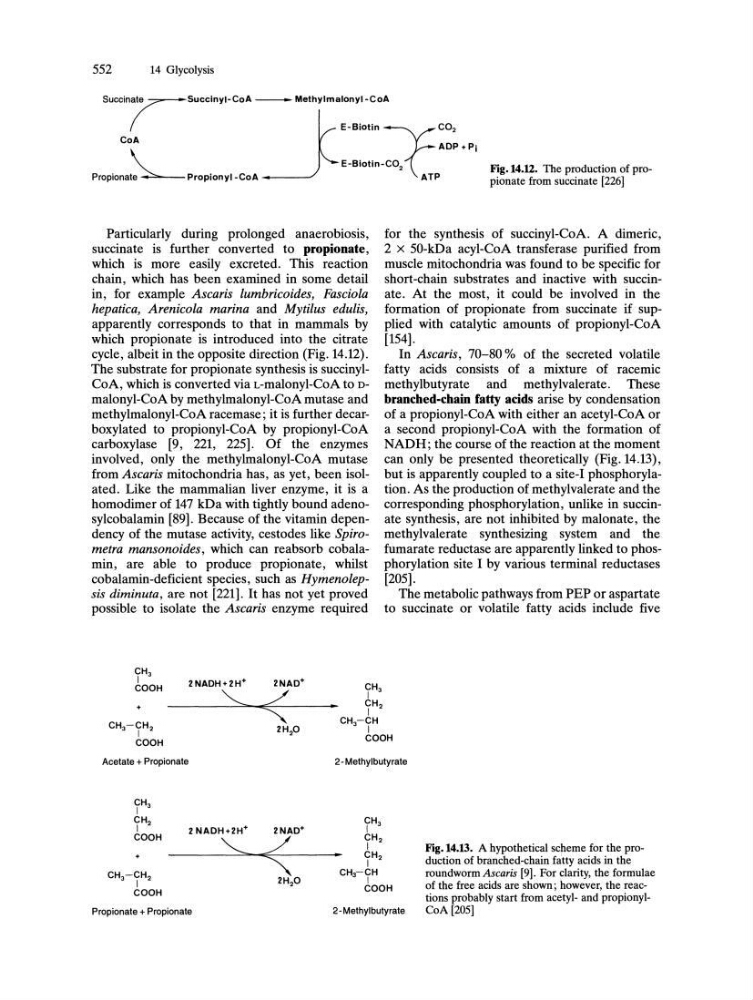
Fig.14.12. The production of propionate from succinate [226]
Particularly during prolonged anaerobiosis,
succinate is further converted to propionate,
which is more easily excreted. This reaction
chain, which has been examined in some detail
in, for example Ascaris lumbricoides, Fasciola
hepatica, Arenicola marina and Mytilus edulis,
apparently corresponds to that in mammals by
which propionate is introduced into the citrate
cycle, albeit in the opposite direction (Fig. 14.12).
The substrate for propionate synthesis is succinylCoA, which is converted via L-malonyl-CoA to Dmalonyl-CoA by methylmalonyl-CoA mutase and
methylmalonyl-CoA racemase; it is further de carboxylated to propionyl-CoA by propionyl-CoA
carboxylase [9, 221, 225]. Of the enzymes
involved, only the methylmalonyl-CoA mutase
from Ascaris mitochondria has, as yet, been isolated. Like the mammalian liver enzyme, it is a
homodimer of 147 kDa with tightly bound adenosylcobalamin [89]. Because of the vitamin dependency of the mutase activity, cestodes like Spirometra mansonoides, which can reabsorb cobalamin, are able to produce propionate, whilst
cobalamin-deficient species, such as Hymenolepsis diminuta, are not [221]. It has not yet proved
possible to isolate the Ascaris enzyme required
CH3
I
2 NADH+2H+
2NAD+
COOH
CH3
""- «
I
+
CH,
I
CH3 -CH,
CH3-CH
I
for the synthesis of succinyl-CoA. A dimeric,
2 x 50-kDa acyl-CoA transferase purified from
muscle mitochondria was found to be specific for
short-chain substrates and inactive with succinate. At the most, it could be involved in the
formation of propionate from succinate if supplied with catalytic amounts of propionyl-CoA
[154].
In Ascaris, 70-80 % of the secreted volatile
fatty acids consists of a mixture of racemic
methylbutyrate and methylvalerate. These
branched-chain fatty acids arise by condensation
of a propionyl-CoA with either an acetyl-CoA or
a second propionyl-CoA with the formation of
NADH; the course ofthe reaction at the moment
can only be presented theoretically (Fig. 14.13),
but is apparently coupled to a site-I phosphorylation. As the production of methylvalerate and the
corresponding phosphorylation, unlike in succinate synthesis, are not inhibited by malonate, the
methylvalerate synthesizing system and the
fumarate reductase are apparently linked to phosphorylation site I by various terminal reductases
[205].
The metabolic pathways from PEP or aspartate
to succinate or volatile fatty acids include five
2H,D
I
COOH
COOH
Acetate + Propionate
2 - Methylbutyrate
CH3
I
CH,
CH3
I
2 NADH+2H+
2NAD+
I
COOH
"'<
CH,
I
Fig.14.13. A hypothetical scheme for the pro+
CH,
duction of branched-chain fatty acids in the
I
CH3 -CH,
CH3-CH
roundworm Ascaris [9]. For clarity, the formulae
I
2H,O
I
of the free acids are shown; however, the reacCOOH
COOH
tions probably start from acetyl- and propionylPropionate + Propionate
2 - Methylbutyrate
CoA [205]