

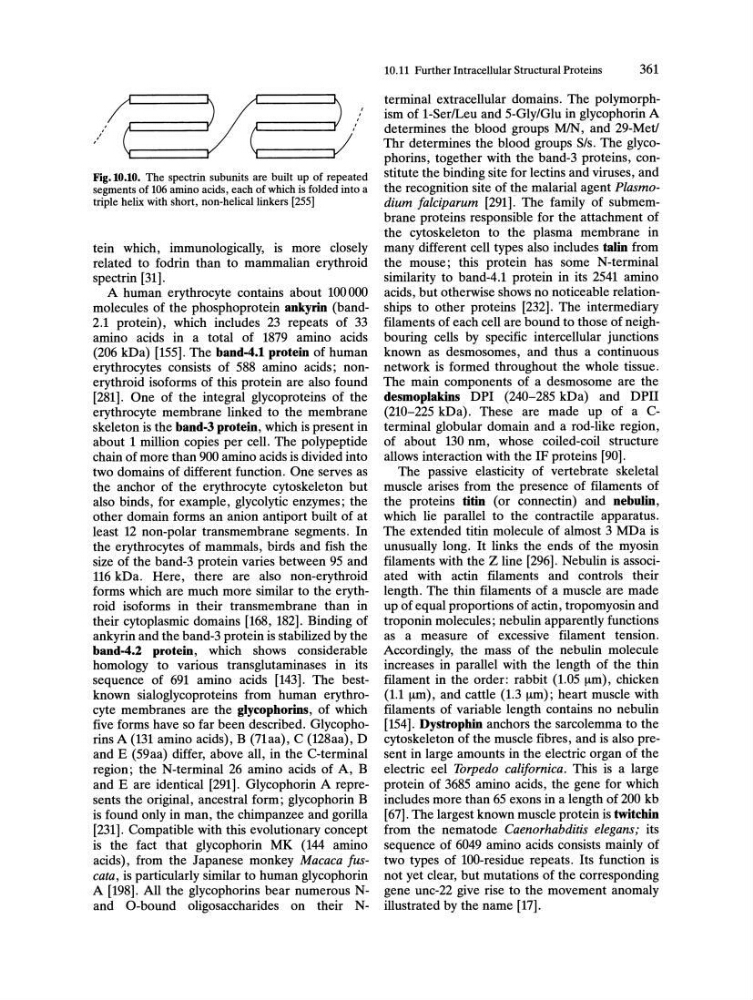
Fig.10.10. The spectrin subunits are built up of repeated
segments of 106 amino acids, each of which is folded into a
triple helix with short, non-helical linkers [255]
tein which, immunologically, is more closely
related to fodrin than to mammalian erythroid
spectrin [31].
A human erythrocyte contains about 100000
molecules of the phosphoprotein ankyrin (band2.1 protein), which includes 23 repeats of 33
amino acids in a total of 1879 amino acids
(206 kDa) [155]. The band-4.1 protein of human
erythrocytes consists of 588 amino acids; nonerythroid isoforms of this protein are also found
[281]. One of the integral glycoproteins of the
erythrocyte membrane linked to the membrane
skeleton is the band-3 protein, which is present in
about 1 million copies per cell. The polypeptide
chain of more than 900 amino acids is divided into
two domains of different function. One serves as
the anchor of the erythrocyte cytoskeleton but
also binds, for example, glycolytic enzymes; the
other domain forms an anion antiport built of at
least 12 non-polar transmembrane segments. In
the erythrocytes of mammals, birds and fish the
size of the band-3 protein varies between 95 and
116 kDa. Here, there are also non-erythroid
forms which are much more similar to the erythroid isoforms in their transmembrane than in
their cytoplasmic domains [168, 182]. Binding of
ankyrin and the band-3 protein is stabilized by the
band-4.2 protein, which shows considerable
homology to various transglutaminases in its
sequence of 691 amino acids [143]. The bestknown sialoglycoproteins from human erythrocyte membranes are the glycophorins, of which
five forms have so far been described. Glycophorins A (131 amino acids), B (71aa), C (128aa), D
and E (59aa) differ, above all, in the C-terminal
region; the N-terminal 26 amino acids of A, B
and E are identical [291]. Glycophorin A represents the original, ancestral form; glycophorin B
is found only in man, the chimpanzee and gorilla
[231]. Compatible with this evolutionary concept
is the fact that glycophorin MK (144 amino
acids), from the Japanese monkey Macaca fuscata, is particularly similar to human glycophorin
A [198]. All the glycophorins bear numerous Nand O-bound oligo saccharides on their N10.11 Further Intracellular Structural Proteins
361
terminal extracellular domains. The polymorphism of 1-Ser/Leu and 5-Gly/Glu in glycophorin A
determines the blood groups MIN, and 29-Metl
Thr determines the blood groups Sis. The glycophorins, together with the band-3 proteins, constitute the binding site for lectins and viruses, and
the recognition site of the malarial agent Plasmodium falciparum [291]. The family of submembrane proteins responsible for the attachment of
the cytoskeleton to the plasma membrane in
many different cell types also includes talin from
the mouse; this protein has some N-terminal
similarity to band-4.1 protein in its 2541 amino
acids, but otherwise shows no noticeable relationships to other proteins [232]. The intermediary
filaments of each cell are bound to those of neighbouring cells by specific intercellular junctions
known as desmosomes, and thus a continuous
network is formed throughout the whole tissue.
The main components of a desmosome are the
desmoplakins DPI (240-285 kDa) and DPII
(210-225 kDa). These are made up of a Cterminal globular domain and a rod-like region,
of about 130 nm, whose coiled-coil structure
allows interaction with the IF proteins [90].
The passive elasticity of vertebrate skeletal
muscle arises from the presence of filaments of
the proteins titin (or connectin) and nebulin,
which lie parallel to the contractile apparatus.
The extended titin molecule of almost 3 MDa is
unusually long. It links the ends of the myosin
filaments with the Z line [296]. Nebulin is associated with actin filaments and controls their
length. The thin filaments of a muscle are made
up of equal proportions of actin, tropomyosin and
troponin molecules; nebulin apparently functions
as a measure of excessive filament tension.
Accordingly, the mass of the nebulin molecule
increases in parallel with the length of the thin
filament in the order: rabbit (1.05 !lm), chicken
(1.1 !lm), and cattle (1.3 !lm); heart muscle with
filaments of variable length contains no nebulin
[154]. Dystrophin anchors the sarcolemma to the
cytoskeleton of the muscle fibres, and is also present in large amounts in the electric organ of the
electric eel Torpedo californica. This is a large
protein of 3685 amino acids, the gene for which
includes more than 65 exons in a length of 200 kb
[67]. The largest known muscle protein is twitchin
from the nematode Caenorhabditis elegans; its
sequence of 6049 amino acids consists mainly of
two types of 100-residue repeats. Its function is
not yet clear, but mutations of the corresponding
gene unc-22 give rise to the movement anomaly
illustrated by the name [17].
segments of 106 amino acids, each of which is folded into a
triple helix with short, non-helical linkers [255]
tein which, immunologically, is more closely
related to fodrin than to mammalian erythroid
spectrin [31].
A human erythrocyte contains about 100000
molecules of the phosphoprotein ankyrin (band2.1 protein), which includes 23 repeats of 33
amino acids in a total of 1879 amino acids
(206 kDa) [155]. The band-4.1 protein of human
erythrocytes consists of 588 amino acids; nonerythroid isoforms of this protein are also found
[281]. One of the integral glycoproteins of the
erythrocyte membrane linked to the membrane
skeleton is the band-3 protein, which is present in
about 1 million copies per cell. The polypeptide
chain of more than 900 amino acids is divided into
two domains of different function. One serves as
the anchor of the erythrocyte cytoskeleton but
also binds, for example, glycolytic enzymes; the
other domain forms an anion antiport built of at
least 12 non-polar transmembrane segments. In
the erythrocytes of mammals, birds and fish the
size of the band-3 protein varies between 95 and
116 kDa. Here, there are also non-erythroid
forms which are much more similar to the erythroid isoforms in their transmembrane than in
their cytoplasmic domains [168, 182]. Binding of
ankyrin and the band-3 protein is stabilized by the
band-4.2 protein, which shows considerable
homology to various transglutaminases in its
sequence of 691 amino acids [143]. The bestknown sialoglycoproteins from human erythrocyte membranes are the glycophorins, of which
five forms have so far been described. Glycophorins A (131 amino acids), B (71aa), C (128aa), D
and E (59aa) differ, above all, in the C-terminal
region; the N-terminal 26 amino acids of A, B
and E are identical [291]. Glycophorin A represents the original, ancestral form; glycophorin B
is found only in man, the chimpanzee and gorilla
[231]. Compatible with this evolutionary concept
is the fact that glycophorin MK (144 amino
acids), from the Japanese monkey Macaca fuscata, is particularly similar to human glycophorin
A [198]. All the glycophorins bear numerous Nand O-bound oligo saccharides on their N10.11 Further Intracellular Structural Proteins
361
terminal extracellular domains. The polymorphism of 1-Ser/Leu and 5-Gly/Glu in glycophorin A
determines the blood groups MIN, and 29-Metl
Thr determines the blood groups Sis. The glycophorins, together with the band-3 proteins, constitute the binding site for lectins and viruses, and
the recognition site of the malarial agent Plasmodium falciparum [291]. The family of submembrane proteins responsible for the attachment of
the cytoskeleton to the plasma membrane in
many different cell types also includes talin from
the mouse; this protein has some N-terminal
similarity to band-4.1 protein in its 2541 amino
acids, but otherwise shows no noticeable relationships to other proteins [232]. The intermediary
filaments of each cell are bound to those of neighbouring cells by specific intercellular junctions
known as desmosomes, and thus a continuous
network is formed throughout the whole tissue.
The main components of a desmosome are the
desmoplakins DPI (240-285 kDa) and DPII
(210-225 kDa). These are made up of a Cterminal globular domain and a rod-like region,
of about 130 nm, whose coiled-coil structure
allows interaction with the IF proteins [90].
The passive elasticity of vertebrate skeletal
muscle arises from the presence of filaments of
the proteins titin (or connectin) and nebulin,
which lie parallel to the contractile apparatus.
The extended titin molecule of almost 3 MDa is
unusually long. It links the ends of the myosin
filaments with the Z line [296]. Nebulin is associated with actin filaments and controls their
length. The thin filaments of a muscle are made
up of equal proportions of actin, tropomyosin and
troponin molecules; nebulin apparently functions
as a measure of excessive filament tension.
Accordingly, the mass of the nebulin molecule
increases in parallel with the length of the thin
filament in the order: rabbit (1.05 !lm), chicken
(1.1 !lm), and cattle (1.3 !lm); heart muscle with
filaments of variable length contains no nebulin
[154]. Dystrophin anchors the sarcolemma to the
cytoskeleton of the muscle fibres, and is also present in large amounts in the electric organ of the
electric eel Torpedo californica. This is a large
protein of 3685 amino acids, the gene for which
includes more than 65 exons in a length of 200 kb
[67]. The largest known muscle protein is twitchin
from the nematode Caenorhabditis elegans; its
sequence of 6049 amino acids consists mainly of
two types of 100-residue repeats. Its function is
not yet clear, but mutations of the corresponding
gene unc-22 give rise to the movement anomaly
illustrated by the name [17].