

7.1.1 The Structure of Haemoglobin
251
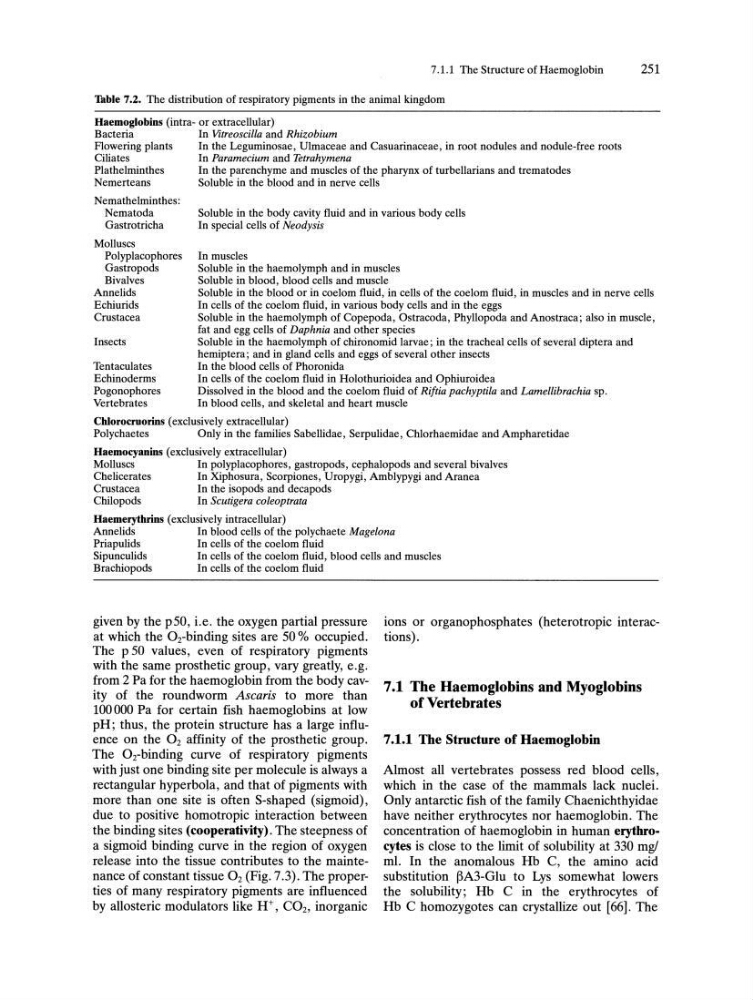
Table 7.2. The distribution of respiratory pigments in the animal kingdom
Haemoglobins (intra- or extracellular)
Bacteria
In Vitreoscilla and Rhizobium
Flowering plants
In the Leguminosae, Ulmaceae and Casuarinaceae, in root nodules and nodule-free roots
Ciliates
In Paramecium and Tetrahymena
Plathelminthes
In the parenchyme and muscles of the pharynx of turbellarians and trematodes
Nemerteans
Soluble in the blood and in nerve cells
Nemathelminthes:
Nematoda
Gastrotricha
Soluble in the body cavity fluid and in various body cells
In special cells of Neodysis
In muscles
Molluscs
Polyplacophores
Gastropods
Bivalves
Soluble in the haemolymph and in muscles
Soluble in blood, blood cells and muscle
Annelids
Echiurids
Crustacea
Soluble in the blood or in coelom fluid, in cells of the coelom fluid, in muscles and in nerve cells
In cells of the coelom fluid, in various body cells and in the eggs
Soluble in the haemolymph of Copepoda, Ostracoda, Phyllopoda and Anostraca; also in muscle,
fat and egg cells of Daphnia and other species
Insects
Soluble in the haemolymph of chironomid larvae; in the tracheal cells of several diptera and
hemiptera; and in gland cells and eggs of several other insects
In the blood cells of Phoronida
Tentaculates
Echinoderms
Pogonophores
Vertebrates
In cells of the coelom fluid in Holothurioidea and Ophiuroidea
Dissolved in the blood and the coelom fluid of Riftia pachyptila and Lamellibrachia sp.
In blood cells, and skeletal and heart muscle
Chlorocmorins (exclusively extracellular)
Polychaetes
Only in the families Sabellidae, Serpulidae, Chlorhaemidae and Ampharetidae
Haemocyanins (exclusively extracellular)
Molluscs
In polyplacophores, gastropods, cephalopods and several bivalves
Chelicerates
In Xiphosura, Scorpiones, Uropygi, Amblypygi and Aranea
Crustacea
In the isopods and decapods
Chilopods
In Scutigera coleoptrata
Haemerythrins (exclusively intracellular)
Annelids
In blood cells of the polychaete Magelona
Priapulids
In cells of the coelom fluid
Sipunculids
In cells of the coelom fluid, blood cells and muscles
Brachiopods
In cells of the coelom fluid
given by the p50, i.e. the oxygen partial pressure
at which the Orbinding sites are 50 % occupied.
The p 50 values, even of respiratory pigments
with the same prosthetic group, vary greatly, e.g.
from 2 Pa for the haemoglobin from the body cavity of the roundworm Ascaris to more than
100000 Pa for certain fish haemoglobins at low
pH; thus, the protein structure has a large influence on the O2 affinity of the prosthetic group.
The Orbinding curve of respiratory pigments
with just one binding site per molecule is always a
rectangular hyperbola, and that of pigments with
more than one site is often S-shaped (sigmoid),
due to positive homotropic interaction between
the binding sites (cooperativity). The steepness of
a sigmoid binding curve in the region of oxygen
release into the tissue contributes to the maintenance of constant tissue O2 (Fig. 7.3). The properties of many respiratory pigments are influenced
by allosteric modulators like H+, CO2, inorganic
ions or organophosphates (heterotropic interactions).
7.1 The Haemoglobins and Myoglobins
of Vertebrates
7.1.1 The Structure of Haemoglobin
Almost all vertebrates possess red blood cells,
which in the case of the mammals lack nuclei.
Only antarctic fish of the family Chaenichthyidae
have neither erythrocytes nor haemoglobin. The
concentration of haemoglobin in human erythrocytes is close to the limit of solubility at 330 mgt
ml. In the anomalous Hb C, the amino acid
substitution ~A3-Glu to Lys somewhat lowers
the solubility; Hb C in the erythrocytes of
Hb C homozygotes can crystallize out [66]. The
251
Table 7.2. The distribution of respiratory pigments in the animal kingdom
Haemoglobins (intra- or extracellular)
Bacteria
In Vitreoscilla and Rhizobium
Flowering plants
In the Leguminosae, Ulmaceae and Casuarinaceae, in root nodules and nodule-free roots
Ciliates
In Paramecium and Tetrahymena
Plathelminthes
In the parenchyme and muscles of the pharynx of turbellarians and trematodes
Nemerteans
Soluble in the blood and in nerve cells
Nemathelminthes:
Nematoda
Gastrotricha
Soluble in the body cavity fluid and in various body cells
In special cells of Neodysis
In muscles
Molluscs
Polyplacophores
Gastropods
Bivalves
Soluble in the haemolymph and in muscles
Soluble in blood, blood cells and muscle
Annelids
Echiurids
Crustacea
Soluble in the blood or in coelom fluid, in cells of the coelom fluid, in muscles and in nerve cells
In cells of the coelom fluid, in various body cells and in the eggs
Soluble in the haemolymph of Copepoda, Ostracoda, Phyllopoda and Anostraca; also in muscle,
fat and egg cells of Daphnia and other species
Insects
Soluble in the haemolymph of chironomid larvae; in the tracheal cells of several diptera and
hemiptera; and in gland cells and eggs of several other insects
In the blood cells of Phoronida
Tentaculates
Echinoderms
Pogonophores
Vertebrates
In cells of the coelom fluid in Holothurioidea and Ophiuroidea
Dissolved in the blood and the coelom fluid of Riftia pachyptila and Lamellibrachia sp.
In blood cells, and skeletal and heart muscle
Chlorocmorins (exclusively extracellular)
Polychaetes
Only in the families Sabellidae, Serpulidae, Chlorhaemidae and Ampharetidae
Haemocyanins (exclusively extracellular)
Molluscs
In polyplacophores, gastropods, cephalopods and several bivalves
Chelicerates
In Xiphosura, Scorpiones, Uropygi, Amblypygi and Aranea
Crustacea
In the isopods and decapods
Chilopods
In Scutigera coleoptrata
Haemerythrins (exclusively intracellular)
Annelids
In blood cells of the polychaete Magelona
Priapulids
In cells of the coelom fluid
Sipunculids
In cells of the coelom fluid, blood cells and muscles
Brachiopods
In cells of the coelom fluid
given by the p50, i.e. the oxygen partial pressure
at which the Orbinding sites are 50 % occupied.
The p 50 values, even of respiratory pigments
with the same prosthetic group, vary greatly, e.g.
from 2 Pa for the haemoglobin from the body cavity of the roundworm Ascaris to more than
100000 Pa for certain fish haemoglobins at low
pH; thus, the protein structure has a large influence on the O2 affinity of the prosthetic group.
The Orbinding curve of respiratory pigments
with just one binding site per molecule is always a
rectangular hyperbola, and that of pigments with
more than one site is often S-shaped (sigmoid),
due to positive homotropic interaction between
the binding sites (cooperativity). The steepness of
a sigmoid binding curve in the region of oxygen
release into the tissue contributes to the maintenance of constant tissue O2 (Fig. 7.3). The properties of many respiratory pigments are influenced
by allosteric modulators like H+, CO2, inorganic
ions or organophosphates (heterotropic interactions).
7.1 The Haemoglobins and Myoglobins
of Vertebrates
7.1.1 The Structure of Haemoglobin
Almost all vertebrates possess red blood cells,
which in the case of the mammals lack nuclei.
Only antarctic fish of the family Chaenichthyidae
have neither erythrocytes nor haemoglobin. The
concentration of haemoglobin in human erythrocytes is close to the limit of solubility at 330 mgt
ml. In the anomalous Hb C, the amino acid
substitution ~A3-Glu to Lys somewhat lowers
the solubility; Hb C in the erythrocytes of
Hb C homozygotes can crystallize out [66]. The