

222
6 Immunoproteins
IgM
Cytoplasm
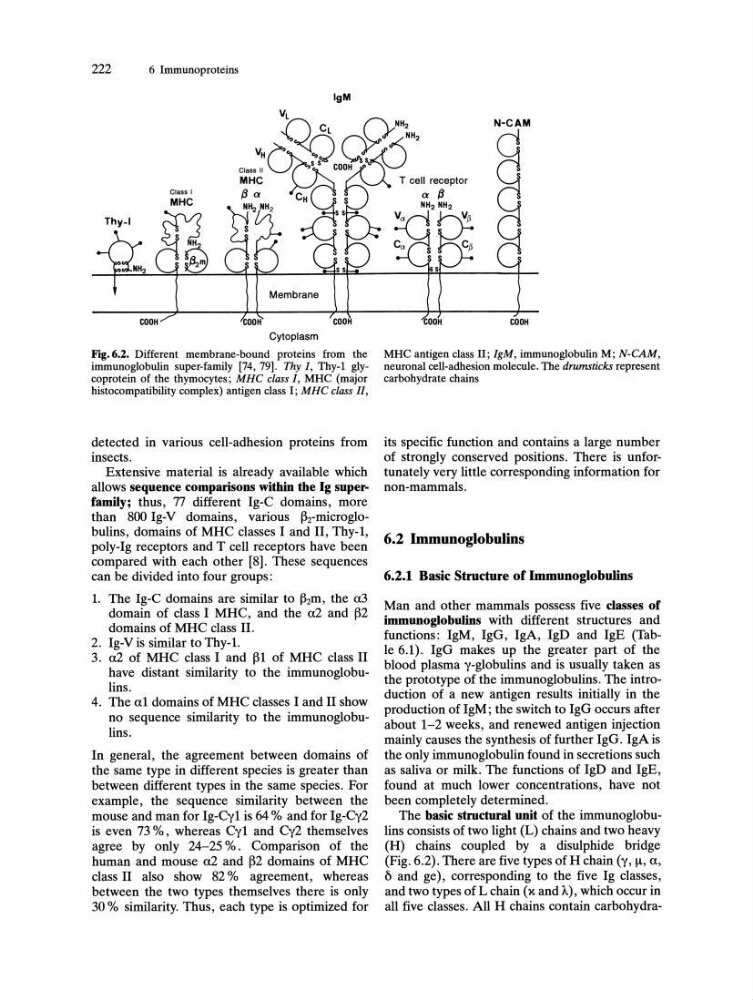
Fig.6.2. Different membrane-bound proteins from the
immunoglobulin super-family [74, 79]. Thy 1, Thy-l glycoprotein of the thymocytes; MHC class 1, MHC (major
histocompatibility complex) antigen class I; MHC class II,
detected in various cell-adhesion proteins from
insects.
Extensive material is already available which
allows sequence comparisons within the Ig superfamily; thus, 77 different Ig-C domains, more
than 8001g-V domains, various ~2-microglobulins, domains of MHC classes I and II, Thy-l,
poly-Ig receptors and T cell receptors have been
compared with each other [8]. These sequences
can be divided into four groups:
1. The Ig-C domains are similar to 132m, the a3
domain of class I MHC, and the a2 and ~2
domains of MHC class II.
2. Ig-V is similar to Thy-i.
3. a2 of MHC class I and ~1 of MHC class II
have distant similarity to the immunoglobulins.
4. The al domains of MHC classes I and II show
no sequence similarity to the immunoglobulins.
In general, the agreement between domains of
the same type in different species is greater than
between different types in the same species. For
example, the sequence similarity between the
mouse and man for Ig-Cyl is 64 % and for Ig-Cy2
is even 73 %, whereas Cyl and Cy2 themselves
agree by only 24-25 %. Comparison of the
human and mouse a2 and ~2 domains of MHC
class II also show 82 % agreement, whereas
between the two types themselves there is only
30 % similarity. Thus, each type is optimized for
MHC antigen class II; IgM, immunoglobulin M; N-CAM,
neuronal cell-adhesion molecule. The drumsticks represent
carbohydrate chains
its specific function and contains a large number
of strongly conserved positions. There is unfortunately very little corresponding information for
non-mammals.
6.2 Immunoglobulins
6.2.1 Basic Structure of Immunoglobulins
Man and other mammals possess five classes of
immunoglobulins with different structures and
functions: IgM, IgG, IgA, IgD and IgE (Table 6.1). IgG makes up the greater part of the
blood plasma y-globulins and is usually taken as
the prototype of the immunoglobulins. The introduction of a new antigen results initially in the
production of IgM; the switch to IgG occurs after
about 1-2 weeks, and renewed antigen injection
mainly causes the synthesis of further IgG. IgA is
the only immunoglobulin found in secretions such
as saliva or milk. The functions of IgD and IgE,
found at much lower concentrations, have not
been completely determined.
The basic structural unit of the immunoglobulins consists of two light (L) chains and two heavy
(H) chains coupled by a disulphide bridge
(Fig. 6.2). There are five types of H chain (y, It, a,
(' ) and ge), corresponding to the five Ig classes,
and two types of L chain (% and A), which occur in
all five classes. All H chains contain carbohydra-
6 Immunoproteins
IgM
Cytoplasm
Fig.6.2. Different membrane-bound proteins from the
immunoglobulin super-family [74, 79]. Thy 1, Thy-l glycoprotein of the thymocytes; MHC class 1, MHC (major
histocompatibility complex) antigen class I; MHC class II,
detected in various cell-adhesion proteins from
insects.
Extensive material is already available which
allows sequence comparisons within the Ig superfamily; thus, 77 different Ig-C domains, more
than 8001g-V domains, various ~2-microglobulins, domains of MHC classes I and II, Thy-l,
poly-Ig receptors and T cell receptors have been
compared with each other [8]. These sequences
can be divided into four groups:
1. The Ig-C domains are similar to 132m, the a3
domain of class I MHC, and the a2 and ~2
domains of MHC class II.
2. Ig-V is similar to Thy-i.
3. a2 of MHC class I and ~1 of MHC class II
have distant similarity to the immunoglobulins.
4. The al domains of MHC classes I and II show
no sequence similarity to the immunoglobulins.
In general, the agreement between domains of
the same type in different species is greater than
between different types in the same species. For
example, the sequence similarity between the
mouse and man for Ig-Cyl is 64 % and for Ig-Cy2
is even 73 %, whereas Cyl and Cy2 themselves
agree by only 24-25 %. Comparison of the
human and mouse a2 and ~2 domains of MHC
class II also show 82 % agreement, whereas
between the two types themselves there is only
30 % similarity. Thus, each type is optimized for
MHC antigen class II; IgM, immunoglobulin M; N-CAM,
neuronal cell-adhesion molecule. The drumsticks represent
carbohydrate chains
its specific function and contains a large number
of strongly conserved positions. There is unfortunately very little corresponding information for
non-mammals.
6.2 Immunoglobulins
6.2.1 Basic Structure of Immunoglobulins
Man and other mammals possess five classes of
immunoglobulins with different structures and
functions: IgM, IgG, IgA, IgD and IgE (Table 6.1). IgG makes up the greater part of the
blood plasma y-globulins and is usually taken as
the prototype of the immunoglobulins. The introduction of a new antigen results initially in the
production of IgM; the switch to IgG occurs after
about 1-2 weeks, and renewed antigen injection
mainly causes the synthesis of further IgG. IgA is
the only immunoglobulin found in secretions such
as saliva or milk. The functions of IgD and IgE,
found at much lower concentrations, have not
been completely determined.
The basic structural unit of the immunoglobulins consists of two light (L) chains and two heavy
(H) chains coupled by a disulphide bridge
(Fig. 6.2). There are five types of H chain (y, It, a,
(' ) and ge), corresponding to the five Ig classes,
and two types of L chain (% and A), which occur in
all five classes. All H chains contain carbohydra-