

88
3 The Structural Variety and Metabolism of Proteins
the ER membrane and the proteases responsible
for processing of hormone precursors and proenzymes recognize the pre- and pro-sequences of
their substrates. In proteins with short half-lives
«2 h), one or more sequences, which do not
appear in more persistent proteins, may be found
that are rich in proline, glutamic acid, serine and
threonine. The assumption that these are specific
proteolysis signals goes under the name of the
"PEST hypothesis", after the one letter symbols
of these four amino acids (see Appendix) [230].
Oxidation by mixed-function oxygenases, de amidation, phosphorylation and the oxidation of
SH- groups also act as signals for proteolysis. Finally, the quaternary structure of cell proteins
plays a role in their susceptibility, e.g. the free
globin chains in reticulocytes are more easily
cleaved than is the complete tetrameric haemoglobin; certain complement factors are only activated by proteolysis when in the complexed form
[212,258].
The best-known recognition signal for extralysosomal proteolysis is conjugation with ubiquitin.
This small polypeptide, with a length of 76 amino
acids, was discovered in chromatin in 1977 as a
constituent of a variant histone H2A (p. 33). As
the name suggests, ubiquitin has been detected in
all investigated eukaryotes and bacteria. Free
ubiquitin is an a/~ protein with an a-helix of 3.5
turns and a ~-sheet structure of four strands. Ubiquitin is an extremely conserved protein; the
sequence in mammals, fish and insects is identical
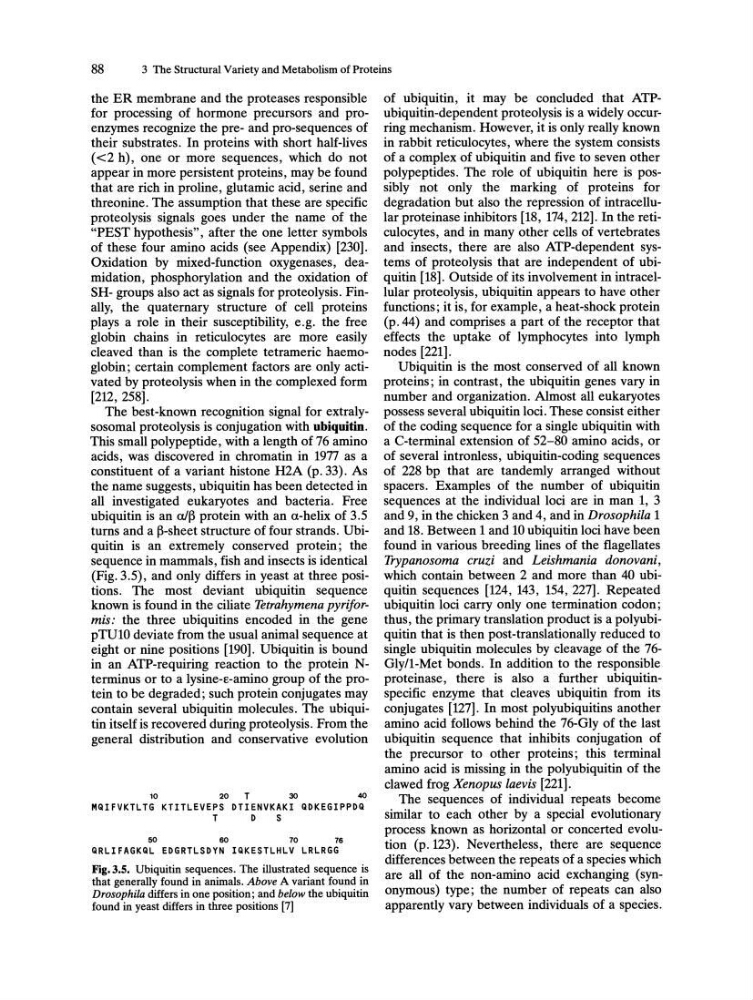
(Fig. 3.5), and only differs in yeast at three positions. The most deviant ubiquitin sequence
known is found in the ciliate Tetrahymena pyriformis: the three ubiquitins encoded in the gene
pTUI0 deviate from the usual animal sequence at
eight or nine positions [190]. Ubiquitin is bound
in an ATP-requiring reaction to the protein Nterminus or to a lysine-E-amino group of the protein to be degraded; such protein conjugates may
contain several ubiquitin molecules. The ubiquitin itself is recovered during proteolysis. From the
general distribution and conservative evolution
10
2 0 T
30
40
MQIFVKTLTG KTITLEVEPS DTIENVKAKI QDKEGIPPDQ
T
D
S
50
60
70
76
QRLIFAGKQL EDGRTLSDYN IQKESTLHLV LRLRGG
Fig.3.5. Ubiquitin sequences. The illustrated sequence is
that generally found in animals. Above A variant found in
Drosophila differs in one position; and below the ubiquitin
found in yeast differs in three positions [7]
of ubiquitin, it may be concluded that ATPubiquitin-dependent proteolysis is a widely occurring mechanism. However, it is only really known
in rabbit reticulocytes, where the system consists
of a complex of ubiquitin and five to seven other
polypeptides. The role of ubiquitin here is possibly not only the marking of proteins for
degradation but also the repression of intracellular proteinase inhibitors [18, 174,212). In the reticulocytes, and in many other cells of vertebrates
and insects, there are also ATP-dependent systems of proteolysis that are independent of ubiquitin [18]. Outside of its involvement in intracellular proteolysis, ubiquitin appears to have other
functions; it is, for example, a heat-shock protein
(p.44) and comprises a part of the receptor that
effects the uptake of lymphocytes into lymph
nodes [221).
Ubiquitin is the most conserved of all known
proteins; in contrast, the ubiquitin genes vary in
number and organization. Almost all eukaryotes
possess several ubiquitin loci. These consist either
of the coding sequence for a single ubiquitin with
a C-terminal extension of 52-80 amino acids, or
of several intronless, ubiquitin-coding sequences
of 228 bp that are tandemly arranged without
spacers. Examples of the number of ubiquitin
sequences at the individual loci are in man 1, 3
and 9, in the chicken 3 and 4, and in Drosophila 1
and 18. Between 1 and 10 ubiquitin loci have been
found in various breeding lines of the flagellates
Trypanosoma cruzi and Leishmania donovani,
which contain between 2 and more than 40 ubiquitin sequences [124, 143, 154,227]. Repeated
ubiquitin loci carry only one termination codon;
thus, the primary translation product is a polyubiquitin that is then post-translationally reduced to
single ubiquitin molecules by cleavage of the 76Glyl1-Met bonds. In addition to the responsible
proteinase, there is also a further ubiquitinspecific enzyme that cleaves ubiquitin from its
conjugates [127]. In most polyubiquitins another
amino acid follows behind the 76-Gly of the last
ubiquitin sequence that inhibits conjugation of
the precursor to other proteins; this terminal
amino acid is missing in the polyubiquitin of the
clawed frog Xenopus laevis [221].
The sequences of individual repeats become
similar to each other by a special evolutionary
process known as horizontal or concerted evolution (p.123). Nevertheless, there are sequence
differences between the repeats of a species which
are all of the non-amino acid exchanging (synonymous) type; the number of repeats can also
apparently vary between individuals of a species.
3 The Structural Variety and Metabolism of Proteins
the ER membrane and the proteases responsible
for processing of hormone precursors and proenzymes recognize the pre- and pro-sequences of
their substrates. In proteins with short half-lives
«2 h), one or more sequences, which do not
appear in more persistent proteins, may be found
that are rich in proline, glutamic acid, serine and
threonine. The assumption that these are specific
proteolysis signals goes under the name of the
"PEST hypothesis", after the one letter symbols
of these four amino acids (see Appendix) [230].
Oxidation by mixed-function oxygenases, de amidation, phosphorylation and the oxidation of
SH- groups also act as signals for proteolysis. Finally, the quaternary structure of cell proteins
plays a role in their susceptibility, e.g. the free
globin chains in reticulocytes are more easily
cleaved than is the complete tetrameric haemoglobin; certain complement factors are only activated by proteolysis when in the complexed form
[212,258].
The best-known recognition signal for extralysosomal proteolysis is conjugation with ubiquitin.
This small polypeptide, with a length of 76 amino
acids, was discovered in chromatin in 1977 as a
constituent of a variant histone H2A (p. 33). As
the name suggests, ubiquitin has been detected in
all investigated eukaryotes and bacteria. Free
ubiquitin is an a/~ protein with an a-helix of 3.5
turns and a ~-sheet structure of four strands. Ubiquitin is an extremely conserved protein; the
sequence in mammals, fish and insects is identical
(Fig. 3.5), and only differs in yeast at three positions. The most deviant ubiquitin sequence
known is found in the ciliate Tetrahymena pyriformis: the three ubiquitins encoded in the gene
pTUI0 deviate from the usual animal sequence at
eight or nine positions [190]. Ubiquitin is bound
in an ATP-requiring reaction to the protein Nterminus or to a lysine-E-amino group of the protein to be degraded; such protein conjugates may
contain several ubiquitin molecules. The ubiquitin itself is recovered during proteolysis. From the
general distribution and conservative evolution
10
2 0 T
30
40
MQIFVKTLTG KTITLEVEPS DTIENVKAKI QDKEGIPPDQ
T
D
S
50
60
70
76
QRLIFAGKQL EDGRTLSDYN IQKESTLHLV LRLRGG
Fig.3.5. Ubiquitin sequences. The illustrated sequence is
that generally found in animals. Above A variant found in
Drosophila differs in one position; and below the ubiquitin
found in yeast differs in three positions [7]
of ubiquitin, it may be concluded that ATPubiquitin-dependent proteolysis is a widely occurring mechanism. However, it is only really known
in rabbit reticulocytes, where the system consists
of a complex of ubiquitin and five to seven other
polypeptides. The role of ubiquitin here is possibly not only the marking of proteins for
degradation but also the repression of intracellular proteinase inhibitors [18, 174,212). In the reticulocytes, and in many other cells of vertebrates
and insects, there are also ATP-dependent systems of proteolysis that are independent of ubiquitin [18]. Outside of its involvement in intracellular proteolysis, ubiquitin appears to have other
functions; it is, for example, a heat-shock protein
(p.44) and comprises a part of the receptor that
effects the uptake of lymphocytes into lymph
nodes [221).
Ubiquitin is the most conserved of all known
proteins; in contrast, the ubiquitin genes vary in
number and organization. Almost all eukaryotes
possess several ubiquitin loci. These consist either
of the coding sequence for a single ubiquitin with
a C-terminal extension of 52-80 amino acids, or
of several intronless, ubiquitin-coding sequences
of 228 bp that are tandemly arranged without
spacers. Examples of the number of ubiquitin
sequences at the individual loci are in man 1, 3
and 9, in the chicken 3 and 4, and in Drosophila 1
and 18. Between 1 and 10 ubiquitin loci have been
found in various breeding lines of the flagellates
Trypanosoma cruzi and Leishmania donovani,
which contain between 2 and more than 40 ubiquitin sequences [124, 143, 154,227]. Repeated
ubiquitin loci carry only one termination codon;
thus, the primary translation product is a polyubiquitin that is then post-translationally reduced to
single ubiquitin molecules by cleavage of the 76Glyl1-Met bonds. In addition to the responsible
proteinase, there is also a further ubiquitinspecific enzyme that cleaves ubiquitin from its
conjugates [127]. In most polyubiquitins another
amino acid follows behind the 76-Gly of the last
ubiquitin sequence that inhibits conjugation of
the precursor to other proteins; this terminal
amino acid is missing in the polyubiquitin of the
clawed frog Xenopus laevis [221].
The sequences of individual repeats become
similar to each other by a special evolutionary
process known as horizontal or concerted evolution (p.123). Nevertheless, there are sequence
differences between the repeats of a species which
are all of the non-amino acid exchanging (synonymous) type; the number of repeats can also
apparently vary between individuals of a species.