

284
S. Gobert et al.
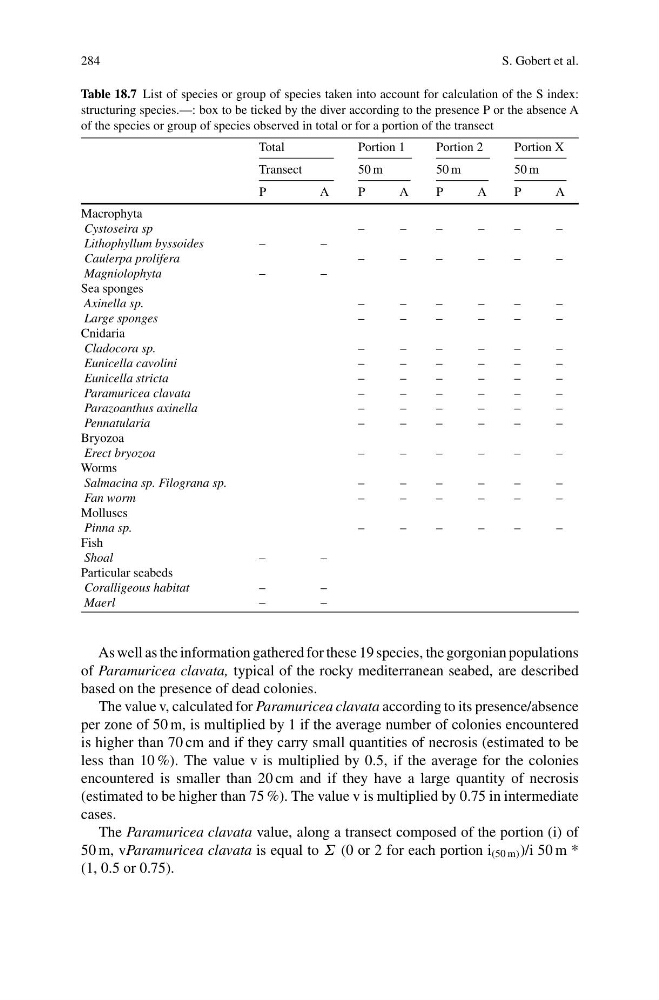
Table 18.7 List of species or group of species taken into account for calculation of the S index:
structuring species.—: box to be ticked by the diver according to the presence P or the absence A
of the species or group of species observed in total or for a portion of the transect
Total
Portion 1
Portion 2
Portion X
Transect
50 m
50 m
50 m
P
A
P
A
P
A
P
A
Macrophyta
Cystoseira sp
–
–
–
–
–
–
Lithophyllum byssoides
–
–
Caulerpa prolifera
–
–
–
–
–
–
Magniolophyta
–
–
Sea sponges
Axinella sp.
–
–
–
–
–
–
Large sponges
–
–
–
–
–
–
Cnidaria
Cladocora sp.
–
–
–
–
–
–
Eunicella cavolini
–
–
–
–
–
–
Eunicella stricta
–
–
–
–
–
–
Paramuricea clavata
–
–
–
–
–
–
Parazoanthus axinella
–
–
–
–
–
–
Pennatularia
–
–
–
–
–
–
Bryozoa
Erect bryozoa
–
–
–
–
–
–
Worms
Salmacina sp. Filograna sp.
–
–
–
–
–
–
Fan worm
–
–
–
–
–
–
Molluscs
Pinna sp.
–
–
–
–
–
–
Fish
Shoal
–
–
Particular seabeds
Coralligeous habitat
–
–
Maerl
–
–
As well as the information gathered for these 19 species, the gorgonian populations
of Paramuricea clavata, typical of the rocky mediterranean seabed, are described
based on the presence of dead colonies.
The value v, calculated for Paramuricea clavata according to its presence/absence
per zone of 50 m, is multiplied by 1 if the average number of colonies encountered
is higher than 70 cm and if they carry small quantities of necrosis (estimated to be
less than 10 %). The value v is multiplied by 0.5, if the average for the colonies
encountered is smaller than 20 cm and if they have a large quantity of necrosis
(estimated to be higher than 75 %). The value v is multiplied by 0.75 in intermediate
cases.
The Paramuricea clavata value, along a transect composed of the portion (i) of
50 m, vParamuricea clavata is equal to Σ (0 or 2 for each portion i (50 m) )/i 50 m *
(1, 0.5 or 0.75).
S. Gobert et al.
Table 18.7 List of species or group of species taken into account for calculation of the S index:
structuring species.—: box to be ticked by the diver according to the presence P or the absence A
of the species or group of species observed in total or for a portion of the transect
Total
Portion 1
Portion 2
Portion X
Transect
50 m
50 m
50 m
P
A
P
A
P
A
P
A
Macrophyta
Cystoseira sp
–
–
–
–
–
–
Lithophyllum byssoides
–
–
Caulerpa prolifera
–
–
–
–
–
–
Magniolophyta
–
–
Sea sponges
Axinella sp.
–
–
–
–
–
–
Large sponges
–
–
–
–
–
–
Cnidaria
Cladocora sp.
–
–
–
–
–
–
Eunicella cavolini
–
–
–
–
–
–
Eunicella stricta
–
–
–
–
–
–
Paramuricea clavata
–
–
–
–
–
–
Parazoanthus axinella
–
–
–
–
–
–
Pennatularia
–
–
–
–
–
–
Bryozoa
Erect bryozoa
–
–
–
–
–
–
Worms
Salmacina sp. Filograna sp.
–
–
–
–
–
–
Fan worm
–
–
–
–
–
–
Molluscs
Pinna sp.
–
–
–
–
–
–
Fish
Shoal
–
–
Particular seabeds
Coralligeous habitat
–
–
Maerl
–
–
As well as the information gathered for these 19 species, the gorgonian populations
of Paramuricea clavata, typical of the rocky mediterranean seabed, are described
based on the presence of dead colonies.
The value v, calculated for Paramuricea clavata according to its presence/absence
per zone of 50 m, is multiplied by 1 if the average number of colonies encountered
is higher than 70 cm and if they carry small quantities of necrosis (estimated to be
less than 10 %). The value v is multiplied by 0.5, if the average for the colonies
encountered is smaller than 20 cm and if they have a large quantity of necrosis
(estimated to be higher than 75 %). The value v is multiplied by 0.75 in intermediate
cases.
The Paramuricea clavata value, along a transect composed of the portion (i) of
50 m, vParamuricea clavata is equal to Σ (0 or 2 for each portion i (50 m) )/i 50 m *
(1, 0.5 or 0.75).