

Chapter 22 Predation in Seagrass Beds
543
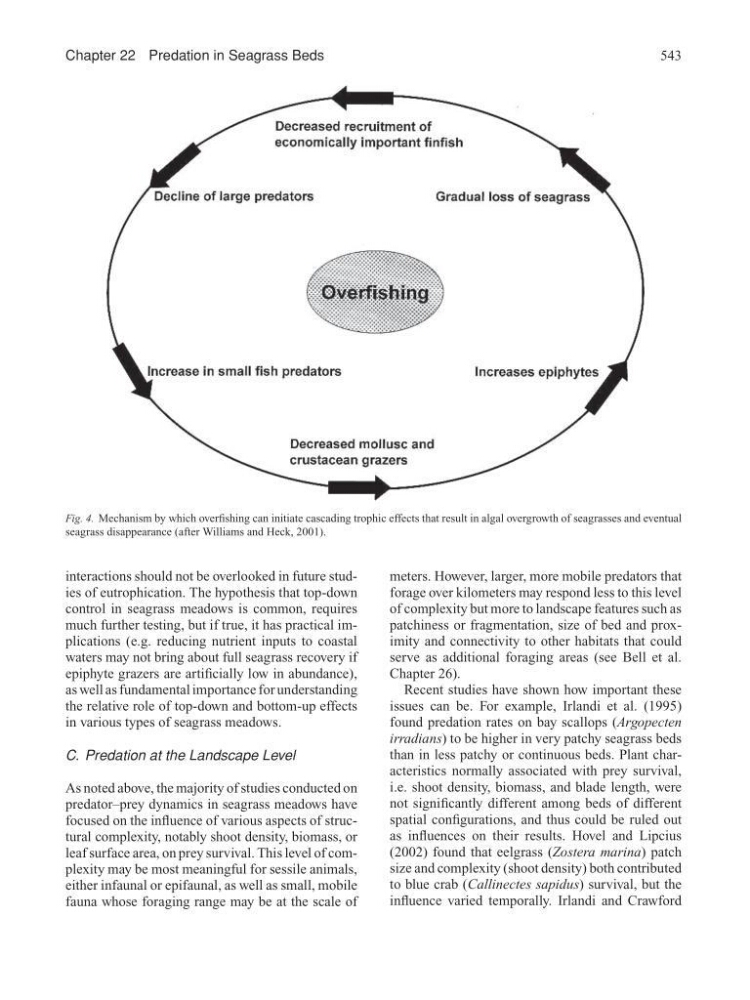
Fig. 4. Mechanism by which overfishing can initiate cascading trophic effects that result in algal overgrowth of seagrasses and eventual
seagrass disappearance (after Williams and Heck, 2001).
interactions should not be overlooked in future studies of eutrophication. The hypothesis that top-down
control in seagrass meadows is common, requires
much further testing, but if true, it has practical implications (e.g. reducing nutrient inputs to coastal
waters may not bring about full seagrass recovery if
epiphyte grazers are artificially low in abundance),
as well as fundamental importance for understanding
the relative role of top-down and bottom-up effects
in various types of seagrass meadows.
C. Predation at the Landscape Level
As noted above, the majority of studies conducted on
predator–prey dynamics in seagrass meadows have
focused on the influence of various aspects of structural complexity, notably shoot density, biomass, or
leaf surface area, on prey survival. This level of complexity may be most meaningful for sessile animals,
either infaunal or epifaunal, as well as small, mobile
fauna whose foraging range may be at the scale of
meters. However, larger, more mobile predators that
forage over kilometers may respond less to this level
of complexity but more to landscape features such as
patchiness or fragmentation, size of bed and proximity and connectivity to other habitats that could
serve as additional foraging areas (see Bell et al.
Chapter 26).
Recent studies have shown how important these
issues can be. For example, Irlandi et al. (1995)
found predation rates on bay scallops (Argopecten
irradians) to be higher in very patchy seagrass beds
than in less patchy or continuous beds. Plant characteristics normally associated with prey survival,
i.e. shoot density, biomass, and blade length, were
not significantly different among beds of different
spatial configurations, and thus could be ruled out
as influences on their results. Hovel and Lipcius
(2002) found that eelgrass (Zostera marina) patch
size and complexity (shoot density) both contributed
to blue crab (Callinectes sapidus) survival, but the
influence varied temporally. Irlandi and Crawford
543
Fig. 4. Mechanism by which overfishing can initiate cascading trophic effects that result in algal overgrowth of seagrasses and eventual
seagrass disappearance (after Williams and Heck, 2001).
interactions should not be overlooked in future studies of eutrophication. The hypothesis that top-down
control in seagrass meadows is common, requires
much further testing, but if true, it has practical implications (e.g. reducing nutrient inputs to coastal
waters may not bring about full seagrass recovery if
epiphyte grazers are artificially low in abundance),
as well as fundamental importance for understanding
the relative role of top-down and bottom-up effects
in various types of seagrass meadows.
C. Predation at the Landscape Level
As noted above, the majority of studies conducted on
predator–prey dynamics in seagrass meadows have
focused on the influence of various aspects of structural complexity, notably shoot density, biomass, or
leaf surface area, on prey survival. This level of complexity may be most meaningful for sessile animals,
either infaunal or epifaunal, as well as small, mobile
fauna whose foraging range may be at the scale of
meters. However, larger, more mobile predators that
forage over kilometers may respond less to this level
of complexity but more to landscape features such as
patchiness or fragmentation, size of bed and proximity and connectivity to other habitats that could
serve as additional foraging areas (see Bell et al.
Chapter 26).
Recent studies have shown how important these
issues can be. For example, Irlandi et al. (1995)
found predation rates on bay scallops (Argopecten
irradians) to be higher in very patchy seagrass beds
than in less patchy or continuous beds. Plant characteristics normally associated with prey survival,
i.e. shoot density, biomass, and blade length, were
not significantly different among beds of different
spatial configurations, and thus could be ruled out
as influences on their results. Hovel and Lipcius
(2002) found that eelgrass (Zostera marina) patch
size and complexity (shoot density) both contributed
to blue crab (Callinectes sapidus) survival, but the
influence varied temporally. Irlandi and Crawford