

544
K. L. Heck and R. J. Orth
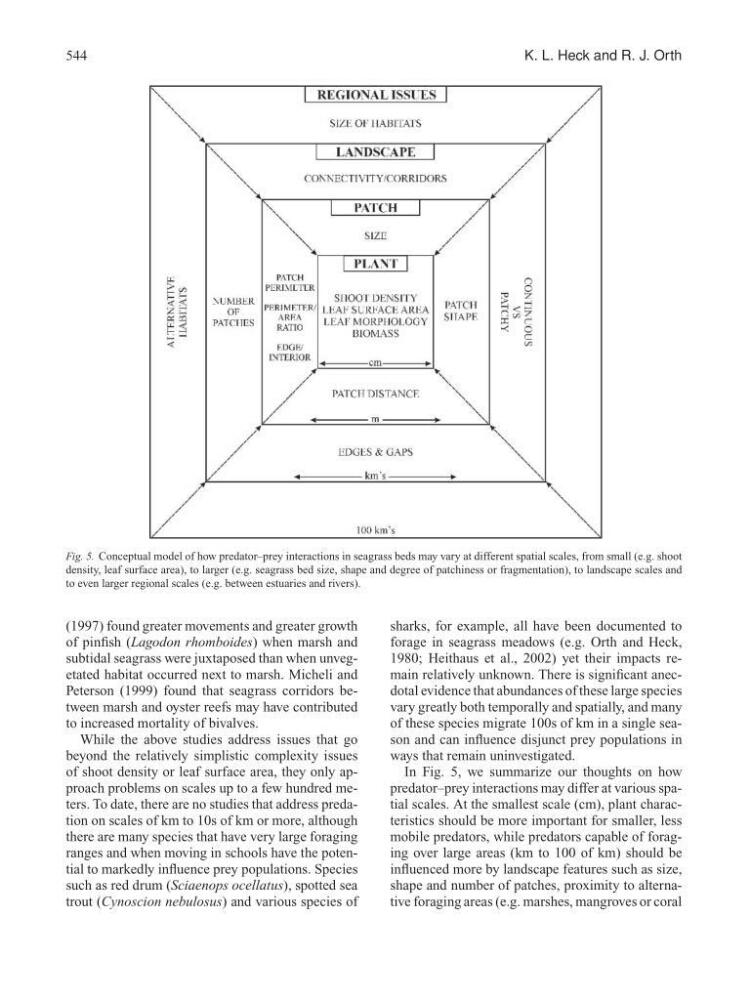
Fig. 5. Conceptual model of how predator–prey interactions in seagrass beds may vary at different spatial scales, from small (e.g. shoot
density, leaf surface area), to larger (e.g. seagrass bed size, shape and degree of patchiness or fragmentation), to landscape scales and
to even larger regional scales (e.g. between estuaries and rivers).
(1997) found greater movements and greater growth
of pinfish (Lagodon rhomboides) when marsh and
subtidal seagrass were juxtaposed than when unvegetated habitat occurred next to marsh. Micheli and
Peterson (1999) found that seagrass corridors between marsh and oyster reefs may have contributed
to increased mortality of bivalves.
While the above studies address issues that go
beyond the relatively simplistic complexity issues
of shoot density or leaf surface area, they only approach problems on scales up to a few hundred meters. To date, there are no studies that address predation on scales of km to 10s of km or more, although
there are many species that have very large foraging
ranges and when moving in schools have the potential to markedly influence prey populations. Species
such as red drum (Sciaenops ocellatus), spotted sea
trout (Cynoscion nebulosus) and various species of
sharks, for example, all have been documented to
forage in seagrass meadows (e.g. Orth and Heck,
1980; Heithaus et al., 2002) yet their impacts remain relatively unknown. There is significant anecdotal evidence that abundances of these large species
vary greatly both temporally and spatially, and many
of these species migrate 100s of km in a single season and can influence disjunct prey populations in
ways that remain uninvestigated.
In Fig. 5, we summarize our thoughts on how
predator–prey interactions may differ at various spatial scales. At the smallest scale (cm), plant characteristics should be more important for smaller, less
mobile predators, while predators capable of foraging over large areas (km to 100 of km) should be
influenced more by landscape features such as size,
shape and number of patches, proximity to alternative foraging areas (e.g. marshes, mangroves or coral
K. L. Heck and R. J. Orth
Fig. 5. Conceptual model of how predator–prey interactions in seagrass beds may vary at different spatial scales, from small (e.g. shoot
density, leaf surface area), to larger (e.g. seagrass bed size, shape and degree of patchiness or fragmentation), to landscape scales and
to even larger regional scales (e.g. between estuaries and rivers).
(1997) found greater movements and greater growth
of pinfish (Lagodon rhomboides) when marsh and
subtidal seagrass were juxtaposed than when unvegetated habitat occurred next to marsh. Micheli and
Peterson (1999) found that seagrass corridors between marsh and oyster reefs may have contributed
to increased mortality of bivalves.
While the above studies address issues that go
beyond the relatively simplistic complexity issues
of shoot density or leaf surface area, they only approach problems on scales up to a few hundred meters. To date, there are no studies that address predation on scales of km to 10s of km or more, although
there are many species that have very large foraging
ranges and when moving in schools have the potential to markedly influence prey populations. Species
such as red drum (Sciaenops ocellatus), spotted sea
trout (Cynoscion nebulosus) and various species of
sharks, for example, all have been documented to
forage in seagrass meadows (e.g. Orth and Heck,
1980; Heithaus et al., 2002) yet their impacts remain relatively unknown. There is significant anecdotal evidence that abundances of these large species
vary greatly both temporally and spatially, and many
of these species migrate 100s of km in a single season and can influence disjunct prey populations in
ways that remain uninvestigated.
In Fig. 5, we summarize our thoughts on how
predator–prey interactions may differ at various spatial scales. At the smallest scale (cm), plant characteristics should be more important for smaller, less
mobile predators, while predators capable of foraging over large areas (km to 100 of km) should be
influenced more by landscape features such as size,
shape and number of patches, proximity to alternative foraging areas (e.g. marshes, mangroves or coral