

542
K. L. Heck and R. J. Orth
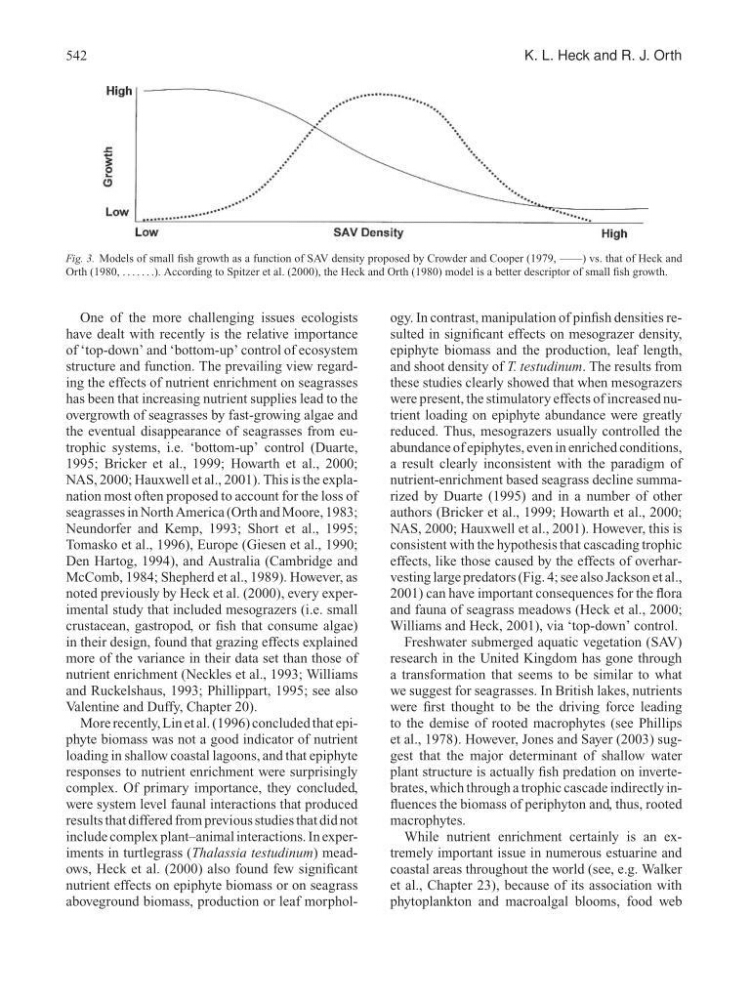
Fig. 3. Models of small fish growth as a function of SAV density proposed by Crowder and Cooper (1979, ——) vs. that of Heck and
Orth (1980, . . . . . . .). According to Spitzer et al. (2000), the Heck and Orth (1980) model is a better descriptor of small fish growth.
One of the more challenging issues ecologists
have dealt with recently is the relative importance
of ‘top-down’ and ‘bottom-up’ control of ecosystem
structure and function. The prevailing view regarding the effects of nutrient enrichment on seagrasses
has been that increasing nutrient supplies lead to the
overgrowth of seagrasses by fast-growing algae and
the eventual disappearance of seagrasses from eutrophic systems, i.e. ‘bottom-up’ control (Duarte,
1995; Bricker et al., 1999; Howarth et al., 2000;
NAS, 2000; Hauxwell et al., 2001). This is the explanation most often proposed to account for the loss of
seagrasses in North America (Orth and Moore, 1983;
Neundorfer and Kemp, 1993; Short et al., 1995;
Tomasko et al., 1996), Europe (Giesen et al., 1990;
Den Hartog, 1994), and Australia (Cambridge and
McComb, 1984; Shepherd et al., 1989). However, as
noted previously by Heck et al. (2000), every experimental study that included mesograzers (i.e. small
crustacean, gastropod, or fish that consume algae)
in their design, found that grazing effects explained
more of the variance in their data set than those of
nutrient enrichment (Neckles et al., 1993; Williams
and Ruckelshaus, 1993; Phillippart, 1995; see also
Valentine and Duffy, Chapter 20).
More recently, Lin et al. (1996) concluded that epiphyte biomass was not a good indicator of nutrient
loading in shallow coastal lagoons, and that epiphyte
responses to nutrient enrichment were surprisingly
complex. Of primary importance, they concluded,
were system level faunal interactions that produced
results that differed from previous studies that did not
include complex plant–animal interactions. In experiments in turtlegrass (Thalassia testudinum) meadows, Heck et al. (2000) also found few significant
nutrient effects on epiphyte biomass or on seagrass
aboveground biomass, production or leaf morphology. In contrast, manipulation of pinfish densities resulted in significant effects on mesograzer density,
epiphyte biomass and the production, leaf length,
and shoot density of T. testudinum. The results from
these studies clearly showed that when mesograzers
were present, the stimulatory effects of increased nutrient loading on epiphyte abundance were greatly
reduced. Thus, mesograzers usually controlled the
abundance of epiphytes, even in enriched conditions,
a result clearly inconsistent with the paradigm of
nutrient-enrichment based seagrass decline summarized by Duarte (1995) and in a number of other
authors (Bricker et al., 1999; Howarth et al., 2000;
NAS, 2000; Hauxwell et al., 2001). However, this is
consistent with the hypothesis that cascading trophic
effects, like those caused by the effects of overharvesting large predators (Fig. 4; see also Jackson et al.,
2001) can have important consequences for the flora
and fauna of seagrass meadows (Heck et al., 2000;
Williams and Heck, 2001), via ‘top-down’ control.
Freshwater submerged aquatic vegetation (SAV)
research in the United Kingdom has gone through
a transformation that seems to be similar to what
we suggest for seagrasses. In British lakes, nutrients
were first thought to be the driving force leading
to the demise of rooted macrophytes (see Phillips
et al., 1978). However, Jones and Sayer (2003) suggest that the major determinant of shallow water
plant structure is actually fish predation on invertebrates, which through a trophic cascade indirectly influences the biomass of periphyton and, thus, rooted
macrophytes.
While nutrient enrichment certainly is an extremely important issue in numerous estuarine and
coastal areas throughout the world (see, e.g. Walker
et al., Chapter 23), because of its association with
phytoplankton and macroalgal blooms, food web
K. L. Heck and R. J. Orth
Fig. 3. Models of small fish growth as a function of SAV density proposed by Crowder and Cooper (1979, ——) vs. that of Heck and
Orth (1980, . . . . . . .). According to Spitzer et al. (2000), the Heck and Orth (1980) model is a better descriptor of small fish growth.
One of the more challenging issues ecologists
have dealt with recently is the relative importance
of ‘top-down’ and ‘bottom-up’ control of ecosystem
structure and function. The prevailing view regarding the effects of nutrient enrichment on seagrasses
has been that increasing nutrient supplies lead to the
overgrowth of seagrasses by fast-growing algae and
the eventual disappearance of seagrasses from eutrophic systems, i.e. ‘bottom-up’ control (Duarte,
1995; Bricker et al., 1999; Howarth et al., 2000;
NAS, 2000; Hauxwell et al., 2001). This is the explanation most often proposed to account for the loss of
seagrasses in North America (Orth and Moore, 1983;
Neundorfer and Kemp, 1993; Short et al., 1995;
Tomasko et al., 1996), Europe (Giesen et al., 1990;
Den Hartog, 1994), and Australia (Cambridge and
McComb, 1984; Shepherd et al., 1989). However, as
noted previously by Heck et al. (2000), every experimental study that included mesograzers (i.e. small
crustacean, gastropod, or fish that consume algae)
in their design, found that grazing effects explained
more of the variance in their data set than those of
nutrient enrichment (Neckles et al., 1993; Williams
and Ruckelshaus, 1993; Phillippart, 1995; see also
Valentine and Duffy, Chapter 20).
More recently, Lin et al. (1996) concluded that epiphyte biomass was not a good indicator of nutrient
loading in shallow coastal lagoons, and that epiphyte
responses to nutrient enrichment were surprisingly
complex. Of primary importance, they concluded,
were system level faunal interactions that produced
results that differed from previous studies that did not
include complex plant–animal interactions. In experiments in turtlegrass (Thalassia testudinum) meadows, Heck et al. (2000) also found few significant
nutrient effects on epiphyte biomass or on seagrass
aboveground biomass, production or leaf morphology. In contrast, manipulation of pinfish densities resulted in significant effects on mesograzer density,
epiphyte biomass and the production, leaf length,
and shoot density of T. testudinum. The results from
these studies clearly showed that when mesograzers
were present, the stimulatory effects of increased nutrient loading on epiphyte abundance were greatly
reduced. Thus, mesograzers usually controlled the
abundance of epiphytes, even in enriched conditions,
a result clearly inconsistent with the paradigm of
nutrient-enrichment based seagrass decline summarized by Duarte (1995) and in a number of other
authors (Bricker et al., 1999; Howarth et al., 2000;
NAS, 2000; Hauxwell et al., 2001). However, this is
consistent with the hypothesis that cascading trophic
effects, like those caused by the effects of overharvesting large predators (Fig. 4; see also Jackson et al.,
2001) can have important consequences for the flora
and fauna of seagrass meadows (Heck et al., 2000;
Williams and Heck, 2001), via ‘top-down’ control.
Freshwater submerged aquatic vegetation (SAV)
research in the United Kingdom has gone through
a transformation that seems to be similar to what
we suggest for seagrasses. In British lakes, nutrients
were first thought to be the driving force leading
to the demise of rooted macrophytes (see Phillips
et al., 1978). However, Jones and Sayer (2003) suggest that the major determinant of shallow water
plant structure is actually fish predation on invertebrates, which through a trophic cascade indirectly influences the biomass of periphyton and, thus, rooted
macrophytes.
While nutrient enrichment certainly is an extremely important issue in numerous estuarine and
coastal areas throughout the world (see, e.g. Walker
et al., Chapter 23), because of its association with
phytoplankton and macroalgal blooms, food web