

Chapter 22 Predation in Seagrass Beds
541
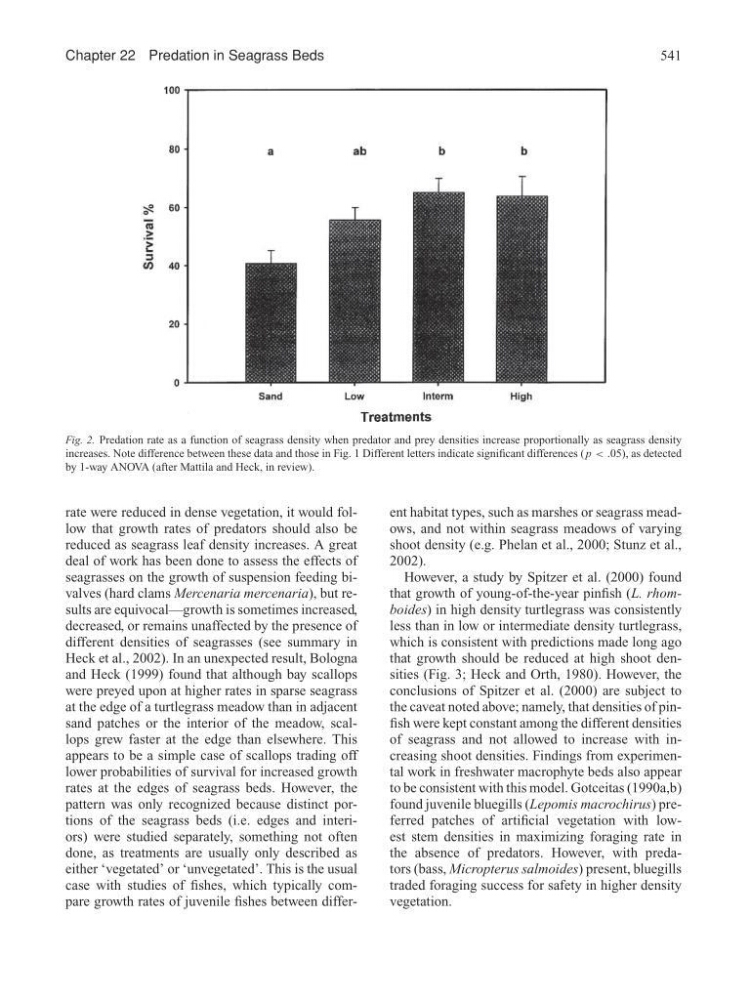
Fig. 2. Predation rate as a function of seagrass density when predator and prey densities increase proportionally as seagrass density
increases. Note difference between these data and those in Fig. 1 Different letters indicate significant differences ( p < .05), as detected
by 1-way ANOVA (after Mattila and Heck, in review).
rate were reduced in dense vegetation, it would follow that growth rates of predators should also be
reduced as seagrass leaf density increases. A great
deal of work has been done to assess the effects of
seagrasses on the growth of suspension feeding bivalves (hard clams Mercenaria mercenaria), but results are equivocal—growth is sometimes increased,
decreased, or remains unaffected by the presence of
different densities of seagrasses (see summary in
Heck et al., 2002). In an unexpected result, Bologna
and Heck (1999) found that although bay scallops
were preyed upon at higher rates in sparse seagrass
at the edge of a turtlegrass meadow than in adjacent
sand patches or the interior of the meadow, scallops grew faster at the edge than elsewhere. This
appears to be a simple case of scallops trading off
lower probabilities of survival for increased growth
rates at the edges of seagrass beds. However, the
pattern was only recognized because distinct portions of the seagrass beds (i.e. edges and interiors) were studied separately, something not often
done, as treatments are usually only described as
either ‘vegetated’ or ‘unvegetated’. This is the usual
case with studies of fishes, which typically compare growth rates of juvenile fishes between different habitat types, such as marshes or seagrass meadows, and not within seagrass meadows of varying
shoot density (e.g. Phelan et al., 2000; Stunz et al.,
2002).
However, a study by Spitzer et al. (2000) found
that growth of young-of-the-year pinfish (L. rhomboides) in high density turtlegrass was consistently
less than in low or intermediate density turtlegrass,
which is consistent with predictions made long ago
that growth should be reduced at high shoot densities (Fig. 3; Heck and Orth, 1980). However, the
conclusions of Spitzer et al. (2000) are subject to
the caveat noted above; namely, that densities of pinfish were kept constant among the different densities
of seagrass and not allowed to increase with increasing shoot densities. Findings from experimental work in freshwater macrophyte beds also appear
to be consistent with this model. Gotceitas (1990a,b)
found juvenile bluegills (Lepomis macrochirus) preferred patches of artificial vegetation with lowest stem densities in maximizing foraging rate in
the absence of predators. However, with predators (bass, Micropterus salmoides) present, bluegills
traded foraging success for safety in higher density
vegetation.
541
Fig. 2. Predation rate as a function of seagrass density when predator and prey densities increase proportionally as seagrass density
increases. Note difference between these data and those in Fig. 1 Different letters indicate significant differences ( p < .05), as detected
by 1-way ANOVA (after Mattila and Heck, in review).
rate were reduced in dense vegetation, it would follow that growth rates of predators should also be
reduced as seagrass leaf density increases. A great
deal of work has been done to assess the effects of
seagrasses on the growth of suspension feeding bivalves (hard clams Mercenaria mercenaria), but results are equivocal—growth is sometimes increased,
decreased, or remains unaffected by the presence of
different densities of seagrasses (see summary in
Heck et al., 2002). In an unexpected result, Bologna
and Heck (1999) found that although bay scallops
were preyed upon at higher rates in sparse seagrass
at the edge of a turtlegrass meadow than in adjacent
sand patches or the interior of the meadow, scallops grew faster at the edge than elsewhere. This
appears to be a simple case of scallops trading off
lower probabilities of survival for increased growth
rates at the edges of seagrass beds. However, the
pattern was only recognized because distinct portions of the seagrass beds (i.e. edges and interiors) were studied separately, something not often
done, as treatments are usually only described as
either ‘vegetated’ or ‘unvegetated’. This is the usual
case with studies of fishes, which typically compare growth rates of juvenile fishes between different habitat types, such as marshes or seagrass meadows, and not within seagrass meadows of varying
shoot density (e.g. Phelan et al., 2000; Stunz et al.,
2002).
However, a study by Spitzer et al. (2000) found
that growth of young-of-the-year pinfish (L. rhomboides) in high density turtlegrass was consistently
less than in low or intermediate density turtlegrass,
which is consistent with predictions made long ago
that growth should be reduced at high shoot densities (Fig. 3; Heck and Orth, 1980). However, the
conclusions of Spitzer et al. (2000) are subject to
the caveat noted above; namely, that densities of pinfish were kept constant among the different densities
of seagrass and not allowed to increase with increasing shoot densities. Findings from experimental work in freshwater macrophyte beds also appear
to be consistent with this model. Gotceitas (1990a,b)
found juvenile bluegills (Lepomis macrochirus) preferred patches of artificial vegetation with lowest stem densities in maximizing foraging rate in
the absence of predators. However, with predators (bass, Micropterus salmoides) present, bluegills
traded foraging success for safety in higher density
vegetation.