

368
Kenneth A. Moore and Frederick T. Short
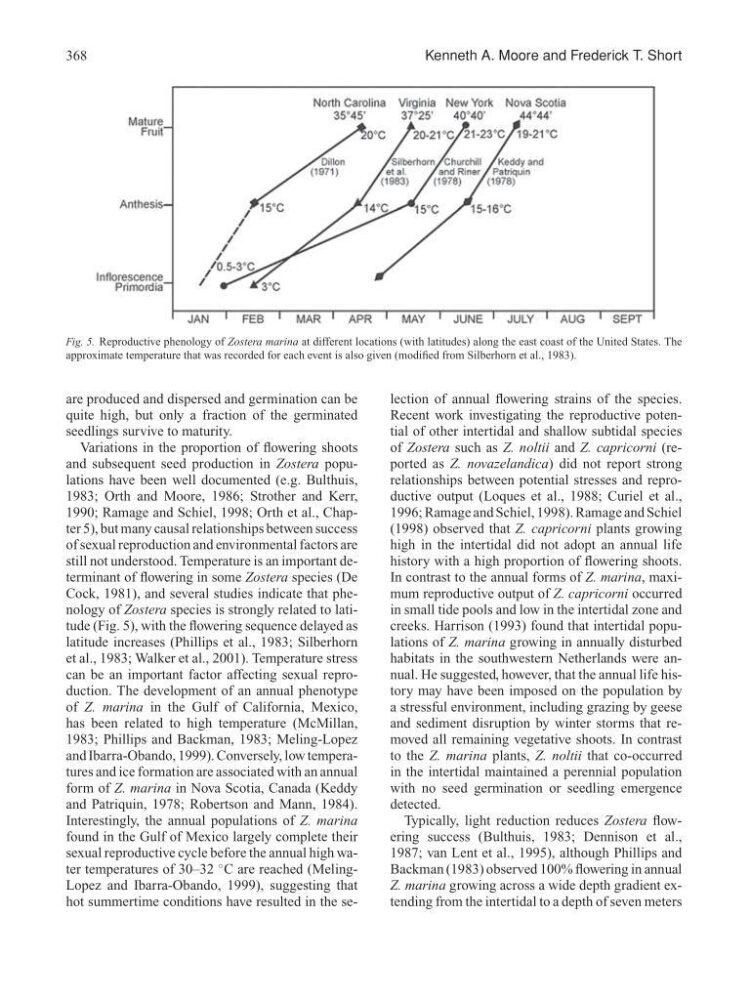
Fig. 5. Reproductive phenology of Zostera marina at different locations (with latitudes) along the east coast of the United States. The
approximate temperature that was recorded for each event is also given (modified from Silberhorn et al., 1983).
are produced and dispersed and germination can be
quite high, but only a fraction of the germinated
seedlings survive to maturity.
Variations in the proportion of flowering shoots
and subsequent seed production in Zostera populations have been well documented (e.g. Bulthuis,
1983; Orth and Moore, 1986; Strother and Kerr,
1990; Ramage and Schiel, 1998; Orth et al., Chapter 5), but many causal relationships between success
of sexual reproduction and environmental factors are
still not understood. Temperature is an important determinant of flowering in some Zostera species (De
Cock, 1981), and several studies indicate that phenology of Zostera species is strongly related to latitude (Fig. 5), with the flowering sequence delayed as
latitude increases (Phillips et al., 1983; Silberhorn
et al., 1983; Walker et al., 2001). Temperature stress
can be an important factor affecting sexual reproduction. The development of an annual phenotype
of Z. marina in the Gulf of California, Mexico,
has been related to high temperature (McMillan,
1983; Phillips and Backman, 1983; Meling-Lopez
and Ibarra-Obando, 1999). Conversely, low temperatures and ice formation are associated with an annual
form of Z. marina in Nova Scotia, Canada (Keddy
and Patriquin, 1978; Robertson and Mann, 1984).
Interestingly, the annual populations of Z. marina
found in the Gulf of Mexico largely complete their
sexual reproductive cycle before the annual high water temperatures of 30–32
◦ C are reached (MelingLopez and Ibarra-Obando, 1999), suggesting that
hot summertime conditions have resulted in the selection of annual flowering strains of the species.
Recent work investigating the reproductive potential of other intertidal and shallow subtidal species
of Zostera such as Z. noltii and Z. capricorni (reported as Z. novazelandica) did not report strong
relationships between potential stresses and reproductive output (Loques et al., 1988; Curiel et al.,
1996; Ramage and Schiel, 1998). Ramage and Schiel
(1998) observed that Z. capricorni plants growing
high in the intertidal did not adopt an annual life
history with a high proportion of flowering shoots.
In contrast to the annual forms of Z. marina, maximum reproductive output of Z. capricorni occurred
in small tide pools and low in the intertidal zone and
creeks. Harrison (1993) found that intertidal populations of Z. marina growing in annually disturbed
habitats in the southwestern Netherlands were annual. He suggested, however, that the annual life history may have been imposed on the population by
a stressful environment, including grazing by geese
and sediment disruption by winter storms that removed all remaining vegetative shoots. In contrast
to the Z. marina plants, Z. noltii that co-occurred
in the intertidal maintained a perennial population
with no seed germination or seedling emergence
detected.
Typically, light reduction reduces Zostera flowering success (Bulthuis, 1983; Dennison et al.,
1987; van Lent et al., 1995), although Phillips and
Backman (1983) observed 100% flowering in annual
Z. marina growing across a wide depth gradient extending from the intertidal to a depth of seven meters
Kenneth A. Moore and Frederick T. Short
Fig. 5. Reproductive phenology of Zostera marina at different locations (with latitudes) along the east coast of the United States. The
approximate temperature that was recorded for each event is also given (modified from Silberhorn et al., 1983).
are produced and dispersed and germination can be
quite high, but only a fraction of the germinated
seedlings survive to maturity.
Variations in the proportion of flowering shoots
and subsequent seed production in Zostera populations have been well documented (e.g. Bulthuis,
1983; Orth and Moore, 1986; Strother and Kerr,
1990; Ramage and Schiel, 1998; Orth et al., Chapter 5), but many causal relationships between success
of sexual reproduction and environmental factors are
still not understood. Temperature is an important determinant of flowering in some Zostera species (De
Cock, 1981), and several studies indicate that phenology of Zostera species is strongly related to latitude (Fig. 5), with the flowering sequence delayed as
latitude increases (Phillips et al., 1983; Silberhorn
et al., 1983; Walker et al., 2001). Temperature stress
can be an important factor affecting sexual reproduction. The development of an annual phenotype
of Z. marina in the Gulf of California, Mexico,
has been related to high temperature (McMillan,
1983; Phillips and Backman, 1983; Meling-Lopez
and Ibarra-Obando, 1999). Conversely, low temperatures and ice formation are associated with an annual
form of Z. marina in Nova Scotia, Canada (Keddy
and Patriquin, 1978; Robertson and Mann, 1984).
Interestingly, the annual populations of Z. marina
found in the Gulf of Mexico largely complete their
sexual reproductive cycle before the annual high water temperatures of 30–32
◦ C are reached (MelingLopez and Ibarra-Obando, 1999), suggesting that
hot summertime conditions have resulted in the selection of annual flowering strains of the species.
Recent work investigating the reproductive potential of other intertidal and shallow subtidal species
of Zostera such as Z. noltii and Z. capricorni (reported as Z. novazelandica) did not report strong
relationships between potential stresses and reproductive output (Loques et al., 1988; Curiel et al.,
1996; Ramage and Schiel, 1998). Ramage and Schiel
(1998) observed that Z. capricorni plants growing
high in the intertidal did not adopt an annual life
history with a high proportion of flowering shoots.
In contrast to the annual forms of Z. marina, maximum reproductive output of Z. capricorni occurred
in small tide pools and low in the intertidal zone and
creeks. Harrison (1993) found that intertidal populations of Z. marina growing in annually disturbed
habitats in the southwestern Netherlands were annual. He suggested, however, that the annual life history may have been imposed on the population by
a stressful environment, including grazing by geese
and sediment disruption by winter storms that removed all remaining vegetative shoots. In contrast
to the Z. marina plants, Z. noltii that co-occurred
in the intertidal maintained a perennial population
with no seed germination or seedling emergence
detected.
Typically, light reduction reduces Zostera flowering success (Bulthuis, 1983; Dennison et al.,
1987; van Lent et al., 1995), although Phillips and
Backman (1983) observed 100% flowering in annual
Z. marina growing across a wide depth gradient extending from the intertidal to a depth of seven meters