

Chapter 16 Biology of Zostera
367
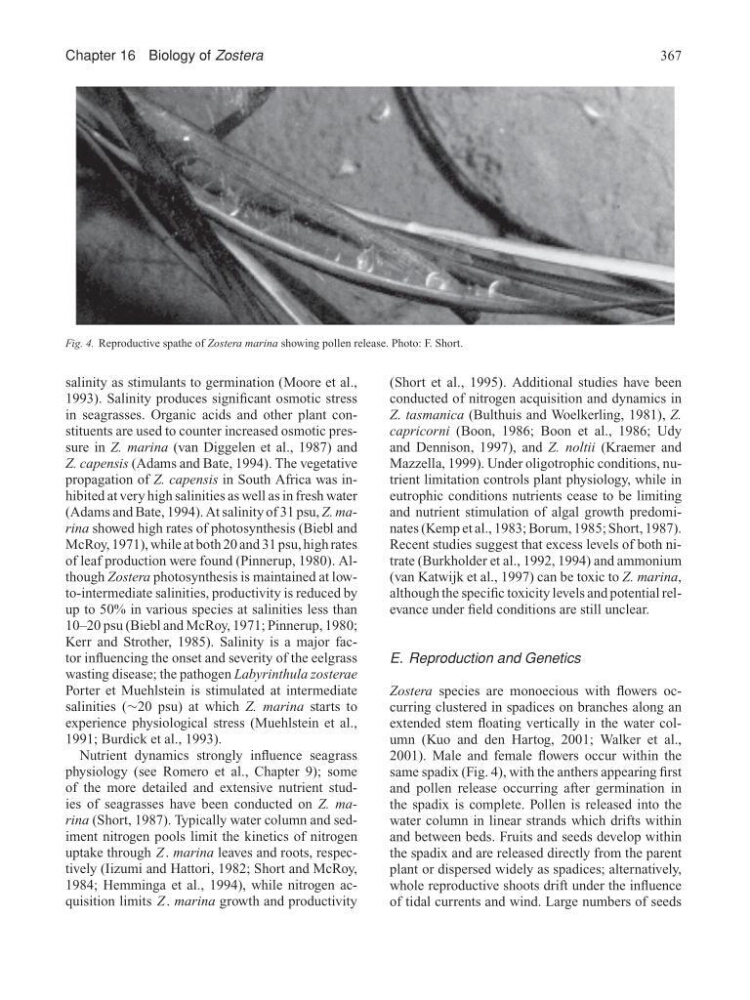
Fig. 4. Reproductive spathe of Zostera marina showing pollen release. Photo: F. Short.
salinity as stimulants to germination (Moore et al.,
1993). Salinity produces significant osmotic stress
in seagrasses. Organic acids and other plant constituents are used to counter increased osmotic pressure in Z. marina (van Diggelen et al., 1987) and
Z. capensis (Adams and Bate, 1994). The vegetative
propagation of Z. capensis in South Africa was inhibited at very high salinities as well as in fresh water
(Adams and Bate, 1994). At salinity of 31 psu, Z. marina showed high rates of photosynthesis (Biebl and
McRoy, 1971), while at both 20 and 31 psu, high rates
of leaf production were found (Pinnerup, 1980). Although Zostera photosynthesis is maintained at lowto-intermediate salinities, productivity is reduced by
up to 50% in various species at salinities less than
10–20 psu (Biebl and McRoy, 1971; Pinnerup, 1980;
Kerr and Strother, 1985). Salinity is a major factor influencing the onset and severity of the eelgrass
wasting disease; the pathogen Labyrinthula zosterae
Porter et Muehlstein is stimulated at intermediate
salinities (∼20 psu) at which Z. marina starts to
experience physiological stress (Muehlstein et al.,
1991; Burdick et al., 1993).
Nutrient dynamics strongly influence seagrass
physiology (see Romero et al., Chapter 9); some
of the more detailed and extensive nutrient studies of seagrasses have been conducted on Z. marina (Short, 1987). Typically water column and sediment nitrogen pools limit the kinetics of nitrogen
uptake through Z . marina leaves and roots, respectively (Iizumi and Hattori, 1982; Short and McRoy,
1984; Hemminga et al., 1994), while nitrogen acquisition limits Z . marina growth and productivity
(Short et al., 1995). Additional studies have been
conducted of nitrogen acquisition and dynamics in
Z. tasmanica (Bulthuis and Woelkerling, 1981), Z.
capricorni (Boon, 1986; Boon et al., 1986; Udy
and Dennison, 1997), and Z. noltii (Kraemer and
Mazzella, 1999). Under oligotrophic conditions, nutrient limitation controls plant physiology, while in
eutrophic conditions nutrients cease to be limiting
and nutrient stimulation of algal growth predominates (Kemp et al., 1983; Borum, 1985; Short, 1987).
Recent studies suggest that excess levels of both nitrate (Burkholder et al., 1992, 1994) and ammonium
(van Katwijk et al., 1997) can be toxic to Z. marina,
although the specific toxicity levels and potential relevance under field conditions are still unclear.
E. Reproduction and Genetics
Zostera species are monoecious with flowers occurring clustered in spadices on branches along an
extended stem floating vertically in the water column (Kuo and den Hartog, 2001; Walker et al.,
2001). Male and female flowers occur within the
same spadix (Fig. 4), with the anthers appearing first
and pollen release occurring after germination in
the spadix is complete. Pollen is released into the
water column in linear strands which drifts within
and between beds. Fruits and seeds develop within
the spadix and are released directly from the parent
plant or dispersed widely as spadices; alternatively,
whole reproductive shoots drift under the influence
of tidal currents and wind. Large numbers of seeds
367
Fig. 4. Reproductive spathe of Zostera marina showing pollen release. Photo: F. Short.
salinity as stimulants to germination (Moore et al.,
1993). Salinity produces significant osmotic stress
in seagrasses. Organic acids and other plant constituents are used to counter increased osmotic pressure in Z. marina (van Diggelen et al., 1987) and
Z. capensis (Adams and Bate, 1994). The vegetative
propagation of Z. capensis in South Africa was inhibited at very high salinities as well as in fresh water
(Adams and Bate, 1994). At salinity of 31 psu, Z. marina showed high rates of photosynthesis (Biebl and
McRoy, 1971), while at both 20 and 31 psu, high rates
of leaf production were found (Pinnerup, 1980). Although Zostera photosynthesis is maintained at lowto-intermediate salinities, productivity is reduced by
up to 50% in various species at salinities less than
10–20 psu (Biebl and McRoy, 1971; Pinnerup, 1980;
Kerr and Strother, 1985). Salinity is a major factor influencing the onset and severity of the eelgrass
wasting disease; the pathogen Labyrinthula zosterae
Porter et Muehlstein is stimulated at intermediate
salinities (∼20 psu) at which Z. marina starts to
experience physiological stress (Muehlstein et al.,
1991; Burdick et al., 1993).
Nutrient dynamics strongly influence seagrass
physiology (see Romero et al., Chapter 9); some
of the more detailed and extensive nutrient studies of seagrasses have been conducted on Z. marina (Short, 1987). Typically water column and sediment nitrogen pools limit the kinetics of nitrogen
uptake through Z . marina leaves and roots, respectively (Iizumi and Hattori, 1982; Short and McRoy,
1984; Hemminga et al., 1994), while nitrogen acquisition limits Z . marina growth and productivity
(Short et al., 1995). Additional studies have been
conducted of nitrogen acquisition and dynamics in
Z. tasmanica (Bulthuis and Woelkerling, 1981), Z.
capricorni (Boon, 1986; Boon et al., 1986; Udy
and Dennison, 1997), and Z. noltii (Kraemer and
Mazzella, 1999). Under oligotrophic conditions, nutrient limitation controls plant physiology, while in
eutrophic conditions nutrients cease to be limiting
and nutrient stimulation of algal growth predominates (Kemp et al., 1983; Borum, 1985; Short, 1987).
Recent studies suggest that excess levels of both nitrate (Burkholder et al., 1992, 1994) and ammonium
(van Katwijk et al., 1997) can be toxic to Z. marina,
although the specific toxicity levels and potential relevance under field conditions are still unclear.
E. Reproduction and Genetics
Zostera species are monoecious with flowers occurring clustered in spadices on branches along an
extended stem floating vertically in the water column (Kuo and den Hartog, 2001; Walker et al.,
2001). Male and female flowers occur within the
same spadix (Fig. 4), with the anthers appearing first
and pollen release occurring after germination in
the spadix is complete. Pollen is released into the
water column in linear strands which drifts within
and between beds. Fruits and seeds develop within
the spadix and are released directly from the parent
plant or dispersed widely as spadices; alternatively,
whole reproductive shoots drift under the influence
of tidal currents and wind. Large numbers of seeds