

364
Kenneth A. Moore and Frederick T. Short
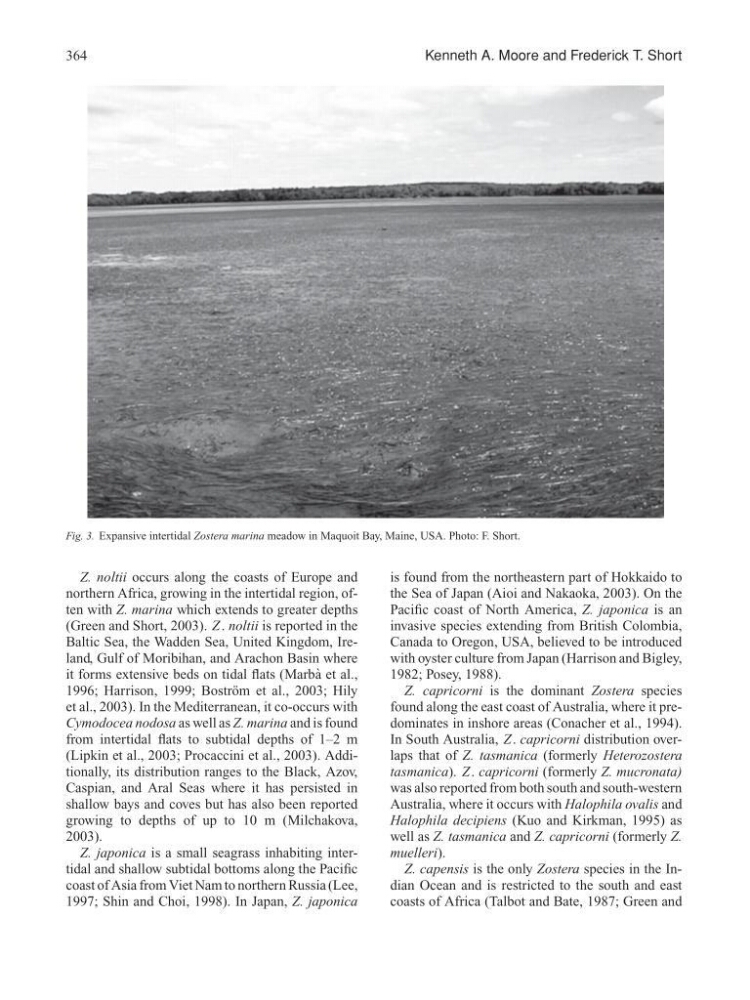
Fig. 3. Expansive intertidal Zostera marina meadow in Maquoit Bay, Maine, USA. Photo: F. Short.
Z. noltii occurs along the coasts of Europe and
northern Africa, growing in the intertidal region, often with Z. marina which extends to greater depths
(Green and Short, 2003). Z . noltii is reported in the
Baltic Sea, the Wadden Sea, United Kingdom, Ireland, Gulf of Moribihan, and Arachon Basin where
it forms extensive beds on tidal flats (Marb` a et al.,
1996; Harrison, 1999; Bostr¨ om et al., 2003; Hily
et al., 2003). In the Mediterranean, it co-occurs with
Cymodocea nodosa as well as Z. marina and is found
from intertidal flats to subtidal depths of 1–2 m
(Lipkin et al., 2003; Procaccini et al., 2003). Additionally, its distribution ranges to the Black, Azov,
Caspian, and Aral Seas where it has persisted in
shallow bays and coves but has also been reported
growing to depths of up to 10 m (Milchakova,
2003).
Z. japonica is a small seagrass inhabiting intertidal and shallow subtidal bottoms along the Pacific
coast of Asia from Viet Nam to northern Russia (Lee,
1997; Shin and Choi, 1998). In Japan, Z. japonica
is found from the northeastern part of Hokkaido to
the Sea of Japan (Aioi and Nakaoka, 2003). On the
Pacific coast of North America, Z. japonica is an
invasive species extending from British Colombia,
Canada to Oregon, USA, believed to be introduced
with oyster culture from Japan (Harrison and Bigley,
1982; Posey, 1988).
Z. capricorni is the dominant Zostera species
found along the east coast of Australia, where it predominates in inshore areas (Conacher et al., 1994).
In South Australia, Z . capricorni distribution overlaps that of Z. tasmanica (formerly Heterozostera
tasmanica). Z . capricorni (formerly Z. mucronata)
was also reported from both south and south-western
Australia, where it occurs with Halophila ovalis and
Halophila decipiens (Kuo and Kirkman, 1995) as
well as Z. tasmanica and Z. capricorni (formerly Z.
muelleri).
Z. capensis is the only Zostera species in the Indian Ocean and is restricted to the south and east
coasts of Africa (Talbot and Bate, 1987; Green and
Kenneth A. Moore and Frederick T. Short
Fig. 3. Expansive intertidal Zostera marina meadow in Maquoit Bay, Maine, USA. Photo: F. Short.
Z. noltii occurs along the coasts of Europe and
northern Africa, growing in the intertidal region, often with Z. marina which extends to greater depths
(Green and Short, 2003). Z . noltii is reported in the
Baltic Sea, the Wadden Sea, United Kingdom, Ireland, Gulf of Moribihan, and Arachon Basin where
it forms extensive beds on tidal flats (Marb` a et al.,
1996; Harrison, 1999; Bostr¨ om et al., 2003; Hily
et al., 2003). In the Mediterranean, it co-occurs with
Cymodocea nodosa as well as Z. marina and is found
from intertidal flats to subtidal depths of 1–2 m
(Lipkin et al., 2003; Procaccini et al., 2003). Additionally, its distribution ranges to the Black, Azov,
Caspian, and Aral Seas where it has persisted in
shallow bays and coves but has also been reported
growing to depths of up to 10 m (Milchakova,
2003).
Z. japonica is a small seagrass inhabiting intertidal and shallow subtidal bottoms along the Pacific
coast of Asia from Viet Nam to northern Russia (Lee,
1997; Shin and Choi, 1998). In Japan, Z. japonica
is found from the northeastern part of Hokkaido to
the Sea of Japan (Aioi and Nakaoka, 2003). On the
Pacific coast of North America, Z. japonica is an
invasive species extending from British Colombia,
Canada to Oregon, USA, believed to be introduced
with oyster culture from Japan (Harrison and Bigley,
1982; Posey, 1988).
Z. capricorni is the dominant Zostera species
found along the east coast of Australia, where it predominates in inshore areas (Conacher et al., 1994).
In South Australia, Z . capricorni distribution overlaps that of Z. tasmanica (formerly Heterozostera
tasmanica). Z . capricorni (formerly Z. mucronata)
was also reported from both south and south-western
Australia, where it occurs with Halophila ovalis and
Halophila decipiens (Kuo and Kirkman, 1995) as
well as Z. tasmanica and Z. capricorni (formerly Z.
muelleri).
Z. capensis is the only Zostera species in the Indian Ocean and is restricted to the south and east
coasts of Africa (Talbot and Bate, 1987; Green and