

Chapter 16 Biology of Zostera
365
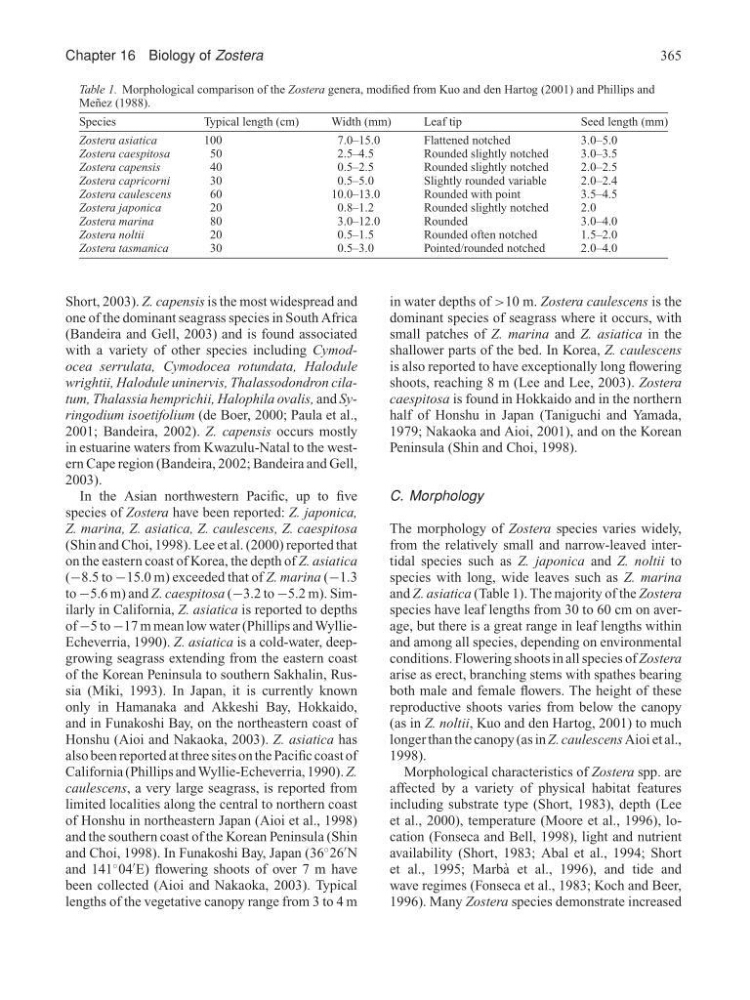
Table 1. Morphological comparison of the Zostera genera, modified from Kuo and den Hartog (2001) and Phillips and
Me˜ nez (1988).
Species
Typical length (cm)
Width (mm)
Leaf tip
Seed length (mm)
Zostera asiatica
100
7.0–15.0
Flattened notched
3.0–5.0
Zostera caespitosa
50
2.5–4.5
Rounded slightly notched
3.0–3.5
Zostera capensis
40
0.5–2.5
Rounded slightly notched
2.0–2.5
Zostera capricorni
30
0.5–5.0
Slightly rounded variable
2.0–2.4
Zostera caulescens
60
10.0–13.0
Rounded with point
3.5–4.5
Zostera japonica
20
0.8–1.2
Rounded slightly notched
2.0
Zostera marina
80
3.0–12.0
Rounded
3.0–4.0
Zostera noltii
20
0.5–1.5
Rounded often notched
1.5–2.0
Zostera tasmanica
30
0.5–3.0
Pointed/rounded notched
2.0–4.0
Short, 2003). Z. capensis is the most widespread and
one of the dominant seagrass species in South Africa
(Bandeira and Gell, 2003) and is found associated
with a variety of other species including Cymodocea serrulata, Cymodocea rotundata, Halodule
wrightii, Halodule uninervis, Thalassodondron cilatum, Thalassia hemprichii, Halophila ovalis, and Syringodium isoetifolium (de Boer, 2000; Paula et al.,
2001; Bandeira, 2002). Z. capensis occurs mostly
in estuarine waters from Kwazulu-Natal to the western Cape region (Bandeira, 2002; Bandeira and Gell,
2003).
In the Asian northwestern Pacific, up to five
species of Zostera have been reported: Z. japonica,
Z. marina, Z. asiatica, Z. caulescens, Z. caespitosa
(Shin and Choi, 1998). Lee et al. (2000) reported that
on the eastern coast of Korea, the depth of Z. asiatica
(−8.5 to −15.0 m) exceeded that of Z. marina (−1.3
to −5.6 m) and Z. caespitosa (−3.2 to −5.2 m). Similarly in California, Z. asiatica is reported to depths
of −5 to −17 m mean low water (Phillips and WyllieEcheverria, 1990). Z. asiatica is a cold-water, deepgrowing seagrass extending from the eastern coast
of the Korean Peninsula to southern Sakhalin, Russia (Miki, 1993). In Japan, it is currently known
only in Hamanaka and Akkeshi Bay, Hokkaido,
and in Funakoshi Bay, on the northeastern coast of
Honshu (Aioi and Nakaoka, 2003). Z. asiatica has
also been reported at three sites on the Pacific coast of
California (Phillips and Wyllie-Echeverria, 1990). Z.
caulescens, a very large seagrass, is reported from
limited localities along the central to northern coast
of Honshu in northeastern Japan (Aioi et al., 1998)
and the southern coast of the Korean Peninsula (Shin
and Choi, 1998). In Funakoshi Bay, Japan (36
◦ 26
N
and 141
◦ 04
E) flowering shoots of over 7 m have
been collected (Aioi and Nakaoka, 2003). Typical
lengths of the vegetative canopy range from 3 to 4 m
in water depths of >10 m. Zostera caulescens is the
dominant species of seagrass where it occurs, with
small patches of Z. marina and Z. asiatica in the
shallower parts of the bed. In Korea, Z. caulescens
is also reported to have exceptionally long flowering
shoots, reaching 8 m (Lee and Lee, 2003). Zostera
caespitosa is found in Hokkaido and in the northern
half of Honshu in Japan (Taniguchi and Yamada,
1979; Nakaoka and Aioi, 2001), and on the Korean
Peninsula (Shin and Choi, 1998).
C. Morphology
The morphology of Zostera species varies widely,
from the relatively small and narrow-leaved intertidal species such as Z. japonica and Z. noltii to
species with long, wide leaves such as Z. marina
and Z. asiatica (Table 1). The majority of the Zostera
species have leaf lengths from 30 to 60 cm on average, but there is a great range in leaf lengths within
and among all species, depending on environmental
conditions. Flowering shoots in all species of Zostera
arise as erect, branching stems with spathes bearing
both male and female flowers. The height of these
reproductive shoots varies from below the canopy
(as in Z. noltii, Kuo and den Hartog, 2001) to much
longer than the canopy (as in Z. caulescens Aioi et al.,
1998).
Morphological characteristics of Zostera spp. are
affected by a variety of physical habitat features
including substrate type (Short, 1983), depth (Lee
et al., 2000), temperature (Moore et al., 1996), location (Fonseca and Bell, 1998), light and nutrient
availability (Short, 1983; Abal et al., 1994; Short
et al., 1995; Marb` a et al., 1996), and tide and
wave regimes (Fonseca et al., 1983; Koch and Beer,
1996). Many Zostera species demonstrate increased
365
Table 1. Morphological comparison of the Zostera genera, modified from Kuo and den Hartog (2001) and Phillips and
Me˜ nez (1988).
Species
Typical length (cm)
Width (mm)
Leaf tip
Seed length (mm)
Zostera asiatica
100
7.0–15.0
Flattened notched
3.0–5.0
Zostera caespitosa
50
2.5–4.5
Rounded slightly notched
3.0–3.5
Zostera capensis
40
0.5–2.5
Rounded slightly notched
2.0–2.5
Zostera capricorni
30
0.5–5.0
Slightly rounded variable
2.0–2.4
Zostera caulescens
60
10.0–13.0
Rounded with point
3.5–4.5
Zostera japonica
20
0.8–1.2
Rounded slightly notched
2.0
Zostera marina
80
3.0–12.0
Rounded
3.0–4.0
Zostera noltii
20
0.5–1.5
Rounded often notched
1.5–2.0
Zostera tasmanica
30
0.5–3.0
Pointed/rounded notched
2.0–4.0
Short, 2003). Z. capensis is the most widespread and
one of the dominant seagrass species in South Africa
(Bandeira and Gell, 2003) and is found associated
with a variety of other species including Cymodocea serrulata, Cymodocea rotundata, Halodule
wrightii, Halodule uninervis, Thalassodondron cilatum, Thalassia hemprichii, Halophila ovalis, and Syringodium isoetifolium (de Boer, 2000; Paula et al.,
2001; Bandeira, 2002). Z. capensis occurs mostly
in estuarine waters from Kwazulu-Natal to the western Cape region (Bandeira, 2002; Bandeira and Gell,
2003).
In the Asian northwestern Pacific, up to five
species of Zostera have been reported: Z. japonica,
Z. marina, Z. asiatica, Z. caulescens, Z. caespitosa
(Shin and Choi, 1998). Lee et al. (2000) reported that
on the eastern coast of Korea, the depth of Z. asiatica
(−8.5 to −15.0 m) exceeded that of Z. marina (−1.3
to −5.6 m) and Z. caespitosa (−3.2 to −5.2 m). Similarly in California, Z. asiatica is reported to depths
of −5 to −17 m mean low water (Phillips and WyllieEcheverria, 1990). Z. asiatica is a cold-water, deepgrowing seagrass extending from the eastern coast
of the Korean Peninsula to southern Sakhalin, Russia (Miki, 1993). In Japan, it is currently known
only in Hamanaka and Akkeshi Bay, Hokkaido,
and in Funakoshi Bay, on the northeastern coast of
Honshu (Aioi and Nakaoka, 2003). Z. asiatica has
also been reported at three sites on the Pacific coast of
California (Phillips and Wyllie-Echeverria, 1990). Z.
caulescens, a very large seagrass, is reported from
limited localities along the central to northern coast
of Honshu in northeastern Japan (Aioi et al., 1998)
and the southern coast of the Korean Peninsula (Shin
and Choi, 1998). In Funakoshi Bay, Japan (36
◦ 26
N
and 141
◦ 04
E) flowering shoots of over 7 m have
been collected (Aioi and Nakaoka, 2003). Typical
lengths of the vegetative canopy range from 3 to 4 m
in water depths of >10 m. Zostera caulescens is the
dominant species of seagrass where it occurs, with
small patches of Z. marina and Z. asiatica in the
shallower parts of the bed. In Korea, Z. caulescens
is also reported to have exceptionally long flowering
shoots, reaching 8 m (Lee and Lee, 2003). Zostera
caespitosa is found in Hokkaido and in the northern
half of Honshu in Japan (Taniguchi and Yamada,
1979; Nakaoka and Aioi, 2001), and on the Korean
Peninsula (Shin and Choi, 1998).
C. Morphology
The morphology of Zostera species varies widely,
from the relatively small and narrow-leaved intertidal species such as Z. japonica and Z. noltii to
species with long, wide leaves such as Z. marina
and Z. asiatica (Table 1). The majority of the Zostera
species have leaf lengths from 30 to 60 cm on average, but there is a great range in leaf lengths within
and among all species, depending on environmental
conditions. Flowering shoots in all species of Zostera
arise as erect, branching stems with spathes bearing
both male and female flowers. The height of these
reproductive shoots varies from below the canopy
(as in Z. noltii, Kuo and den Hartog, 2001) to much
longer than the canopy (as in Z. caulescens Aioi et al.,
1998).
Morphological characteristics of Zostera spp. are
affected by a variety of physical habitat features
including substrate type (Short, 1983), depth (Lee
et al., 2000), temperature (Moore et al., 1996), location (Fonseca and Bell, 1998), light and nutrient
availability (Short, 1983; Abal et al., 1994; Short
et al., 1995; Marb` a et al., 1996), and tide and
wave regimes (Fonseca et al., 1983; Koch and Beer,
1996). Many Zostera species demonstrate increased