

362
Kenneth A. Moore and Frederick T. Short
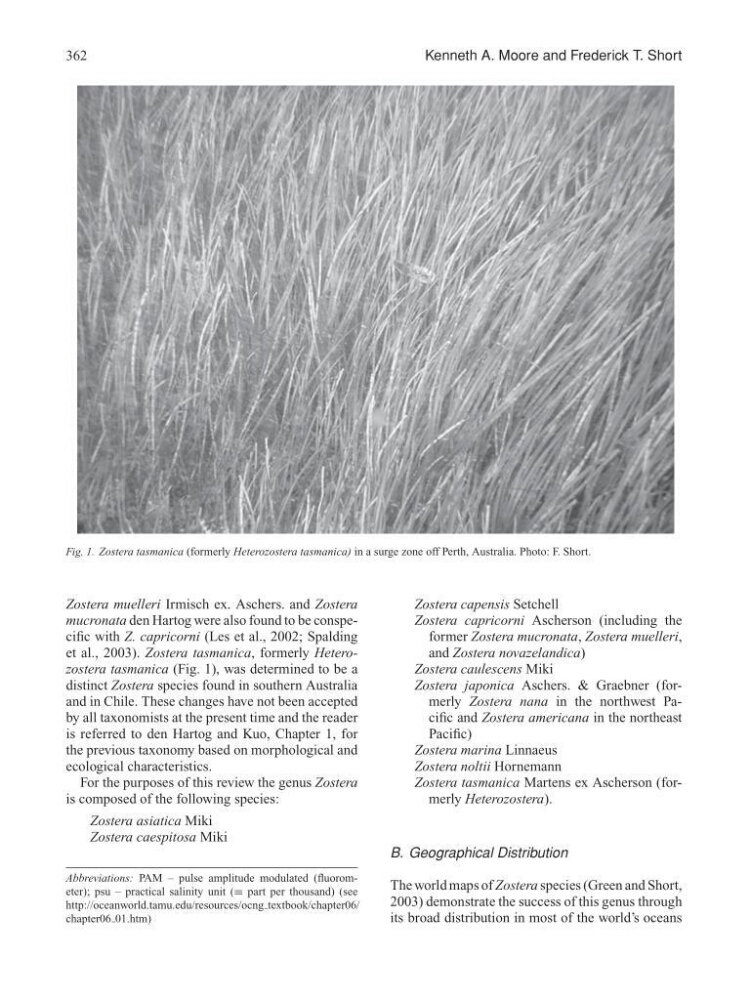
Fig. 1. Zostera tasmanica (formerly Heterozostera tasmanica) in a surge zone off Perth, Australia. Photo: F. Short.
Zostera muelleri Irmisch ex. Aschers. and Zostera
mucronata den Hartog were also found to be conspecific with Z. capricorni (Les et al., 2002; Spalding
et al., 2003). Zostera tasmanica, formerly Heterozostera tasmanica (Fig. 1), was determined to be a
distinct Zostera species found in southern Australia
and in Chile. These changes have not been accepted
by all taxonomists at the present time and the reader
is referred to den Hartog and Kuo, Chapter 1, for
the previous taxonomy based on morphological and
ecological characteristics.
For the purposes of this review the genus Zostera
is composed of the following species:
Zostera asiatica Miki
Zostera caespitosa Miki
Abbreviations: PAM – pulse amplitude modulated (fluorometer); psu – practical salinity unit (≡ part per thousand) (see
http://oceanworld.tamu.edu/resources/ocng textbook/chapter06/
chapter06 01.htm)
Zostera capensis Setchell
Zostera capricorni Ascherson (including the
former Zostera mucronata, Zostera muelleri,
and Zostera novazelandica)
Zostera caulescens Miki
Zostera japonica Aschers. & Graebner (formerly Zostera nana in the northwest Pacific and Zostera americana in the northeast
Pacific)
Zostera marina Linnaeus
Zostera noltii Hornemann
Zostera tasmanica Martens ex Ascherson (formerly Heterozostera).
B. Geographical Distribution
The world maps of Zostera species (Green and Short,
2003) demonstrate the success of this genus through
its broad distribution in most of the world’s oceans
Kenneth A. Moore and Frederick T. Short
Fig. 1. Zostera tasmanica (formerly Heterozostera tasmanica) in a surge zone off Perth, Australia. Photo: F. Short.
Zostera muelleri Irmisch ex. Aschers. and Zostera
mucronata den Hartog were also found to be conspecific with Z. capricorni (Les et al., 2002; Spalding
et al., 2003). Zostera tasmanica, formerly Heterozostera tasmanica (Fig. 1), was determined to be a
distinct Zostera species found in southern Australia
and in Chile. These changes have not been accepted
by all taxonomists at the present time and the reader
is referred to den Hartog and Kuo, Chapter 1, for
the previous taxonomy based on morphological and
ecological characteristics.
For the purposes of this review the genus Zostera
is composed of the following species:
Zostera asiatica Miki
Zostera caespitosa Miki
Abbreviations: PAM – pulse amplitude modulated (fluorometer); psu – practical salinity unit (≡ part per thousand) (see
http://oceanworld.tamu.edu/resources/ocng textbook/chapter06/
chapter06 01.htm)
Zostera capensis Setchell
Zostera capricorni Ascherson (including the
former Zostera mucronata, Zostera muelleri,
and Zostera novazelandica)
Zostera caulescens Miki
Zostera japonica Aschers. & Graebner (formerly Zostera nana in the northwest Pacific and Zostera americana in the northeast
Pacific)
Zostera marina Linnaeus
Zostera noltii Hornemann
Zostera tasmanica Martens ex Ascherson (formerly Heterozostera).
B. Geographical Distribution
The world maps of Zostera species (Green and Short,
2003) demonstrate the success of this genus through
its broad distribution in most of the world’s oceans