

266
Jens Borum, Kaj Sand-Jensen, Thomas Binzer, Ole Pedersen and Tina Maria Greve
0
50
100 150 200 250 300
Time (min)
80
90
100
110
120
130
Lacunal gas pressure (kPa)
Internode 1
Internode 5
Light
Darkness
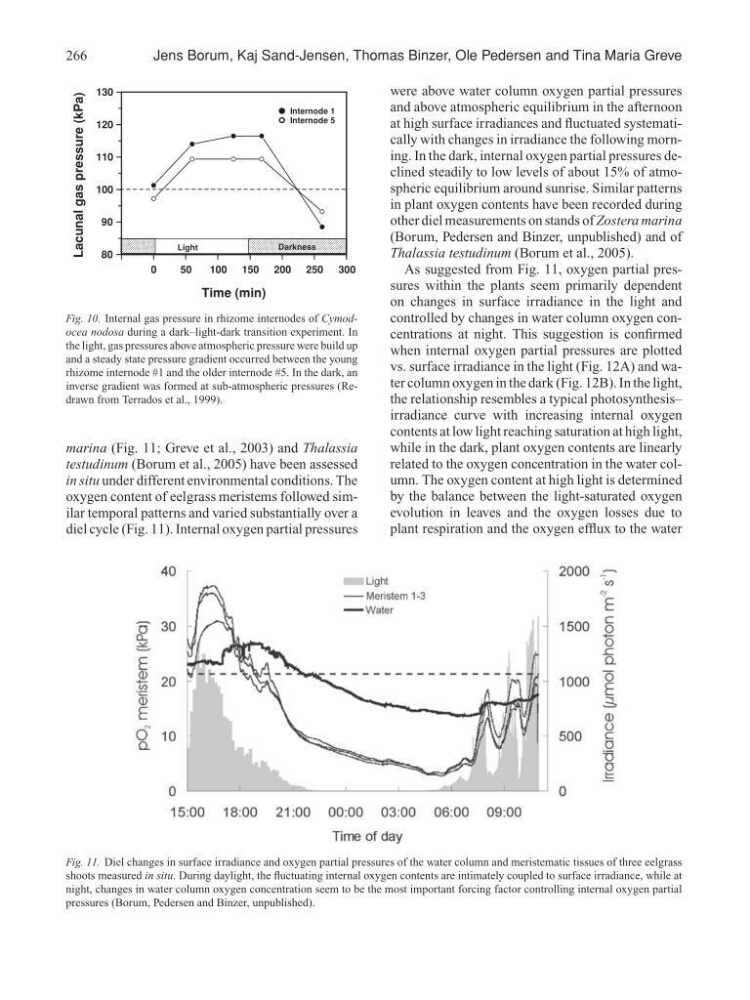
Fig. 10. Internal gas pressure in rhizome internodes of Cymodocea nodosa during a dark–light-dark transition experiment. In
the light, gas pressures above atmospheric pressure were build up
and a steady state pressure gradient occurred between the young
rhizome internode #1 and the older internode #5. In the dark, an
inverse gradient was formed at sub-atmospheric pressures (Redrawn from Terrados et al., 1999).
marina (Fig. 11; Greve et al., 2003) and Thalassia
testudinum (Borum et al., 2005) have been assessed
in situ under different environmental conditions. The
oxygen content of eelgrass meristems followed similar temporal patterns and varied substantially over a
diel cycle (Fig. 11). Internal oxygen partial pressures
Fig. 11. Diel changes in surface irradiance and oxygen partial pressures of the water column and meristematic tissues of three eelgrass
shoots measured in situ. During daylight, the fluctuating internal oxygen contents are intimately coupled to surface irradiance, while at
night, changes in water column oxygen concentration seem to be the most important forcing factor controlling internal oxygen partial
pressures (Borum, Pedersen and Binzer, unpublished).
were above water column oxygen partial pressures
and above atmospheric equilibrium in the afternoon
at high surface irradiances and fluctuated systematically with changes in irradiance the following morning. In the dark, internal oxygen partial pressures declined steadily to low levels of about 15% of atmospheric equilibrium around sunrise. Similar patterns
in plant oxygen contents have been recorded during
other diel measurements on stands of Zostera marina
(Borum, Pedersen and Binzer, unpublished) and of
Thalassia testudinum (Borum et al., 2005).
As suggested from Fig. 11, oxygen partial pressures within the plants seem primarily dependent
on changes in surface irradiance in the light and
controlled by changes in water column oxygen concentrations at night. This suggestion is confirmed
when internal oxygen partial pressures are plotted
vs. surface irradiance in the light (Fig. 12A) and water column oxygen in the dark (Fig. 12B). In the light,
the relationship resembles a typical photosynthesis–
irradiance curve with increasing internal oxygen
contents at low light reaching saturation at high light,
while in the dark, plant oxygen contents are linearly
related to the oxygen concentration in the water column. The oxygen content at high light is determined
by the balance between the light-saturated oxygen
evolution in leaves and the oxygen losses due to
plant respiration and the oxygen efflux to the water
Jens Borum, Kaj Sand-Jensen, Thomas Binzer, Ole Pedersen and Tina Maria Greve
0
50
100 150 200 250 300
Time (min)
80
90
100
110
120
130
Lacunal gas pressure (kPa)
Internode 1
Internode 5
Light
Darkness
Fig. 10. Internal gas pressure in rhizome internodes of Cymodocea nodosa during a dark–light-dark transition experiment. In
the light, gas pressures above atmospheric pressure were build up
and a steady state pressure gradient occurred between the young
rhizome internode #1 and the older internode #5. In the dark, an
inverse gradient was formed at sub-atmospheric pressures (Redrawn from Terrados et al., 1999).
marina (Fig. 11; Greve et al., 2003) and Thalassia
testudinum (Borum et al., 2005) have been assessed
in situ under different environmental conditions. The
oxygen content of eelgrass meristems followed similar temporal patterns and varied substantially over a
diel cycle (Fig. 11). Internal oxygen partial pressures
Fig. 11. Diel changes in surface irradiance and oxygen partial pressures of the water column and meristematic tissues of three eelgrass
shoots measured in situ. During daylight, the fluctuating internal oxygen contents are intimately coupled to surface irradiance, while at
night, changes in water column oxygen concentration seem to be the most important forcing factor controlling internal oxygen partial
pressures (Borum, Pedersen and Binzer, unpublished).
were above water column oxygen partial pressures
and above atmospheric equilibrium in the afternoon
at high surface irradiances and fluctuated systematically with changes in irradiance the following morning. In the dark, internal oxygen partial pressures declined steadily to low levels of about 15% of atmospheric equilibrium around sunrise. Similar patterns
in plant oxygen contents have been recorded during
other diel measurements on stands of Zostera marina
(Borum, Pedersen and Binzer, unpublished) and of
Thalassia testudinum (Borum et al., 2005).
As suggested from Fig. 11, oxygen partial pressures within the plants seem primarily dependent
on changes in surface irradiance in the light and
controlled by changes in water column oxygen concentrations at night. This suggestion is confirmed
when internal oxygen partial pressures are plotted
vs. surface irradiance in the light (Fig. 12A) and water column oxygen in the dark (Fig. 12B). In the light,
the relationship resembles a typical photosynthesis–
irradiance curve with increasing internal oxygen
contents at low light reaching saturation at high light,
while in the dark, plant oxygen contents are linearly
related to the oxygen concentration in the water column. The oxygen content at high light is determined
by the balance between the light-saturated oxygen
evolution in leaves and the oxygen losses due to
plant respiration and the oxygen efflux to the water