

264
Jens Borum, Kaj Sand-Jensen, Thomas Binzer, Ole Pedersen and Tina Maria Greve
0
25
50
75 100 125 150
Time (min)
pO
2 , meristem (kPa)
Light
Dark
Air saturation
10
20
30
40
0
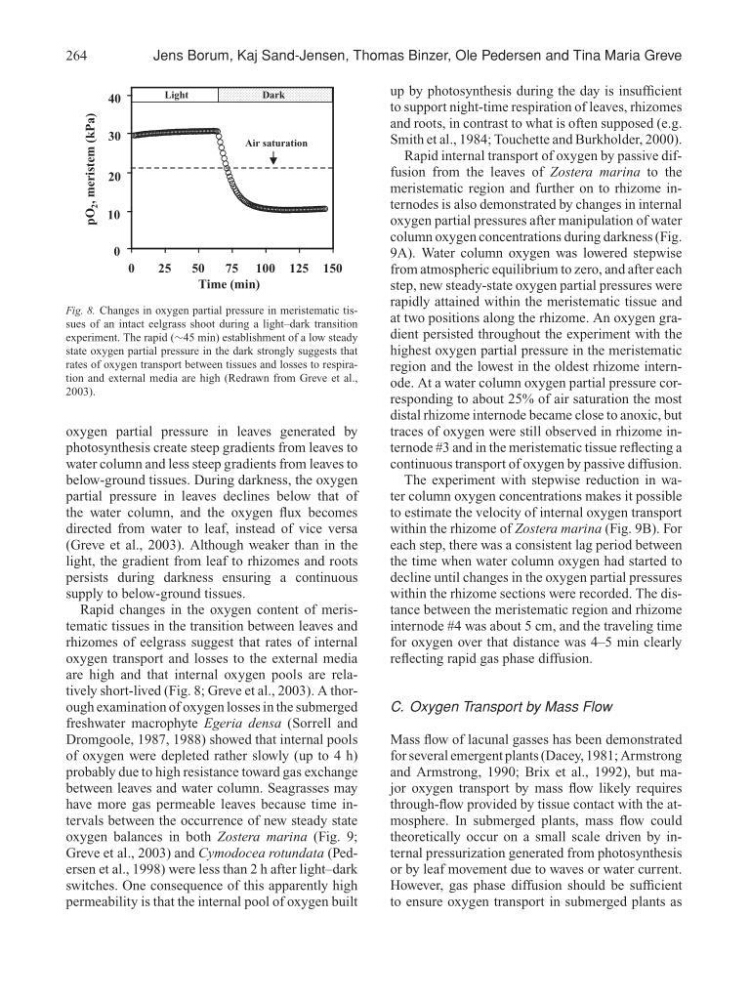
Fig. 8. Changes in oxygen partial pressure in meristematic tissues of an intact eelgrass shoot during a light–dark transition
experiment. The rapid (∼45 min) establishment of a low steady
state oxygen partial pressure in the dark strongly suggests that
rates of oxygen transport between tissues and losses to respiration and external media are high (Redrawn from Greve et al.,
2003).
oxygen partial pressure in leaves generated by
photosynthesis create steep gradients from leaves to
water column and less steep gradients from leaves to
below-ground tissues. During darkness, the oxygen
partial pressure in leaves declines below that of
the water column, and the oxygen flux becomes
directed from water to leaf, instead of vice versa
(Greve et al., 2003). Although weaker than in the
light, the gradient from leaf to rhizomes and roots
persists during darkness ensuring a continuous
supply to below-ground tissues.
Rapid changes in the oxygen content of meristematic tissues in the transition between leaves and
rhizomes of eelgrass suggest that rates of internal
oxygen transport and losses to the external media
are high and that internal oxygen pools are relatively short-lived (Fig. 8; Greve et al., 2003). A thorough examination of oxygen losses in the submerged
freshwater macrophyte Egeria densa (Sorrell and
Dromgoole, 1987, 1988) showed that internal pools
of oxygen were depleted rather slowly (up to 4 h)
probably due to high resistance toward gas exchange
between leaves and water column. Seagrasses may
have more gas permeable leaves because time intervals between the occurrence of new steady state
oxygen balances in both Zostera marina (Fig. 9;
Greve et al., 2003) and Cymodocea rotundata (Pedersen et al., 1998) were less than 2 h after light–dark
switches. One consequence of this apparently high
permeability is that the internal pool of oxygen built
up by photosynthesis during the day is insufficient
to support night-time respiration of leaves, rhizomes
and roots, in contrast to what is often supposed (e.g.
Smith et al., 1984; Touchette and Burkholder, 2000).
Rapid internal transport of oxygen by passive diffusion from the leaves of Zostera marina to the
meristematic region and further on to rhizome internodes is also demonstrated by changes in internal
oxygen partial pressures after manipulation of water
column oxygen concentrations during darkness (Fig.
9A). Water column oxygen was lowered stepwise
from atmospheric equilibrium to zero, and after each
step, new steady-state oxygen partial pressures were
rapidly attained within the meristematic tissue and
at two positions along the rhizome. An oxygen gradient persisted throughout the experiment with the
highest oxygen partial pressure in the meristematic
region and the lowest in the oldest rhizome internode. At a water column oxygen partial pressure corresponding to about 25% of air saturation the most
distal rhizome internode became close to anoxic, but
traces of oxygen were still observed in rhizome internode #3 and in the meristematic tissue reflecting a
continuous transport of oxygen by passive diffusion.
The experiment with stepwise reduction in water column oxygen concentrations makes it possible
to estimate the velocity of internal oxygen transport
within the rhizome of Zostera marina (Fig. 9B). For
each step, there was a consistent lag period between
the time when water column oxygen had started to
decline until changes in the oxygen partial pressures
within the rhizome sections were recorded. The distance between the meristematic region and rhizome
internode #4 was about 5 cm, and the traveling time
for oxygen over that distance was 4–5 min clearly
reflecting rapid gas phase diffusion.
C. Oxygen Transport by Mass Flow
Mass flow of lacunal gasses has been demonstrated
for several emergent plants (Dacey, 1981; Armstrong
and Armstrong, 1990; Brix et al., 1992), but major oxygen transport by mass flow likely requires
through-flow provided by tissue contact with the atmosphere. In submerged plants, mass flow could
theoretically occur on a small scale driven by internal pressurization generated from photosynthesis
or by leaf movement due to waves or water current.
However, gas phase diffusion should be sufficient
to ensure oxygen transport in submerged plants as
Jens Borum, Kaj Sand-Jensen, Thomas Binzer, Ole Pedersen and Tina Maria Greve
0
25
50
75 100 125 150
Time (min)
pO
2 , meristem (kPa)
Light
Dark
Air saturation
10
20
30
40
0
Fig. 8. Changes in oxygen partial pressure in meristematic tissues of an intact eelgrass shoot during a light–dark transition
experiment. The rapid (∼45 min) establishment of a low steady
state oxygen partial pressure in the dark strongly suggests that
rates of oxygen transport between tissues and losses to respiration and external media are high (Redrawn from Greve et al.,
2003).
oxygen partial pressure in leaves generated by
photosynthesis create steep gradients from leaves to
water column and less steep gradients from leaves to
below-ground tissues. During darkness, the oxygen
partial pressure in leaves declines below that of
the water column, and the oxygen flux becomes
directed from water to leaf, instead of vice versa
(Greve et al., 2003). Although weaker than in the
light, the gradient from leaf to rhizomes and roots
persists during darkness ensuring a continuous
supply to below-ground tissues.
Rapid changes in the oxygen content of meristematic tissues in the transition between leaves and
rhizomes of eelgrass suggest that rates of internal
oxygen transport and losses to the external media
are high and that internal oxygen pools are relatively short-lived (Fig. 8; Greve et al., 2003). A thorough examination of oxygen losses in the submerged
freshwater macrophyte Egeria densa (Sorrell and
Dromgoole, 1987, 1988) showed that internal pools
of oxygen were depleted rather slowly (up to 4 h)
probably due to high resistance toward gas exchange
between leaves and water column. Seagrasses may
have more gas permeable leaves because time intervals between the occurrence of new steady state
oxygen balances in both Zostera marina (Fig. 9;
Greve et al., 2003) and Cymodocea rotundata (Pedersen et al., 1998) were less than 2 h after light–dark
switches. One consequence of this apparently high
permeability is that the internal pool of oxygen built
up by photosynthesis during the day is insufficient
to support night-time respiration of leaves, rhizomes
and roots, in contrast to what is often supposed (e.g.
Smith et al., 1984; Touchette and Burkholder, 2000).
Rapid internal transport of oxygen by passive diffusion from the leaves of Zostera marina to the
meristematic region and further on to rhizome internodes is also demonstrated by changes in internal
oxygen partial pressures after manipulation of water
column oxygen concentrations during darkness (Fig.
9A). Water column oxygen was lowered stepwise
from atmospheric equilibrium to zero, and after each
step, new steady-state oxygen partial pressures were
rapidly attained within the meristematic tissue and
at two positions along the rhizome. An oxygen gradient persisted throughout the experiment with the
highest oxygen partial pressure in the meristematic
region and the lowest in the oldest rhizome internode. At a water column oxygen partial pressure corresponding to about 25% of air saturation the most
distal rhizome internode became close to anoxic, but
traces of oxygen were still observed in rhizome internode #3 and in the meristematic tissue reflecting a
continuous transport of oxygen by passive diffusion.
The experiment with stepwise reduction in water column oxygen concentrations makes it possible
to estimate the velocity of internal oxygen transport
within the rhizome of Zostera marina (Fig. 9B). For
each step, there was a consistent lag period between
the time when water column oxygen had started to
decline until changes in the oxygen partial pressures
within the rhizome sections were recorded. The distance between the meristematic region and rhizome
internode #4 was about 5 cm, and the traveling time
for oxygen over that distance was 4–5 min clearly
reflecting rapid gas phase diffusion.
C. Oxygen Transport by Mass Flow
Mass flow of lacunal gasses has been demonstrated
for several emergent plants (Dacey, 1981; Armstrong
and Armstrong, 1990; Brix et al., 1992), but major oxygen transport by mass flow likely requires
through-flow provided by tissue contact with the atmosphere. In submerged plants, mass flow could
theoretically occur on a small scale driven by internal pressurization generated from photosynthesis
or by leaf movement due to waves or water current.
However, gas phase diffusion should be sufficient
to ensure oxygen transport in submerged plants as