

Chapter 10 Oxygen Movement in Seagrasses
263
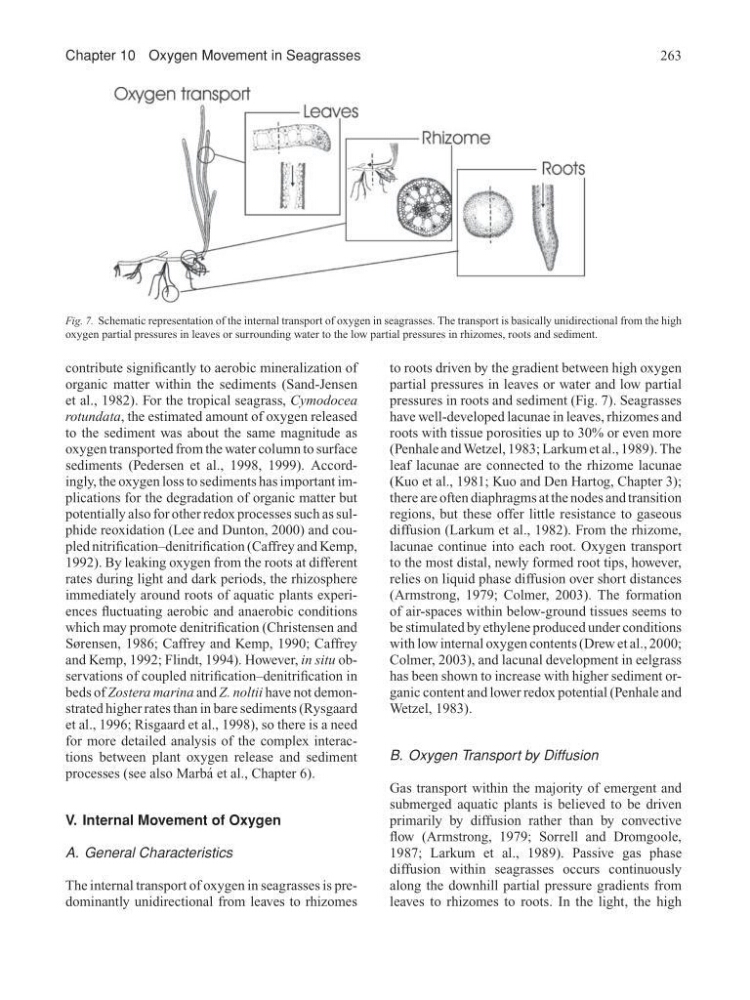
Fig. 7. Schematic representation of the internal transport of oxygen in seagrasses. The transport is basically unidirectional from the high
oxygen partial pressures in leaves or surrounding water to the low partial pressures in rhizomes, roots and sediment.
contribute significantly to aerobic mineralization of
organic matter within the sediments (Sand-Jensen
et al., 1982). For the tropical seagrass, Cymodocea
rotundata, the estimated amount of oxygen released
to the sediment was about the same magnitude as
oxygen transported from the water column to surface
sediments (Pedersen et al., 1998, 1999). Accordingly, the oxygen loss to sediments has important implications for the degradation of organic matter but
potentially also for other redox processes such as sulphide reoxidation (Lee and Dunton, 2000) and coupled nitrification–denitrification (Caffrey and Kemp,
1992). By leaking oxygen from the roots at different
rates during light and dark periods, the rhizosphere
immediately around roots of aquatic plants experiences fluctuating aerobic and anaerobic conditions
which may promote denitrification (Christensen and
Sørensen, 1986; Caffrey and Kemp, 1990; Caffrey
and Kemp, 1992; Flindt, 1994). However, in situ observations of coupled nitrification–denitrification in
beds of Zostera marina and Z. noltii have not demonstrated higher rates than in bare sediments (Rysgaard
et al., 1996; Risgaard et al., 1998), so there is a need
for more detailed analysis of the complex interactions between plant oxygen release and sediment
processes (see also Marb´ a et al., Chapter 6).
V. Internal Movement of Oxygen
A. General Characteristics
The internal transport of oxygen in seagrasses is predominantly unidirectional from leaves to rhizomes
to roots driven by the gradient between high oxygen
partial pressures in leaves or water and low partial
pressures in roots and sediment (Fig. 7). Seagrasses
have well-developed lacunae in leaves, rhizomes and
roots with tissue porosities up to 30% or even more
(Penhale and Wetzel, 1983; Larkum et al., 1989). The
leaf lacunae are connected to the rhizome lacunae
(Kuo et al., 1981; Kuo and Den Hartog, Chapter 3);
there are often diaphragms at the nodes and transition
regions, but these offer little resistance to gaseous
diffusion (Larkum et al., 1982). From the rhizome,
lacunae continue into each root. Oxygen transport
to the most distal, newly formed root tips, however,
relies on liquid phase diffusion over short distances
(Armstrong, 1979; Colmer, 2003). The formation
of air-spaces within below-ground tissues seems to
be stimulated by ethylene produced under conditions
with low internal oxygen contents (Drew et al., 2000;
Colmer, 2003), and lacunal development in eelgrass
has been shown to increase with higher sediment organic content and lower redox potential (Penhale and
Wetzel, 1983).
B. Oxygen Transport by Diffusion
Gas transport within the majority of emergent and
submerged aquatic plants is believed to be driven
primarily by diffusion rather than by convective
flow (Armstrong, 1979; Sorrell and Dromgoole,
1987; Larkum et al., 1989). Passive gas phase
diffusion within seagrasses occurs continuously
along the downhill partial pressure gradients from
leaves to rhizomes to roots. In the light, the high
263
Fig. 7. Schematic representation of the internal transport of oxygen in seagrasses. The transport is basically unidirectional from the high
oxygen partial pressures in leaves or surrounding water to the low partial pressures in rhizomes, roots and sediment.
contribute significantly to aerobic mineralization of
organic matter within the sediments (Sand-Jensen
et al., 1982). For the tropical seagrass, Cymodocea
rotundata, the estimated amount of oxygen released
to the sediment was about the same magnitude as
oxygen transported from the water column to surface
sediments (Pedersen et al., 1998, 1999). Accordingly, the oxygen loss to sediments has important implications for the degradation of organic matter but
potentially also for other redox processes such as sulphide reoxidation (Lee and Dunton, 2000) and coupled nitrification–denitrification (Caffrey and Kemp,
1992). By leaking oxygen from the roots at different
rates during light and dark periods, the rhizosphere
immediately around roots of aquatic plants experiences fluctuating aerobic and anaerobic conditions
which may promote denitrification (Christensen and
Sørensen, 1986; Caffrey and Kemp, 1990; Caffrey
and Kemp, 1992; Flindt, 1994). However, in situ observations of coupled nitrification–denitrification in
beds of Zostera marina and Z. noltii have not demonstrated higher rates than in bare sediments (Rysgaard
et al., 1996; Risgaard et al., 1998), so there is a need
for more detailed analysis of the complex interactions between plant oxygen release and sediment
processes (see also Marb´ a et al., Chapter 6).
V. Internal Movement of Oxygen
A. General Characteristics
The internal transport of oxygen in seagrasses is predominantly unidirectional from leaves to rhizomes
to roots driven by the gradient between high oxygen
partial pressures in leaves or water and low partial
pressures in roots and sediment (Fig. 7). Seagrasses
have well-developed lacunae in leaves, rhizomes and
roots with tissue porosities up to 30% or even more
(Penhale and Wetzel, 1983; Larkum et al., 1989). The
leaf lacunae are connected to the rhizome lacunae
(Kuo et al., 1981; Kuo and Den Hartog, Chapter 3);
there are often diaphragms at the nodes and transition
regions, but these offer little resistance to gaseous
diffusion (Larkum et al., 1982). From the rhizome,
lacunae continue into each root. Oxygen transport
to the most distal, newly formed root tips, however,
relies on liquid phase diffusion over short distances
(Armstrong, 1979; Colmer, 2003). The formation
of air-spaces within below-ground tissues seems to
be stimulated by ethylene produced under conditions
with low internal oxygen contents (Drew et al., 2000;
Colmer, 2003), and lacunal development in eelgrass
has been shown to increase with higher sediment organic content and lower redox potential (Penhale and
Wetzel, 1983).
B. Oxygen Transport by Diffusion
Gas transport within the majority of emergent and
submerged aquatic plants is believed to be driven
primarily by diffusion rather than by convective
flow (Armstrong, 1979; Sorrell and Dromgoole,
1987; Larkum et al., 1989). Passive gas phase
diffusion within seagrasses occurs continuously
along the downhill partial pressure gradients from
leaves to rhizomes to roots. In the light, the high