

Chapter 10 Oxygen Movement in Seagrasses
261
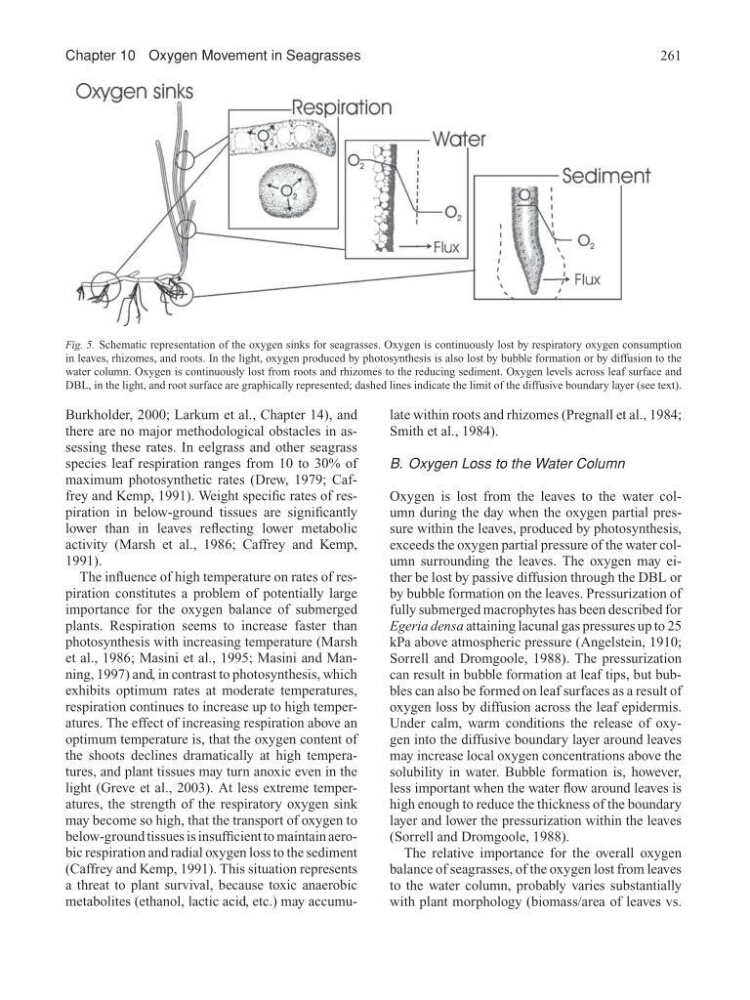
Fig. 5. Schematic representation of the oxygen sinks for seagrasses. Oxygen is continuously lost by respiratory oxygen consumption
in leaves, rhizomes, and roots. In the light, oxygen produced by photosynthesis is also lost by bubble formation or by diffusion to the
water column. Oxygen is continuously lost from roots and rhizomes to the reducing sediment. Oxygen levels across leaf surface and
DBL, in the light, and root surface are graphically represented; dashed lines indicate the limit of the diffusive boundary layer (see text).
Burkholder, 2000; Larkum et al., Chapter 14), and
there are no major methodological obstacles in assessing these rates. In eelgrass and other seagrass
species leaf respiration ranges from 10 to 30% of
maximum photosynthetic rates (Drew, 1979; Caffrey and Kemp, 1991). Weight specific rates of respiration in below-ground tissues are significantly
lower than in leaves reflecting lower metabolic
activity (Marsh et al., 1986; Caffrey and Kemp,
1991).
The influence of high temperature on rates of respiration constitutes a problem of potentially large
importance for the oxygen balance of submerged
plants. Respiration seems to increase faster than
photosynthesis with increasing temperature (Marsh
et al., 1986; Masini et al., 1995; Masini and Manning, 1997) and, in contrast to photosynthesis, which
exhibits optimum rates at moderate temperatures,
respiration continues to increase up to high temperatures. The effect of increasing respiration above an
optimum temperature is, that the oxygen content of
the shoots declines dramatically at high temperatures, and plant tissues may turn anoxic even in the
light (Greve et al., 2003). At less extreme temperatures, the strength of the respiratory oxygen sink
may become so high, that the transport of oxygen to
below-ground tissues is insufficient to maintain aerobic respiration and radial oxygen loss to the sediment
(Caffrey and Kemp, 1991). This situation represents
a threat to plant survival, because toxic anaerobic
metabolites (ethanol, lactic acid, etc.) may accumulate within roots and rhizomes (Pregnall et al., 1984;
Smith et al., 1984).
B. Oxygen Loss to the Water Column
Oxygen is lost from the leaves to the water column during the day when the oxygen partial pressure within the leaves, produced by photosynthesis,
exceeds the oxygen partial pressure of the water column surrounding the leaves. The oxygen may either be lost by passive diffusion through the DBL or
by bubble formation on the leaves. Pressurization of
fully submerged macrophytes has been described for
Egeria densa attaining lacunal gas pressures up to 25
kPa above atmospheric pressure (Angelstein, 1910;
Sorrell and Dromgoole, 1988). The pressurization
can result in bubble formation at leaf tips, but bubbles can also be formed on leaf surfaces as a result of
oxygen loss by diffusion across the leaf epidermis.
Under calm, warm conditions the release of oxygen into the diffusive boundary layer around leaves
may increase local oxygen concentrations above the
solubility in water. Bubble formation is, however,
less important when the water flow around leaves is
high enough to reduce the thickness of the boundary
layer and lower the pressurization within the leaves
(Sorrell and Dromgoole, 1988).
The relative importance for the overall oxygen
balance of seagrasses, of the oxygen lost from leaves
to the water column, probably varies substantially
with plant morphology (biomass/area of leaves vs.
261
Fig. 5. Schematic representation of the oxygen sinks for seagrasses. Oxygen is continuously lost by respiratory oxygen consumption
in leaves, rhizomes, and roots. In the light, oxygen produced by photosynthesis is also lost by bubble formation or by diffusion to the
water column. Oxygen is continuously lost from roots and rhizomes to the reducing sediment. Oxygen levels across leaf surface and
DBL, in the light, and root surface are graphically represented; dashed lines indicate the limit of the diffusive boundary layer (see text).
Burkholder, 2000; Larkum et al., Chapter 14), and
there are no major methodological obstacles in assessing these rates. In eelgrass and other seagrass
species leaf respiration ranges from 10 to 30% of
maximum photosynthetic rates (Drew, 1979; Caffrey and Kemp, 1991). Weight specific rates of respiration in below-ground tissues are significantly
lower than in leaves reflecting lower metabolic
activity (Marsh et al., 1986; Caffrey and Kemp,
1991).
The influence of high temperature on rates of respiration constitutes a problem of potentially large
importance for the oxygen balance of submerged
plants. Respiration seems to increase faster than
photosynthesis with increasing temperature (Marsh
et al., 1986; Masini et al., 1995; Masini and Manning, 1997) and, in contrast to photosynthesis, which
exhibits optimum rates at moderate temperatures,
respiration continues to increase up to high temperatures. The effect of increasing respiration above an
optimum temperature is, that the oxygen content of
the shoots declines dramatically at high temperatures, and plant tissues may turn anoxic even in the
light (Greve et al., 2003). At less extreme temperatures, the strength of the respiratory oxygen sink
may become so high, that the transport of oxygen to
below-ground tissues is insufficient to maintain aerobic respiration and radial oxygen loss to the sediment
(Caffrey and Kemp, 1991). This situation represents
a threat to plant survival, because toxic anaerobic
metabolites (ethanol, lactic acid, etc.) may accumulate within roots and rhizomes (Pregnall et al., 1984;
Smith et al., 1984).
B. Oxygen Loss to the Water Column
Oxygen is lost from the leaves to the water column during the day when the oxygen partial pressure within the leaves, produced by photosynthesis,
exceeds the oxygen partial pressure of the water column surrounding the leaves. The oxygen may either be lost by passive diffusion through the DBL or
by bubble formation on the leaves. Pressurization of
fully submerged macrophytes has been described for
Egeria densa attaining lacunal gas pressures up to 25
kPa above atmospheric pressure (Angelstein, 1910;
Sorrell and Dromgoole, 1988). The pressurization
can result in bubble formation at leaf tips, but bubbles can also be formed on leaf surfaces as a result of
oxygen loss by diffusion across the leaf epidermis.
Under calm, warm conditions the release of oxygen into the diffusive boundary layer around leaves
may increase local oxygen concentrations above the
solubility in water. Bubble formation is, however,
less important when the water flow around leaves is
high enough to reduce the thickness of the boundary
layer and lower the pressurization within the leaves
(Sorrell and Dromgoole, 1988).
The relative importance for the overall oxygen
balance of seagrasses, of the oxygen lost from leaves
to the water column, probably varies substantially
with plant morphology (biomass/area of leaves vs.