

260
Jens Borum, Kaj Sand-Jensen, Thomas Binzer, Ole Pedersen and Tina Maria Greve
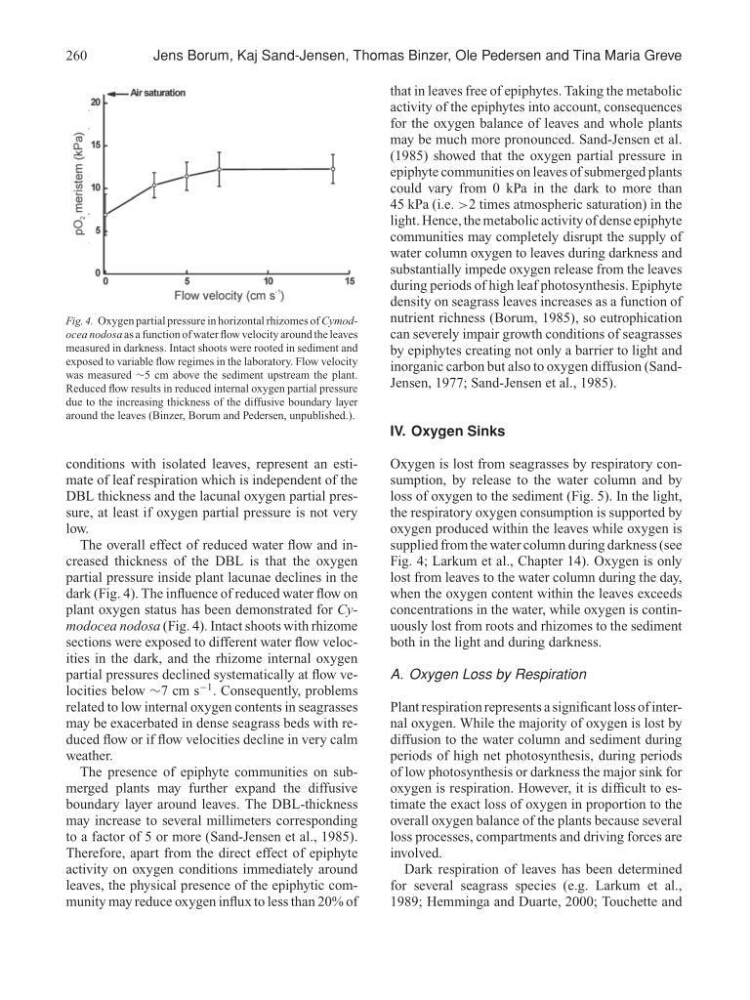
Fig. 4. Oxygen partial pressure in horizontal rhizomes of Cymodocea nodosa as a function of water flow velocity around the leaves
measured in darkness. Intact shoots were rooted in sediment and
exposed to variable flow regimes in the laboratory. Flow velocity
was measured ∼5 cm above the sediment upstream the plant.
Reduced flow results in reduced internal oxygen partial pressure
due to the increasing thickness of the diffusive boundary layer
around the leaves (Binzer, Borum and Pedersen, unpublished.).
conditions with isolated leaves, represent an estimate of leaf respiration which is independent of the
DBL thickness and the lacunal oxygen partial pressure, at least if oxygen partial pressure is not very
low.
The overall effect of reduced water flow and increased thickness of the DBL is that the oxygen
partial pressure inside plant lacunae declines in the
dark (Fig. 4). The influence of reduced water flow on
plant oxygen status has been demonstrated for Cymodocea nodosa (Fig. 4). Intact shoots with rhizome
sections were exposed to different water flow velocities in the dark, and the rhizome internal oxygen
partial pressures declined systematically at flow velocities below ∼7 cm s
−1 . Consequently, problems
related to low internal oxygen contents in seagrasses
may be exacerbated in dense seagrass beds with reduced flow or if flow velocities decline in very calm
weather.
The presence of epiphyte communities on submerged plants may further expand the diffusive
boundary layer around leaves. The DBL-thickness
may increase to several millimeters corresponding
to a factor of 5 or more (Sand-Jensen et al., 1985).
Therefore, apart from the direct effect of epiphyte
activity on oxygen conditions immediately around
leaves, the physical presence of the epiphytic community may reduce oxygen influx to less than 20% of
that in leaves free of epiphytes. Taking the metabolic
activity of the epiphytes into account, consequences
for the oxygen balance of leaves and whole plants
may be much more pronounced. Sand-Jensen et al.
(1985) showed that the oxygen partial pressure in
epiphyte communities on leaves of submerged plants
could vary from 0 kPa in the dark to more than
45 kPa (i.e. >2 times atmospheric saturation) in the
light. Hence, the metabolic activity of dense epiphyte
communities may completely disrupt the supply of
water column oxygen to leaves during darkness and
substantially impede oxygen release from the leaves
during periods of high leaf photosynthesis. Epiphyte
density on seagrass leaves increases as a function of
nutrient richness (Borum, 1985), so eutrophication
can severely impair growth conditions of seagrasses
by epiphytes creating not only a barrier to light and
inorganic carbon but also to oxygen diffusion (SandJensen, 1977; Sand-Jensen et al., 1985).
IV. Oxygen Sinks
Oxygen is lost from seagrasses by respiratory consumption, by release to the water column and by
loss of oxygen to the sediment (Fig. 5). In the light,
the respiratory oxygen consumption is supported by
oxygen produced within the leaves while oxygen is
supplied from the water column during darkness (see
Fig. 4; Larkum et al., Chapter 14). Oxygen is only
lost from leaves to the water column during the day,
when the oxygen content within the leaves exceeds
concentrations in the water, while oxygen is continuously lost from roots and rhizomes to the sediment
both in the light and during darkness.
A. Oxygen Loss by Respiration
Plant respiration represents a significant loss of internal oxygen. While the majority of oxygen is lost by
diffusion to the water column and sediment during
periods of high net photosynthesis, during periods
of low photosynthesis or darkness the major sink for
oxygen is respiration. However, it is difficult to estimate the exact loss of oxygen in proportion to the
overall oxygen balance of the plants because several
loss processes, compartments and driving forces are
involved.
Dark respiration of leaves has been determined
for several seagrass species (e.g. Larkum et al.,
1989; Hemminga and Duarte, 2000; Touchette and
Jens Borum, Kaj Sand-Jensen, Thomas Binzer, Ole Pedersen and Tina Maria Greve
Fig. 4. Oxygen partial pressure in horizontal rhizomes of Cymodocea nodosa as a function of water flow velocity around the leaves
measured in darkness. Intact shoots were rooted in sediment and
exposed to variable flow regimes in the laboratory. Flow velocity
was measured ∼5 cm above the sediment upstream the plant.
Reduced flow results in reduced internal oxygen partial pressure
due to the increasing thickness of the diffusive boundary layer
around the leaves (Binzer, Borum and Pedersen, unpublished.).
conditions with isolated leaves, represent an estimate of leaf respiration which is independent of the
DBL thickness and the lacunal oxygen partial pressure, at least if oxygen partial pressure is not very
low.
The overall effect of reduced water flow and increased thickness of the DBL is that the oxygen
partial pressure inside plant lacunae declines in the
dark (Fig. 4). The influence of reduced water flow on
plant oxygen status has been demonstrated for Cymodocea nodosa (Fig. 4). Intact shoots with rhizome
sections were exposed to different water flow velocities in the dark, and the rhizome internal oxygen
partial pressures declined systematically at flow velocities below ∼7 cm s
−1 . Consequently, problems
related to low internal oxygen contents in seagrasses
may be exacerbated in dense seagrass beds with reduced flow or if flow velocities decline in very calm
weather.
The presence of epiphyte communities on submerged plants may further expand the diffusive
boundary layer around leaves. The DBL-thickness
may increase to several millimeters corresponding
to a factor of 5 or more (Sand-Jensen et al., 1985).
Therefore, apart from the direct effect of epiphyte
activity on oxygen conditions immediately around
leaves, the physical presence of the epiphytic community may reduce oxygen influx to less than 20% of
that in leaves free of epiphytes. Taking the metabolic
activity of the epiphytes into account, consequences
for the oxygen balance of leaves and whole plants
may be much more pronounced. Sand-Jensen et al.
(1985) showed that the oxygen partial pressure in
epiphyte communities on leaves of submerged plants
could vary from 0 kPa in the dark to more than
45 kPa (i.e. >2 times atmospheric saturation) in the
light. Hence, the metabolic activity of dense epiphyte
communities may completely disrupt the supply of
water column oxygen to leaves during darkness and
substantially impede oxygen release from the leaves
during periods of high leaf photosynthesis. Epiphyte
density on seagrass leaves increases as a function of
nutrient richness (Borum, 1985), so eutrophication
can severely impair growth conditions of seagrasses
by epiphytes creating not only a barrier to light and
inorganic carbon but also to oxygen diffusion (SandJensen, 1977; Sand-Jensen et al., 1985).
IV. Oxygen Sinks
Oxygen is lost from seagrasses by respiratory consumption, by release to the water column and by
loss of oxygen to the sediment (Fig. 5). In the light,
the respiratory oxygen consumption is supported by
oxygen produced within the leaves while oxygen is
supplied from the water column during darkness (see
Fig. 4; Larkum et al., Chapter 14). Oxygen is only
lost from leaves to the water column during the day,
when the oxygen content within the leaves exceeds
concentrations in the water, while oxygen is continuously lost from roots and rhizomes to the sediment
both in the light and during darkness.
A. Oxygen Loss by Respiration
Plant respiration represents a significant loss of internal oxygen. While the majority of oxygen is lost by
diffusion to the water column and sediment during
periods of high net photosynthesis, during periods
of low photosynthesis or darkness the major sink for
oxygen is respiration. However, it is difficult to estimate the exact loss of oxygen in proportion to the
overall oxygen balance of the plants because several
loss processes, compartments and driving forces are
involved.
Dark respiration of leaves has been determined
for several seagrass species (e.g. Larkum et al.,
1989; Hemminga and Duarte, 2000; Touchette and