

Chapter 7 Carbon Flux in Seagrasses
171
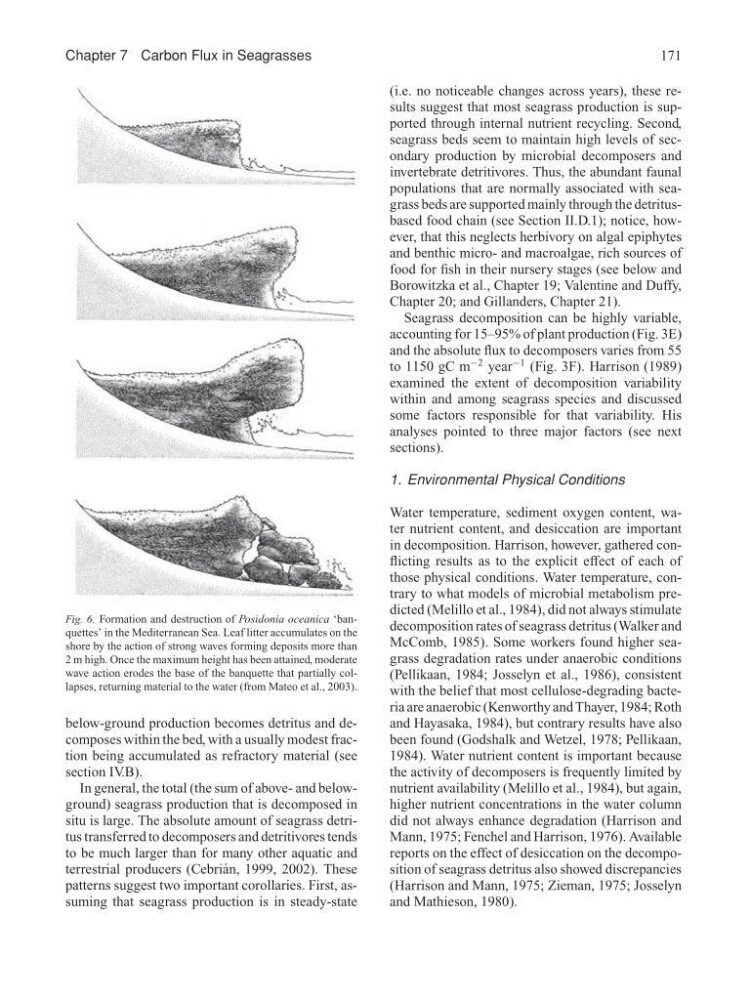
Fig. 6. Formation and destruction of Posidonia oceanica ‘banquettes’ in the Mediterranean Sea. Leaf litter accumulates on the
shore by the action of strong waves forming deposits more than
2 m high. Once the maximum height has been attained, moderate
wave action erodes the base of the banquette that partially collapses, returning material to the water (from Mateo et al., 2003).
below-ground production becomes detritus and decomposes within the bed, with a usually modest fraction being accumulated as refractory material (see
section IV.B).
In general, the total (the sum of above- and belowground) seagrass production that is decomposed in
situ is large. The absolute amount of seagrass detritus transferred to decomposers and detritivores tends
to be much larger than for many other aquatic and
terrestrial producers (Cebri´ an, 1999, 2002). These
patterns suggest two important corollaries. First, assuming that seagrass production is in steady-state
(i.e. no noticeable changes across years), these results suggest that most seagrass production is supported through internal nutrient recycling. Second,
seagrass beds seem to maintain high levels of secondary production by microbial decomposers and
invertebrate detritivores. Thus, the abundant faunal
populations that are normally associated with seagrass beds are supported mainly through the detritusbased food chain (see Section II.D.1); notice, however, that this neglects herbivory on algal epiphytes
and benthic micro- and macroalgae, rich sources of
food for fish in their nursery stages (see below and
Borowitzka et al., Chapter 19; Valentine and Duffy,
Chapter 20; and Gillanders, Chapter 21).
Seagrass decomposition can be highly variable,
accounting for 15–95% of plant production (Fig. 3E)
and the absolute flux to decomposers varies from 55
to 1150 gC m
−2 year
−1 (Fig. 3F). Harrison (1989)
examined the extent of decomposition variability
within and among seagrass species and discussed
some factors responsible for that variability. His
analyses pointed to three major factors (see next
sections).
1. Environmental Physical Conditions
Water temperature, sediment oxygen content, water nutrient content, and desiccation are important
in decomposition. Harrison, however, gathered conflicting results as to the explicit effect of each of
those physical conditions. Water temperature, contrary to what models of microbial metabolism predicted (Melillo et al., 1984), did not always stimulate
decomposition rates of seagrass detritus (Walker and
McComb, 1985). Some workers found higher seagrass degradation rates under anaerobic conditions
(Pellikaan, 1984; Josselyn et al., 1986), consistent
with the belief that most cellulose-degrading bacteria are anaerobic (Kenworthy and Thayer, 1984; Roth
and Hayasaka, 1984), but contrary results have also
been found (Godshalk and Wetzel, 1978; Pellikaan,
1984). Water nutrient content is important because
the activity of decomposers is frequently limited by
nutrient availability (Melillo et al., 1984), but again,
higher nutrient concentrations in the water column
did not always enhance degradation (Harrison and
Mann, 1975; Fenchel and Harrison, 1976). Available
reports on the effect of desiccation on the decomposition of seagrass detritus also showed discrepancies
(Harrison and Mann, 1975; Zieman, 1975; Josselyn
and Mathieson, 1980).
171
Fig. 6. Formation and destruction of Posidonia oceanica ‘banquettes’ in the Mediterranean Sea. Leaf litter accumulates on the
shore by the action of strong waves forming deposits more than
2 m high. Once the maximum height has been attained, moderate
wave action erodes the base of the banquette that partially collapses, returning material to the water (from Mateo et al., 2003).
below-ground production becomes detritus and decomposes within the bed, with a usually modest fraction being accumulated as refractory material (see
section IV.B).
In general, the total (the sum of above- and belowground) seagrass production that is decomposed in
situ is large. The absolute amount of seagrass detritus transferred to decomposers and detritivores tends
to be much larger than for many other aquatic and
terrestrial producers (Cebri´ an, 1999, 2002). These
patterns suggest two important corollaries. First, assuming that seagrass production is in steady-state
(i.e. no noticeable changes across years), these results suggest that most seagrass production is supported through internal nutrient recycling. Second,
seagrass beds seem to maintain high levels of secondary production by microbial decomposers and
invertebrate detritivores. Thus, the abundant faunal
populations that are normally associated with seagrass beds are supported mainly through the detritusbased food chain (see Section II.D.1); notice, however, that this neglects herbivory on algal epiphytes
and benthic micro- and macroalgae, rich sources of
food for fish in their nursery stages (see below and
Borowitzka et al., Chapter 19; Valentine and Duffy,
Chapter 20; and Gillanders, Chapter 21).
Seagrass decomposition can be highly variable,
accounting for 15–95% of plant production (Fig. 3E)
and the absolute flux to decomposers varies from 55
to 1150 gC m
−2 year
−1 (Fig. 3F). Harrison (1989)
examined the extent of decomposition variability
within and among seagrass species and discussed
some factors responsible for that variability. His
analyses pointed to three major factors (see next
sections).
1. Environmental Physical Conditions
Water temperature, sediment oxygen content, water nutrient content, and desiccation are important
in decomposition. Harrison, however, gathered conflicting results as to the explicit effect of each of
those physical conditions. Water temperature, contrary to what models of microbial metabolism predicted (Melillo et al., 1984), did not always stimulate
decomposition rates of seagrass detritus (Walker and
McComb, 1985). Some workers found higher seagrass degradation rates under anaerobic conditions
(Pellikaan, 1984; Josselyn et al., 1986), consistent
with the belief that most cellulose-degrading bacteria are anaerobic (Kenworthy and Thayer, 1984; Roth
and Hayasaka, 1984), but contrary results have also
been found (Godshalk and Wetzel, 1978; Pellikaan,
1984). Water nutrient content is important because
the activity of decomposers is frequently limited by
nutrient availability (Melillo et al., 1984), but again,
higher nutrient concentrations in the water column
did not always enhance degradation (Harrison and
Mann, 1975; Fenchel and Harrison, 1976). Available
reports on the effect of desiccation on the decomposition of seagrass detritus also showed discrepancies
(Harrison and Mann, 1975; Zieman, 1975; Josselyn
and Mathieson, 1980).