

that these conditions most likely varied during the
Archaean, it is possible to provide some clues about the
climatic conditions of the primitive Earth that were markedly different from those known today (Nisbet and Fowler
2003). Volcanic and hydrothermal activity was more
intense than at present. The amount of energy emitted by
the sun that reached the surface of the Earth was 20–30 %
lower than today. The atmosphere was probably richer in
CO 2 but also contained one or more other greenhouse
gases, such as methane (CH 4 ). The intensity of the greenhouse effect would have offset the weaker luminescence of
the early sun and allowed water to remain on the surface in
the liquid state. The presence of trace amounts of molecular
nitrogen (N 2 ), ammonia (NH 3 ), nitric oxide (NO), nitrate
(NO 3
-) , carbon monoxide (CO), dihydrogen (H 2 ), sulphide
(H 2 S) and sulphate (SO 4
2 -) in the atmosphere is also plausible. One important issue is the concentration of dioxygen
(O 2 ) . Most current hypotheses postulate that the
atmosphere and the oceans were virtually anoxic. However,
some authors believe that dioxygen generated by the photolysis of water was present in the atmosphere and the
ocean surface at low concentrations in the range of
0.2–2 % of the current atmospheric level (21 %). Others
argue instead that the concentration of dioxygen could have
been much larger (Ohmoto 2004).
Regarding the temperature of the ocean, isotopic analysis
of oxygen and silicon trapped in Archaean rocks suggests
that the average temperature was higher than today, possibly
about 50
C (van den Boorn et al. 2007) or even 70–80
C
(Knauth and Lowe 2003). Under such conditions, the majority of available ecological niches would have been habitable
by thermophilic organisms. These high temperatures would
imply a very high level of CO 2 in the atmosphere (2–6 bar)
and, therefore, extremely acidic rains (pH 3.7), which would
have rapidly corroded exposed proto-continental rocks.
However, there is no geological evidence for large scale
Genealogical approach
LUCA is an organism
Global approach
LUCA is a community of organisms
( + + …)
a
b
Time
HGT
*
*
*
*
*
*
*
*
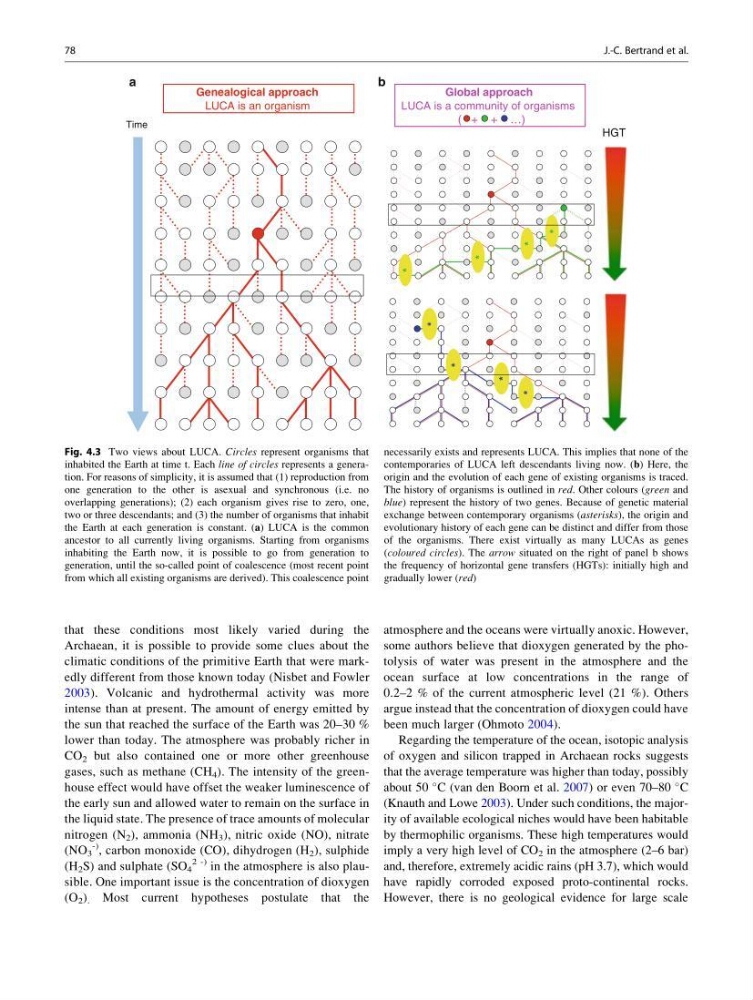
Fig. 4.3 Two views about LUCA. Circles represent organisms that
inhabited the Earth at time t. Each line of circles represents a generation. For reasons of simplicity, it is assumed that (1) reproduction from
one generation to the other is asexual and synchronous (i.e. no
overlapping generations); (2) each organism gives rise to zero, one,
two or three descendants; and (3) the number of organisms that inhabit
the Earth at each generation is constant. (a) LUCA is the common
ancestor to all currently living organisms. Starting from organisms
inhabiting the Earth now, it is possible to go from generation to
generation, until the so-called point of coalescence (most recent point
from which all existing organisms are derived). This coalescence point
necessarily exists and represents LUCA. This implies that none of the
contemporaries of LUCA left descendants living now. (b) Here, the
origin and the evolution of each gene of existing organisms is traced.
The history of organisms is outlined in red. Other colours (green and
blue) represent the history of two genes. Because of genetic material
exchange between contemporary organisms (asterisks), the origin and
evolutionary history of each gene can be distinct and differ from those
of the organisms. There exist virtually as many LUCAs as genes
(coloured circles). The arrow situated on the right of panel b shows
the frequency of horizontal gene transfers (HGTs): initially high and
gradually lower (red)
78
J.-C. Bertrand et al.
Archaean, it is possible to provide some clues about the
climatic conditions of the primitive Earth that were markedly different from those known today (Nisbet and Fowler
2003). Volcanic and hydrothermal activity was more
intense than at present. The amount of energy emitted by
the sun that reached the surface of the Earth was 20–30 %
lower than today. The atmosphere was probably richer in
CO 2 but also contained one or more other greenhouse
gases, such as methane (CH 4 ). The intensity of the greenhouse effect would have offset the weaker luminescence of
the early sun and allowed water to remain on the surface in
the liquid state. The presence of trace amounts of molecular
nitrogen (N 2 ), ammonia (NH 3 ), nitric oxide (NO), nitrate
(NO 3
-) , carbon monoxide (CO), dihydrogen (H 2 ), sulphide
(H 2 S) and sulphate (SO 4
2 -) in the atmosphere is also plausible. One important issue is the concentration of dioxygen
(O 2 ) . Most current hypotheses postulate that the
atmosphere and the oceans were virtually anoxic. However,
some authors believe that dioxygen generated by the photolysis of water was present in the atmosphere and the
ocean surface at low concentrations in the range of
0.2–2 % of the current atmospheric level (21 %). Others
argue instead that the concentration of dioxygen could have
been much larger (Ohmoto 2004).
Regarding the temperature of the ocean, isotopic analysis
of oxygen and silicon trapped in Archaean rocks suggests
that the average temperature was higher than today, possibly
about 50
C (van den Boorn et al. 2007) or even 70–80
C
(Knauth and Lowe 2003). Under such conditions, the majority of available ecological niches would have been habitable
by thermophilic organisms. These high temperatures would
imply a very high level of CO 2 in the atmosphere (2–6 bar)
and, therefore, extremely acidic rains (pH 3.7), which would
have rapidly corroded exposed proto-continental rocks.
However, there is no geological evidence for large scale
Genealogical approach
LUCA is an organism
Global approach
LUCA is a community of organisms
( + + …)
a
b
Time
HGT
*
*
*
*
*
*
*
*
Fig. 4.3 Two views about LUCA. Circles represent organisms that
inhabited the Earth at time t. Each line of circles represents a generation. For reasons of simplicity, it is assumed that (1) reproduction from
one generation to the other is asexual and synchronous (i.e. no
overlapping generations); (2) each organism gives rise to zero, one,
two or three descendants; and (3) the number of organisms that inhabit
the Earth at each generation is constant. (a) LUCA is the common
ancestor to all currently living organisms. Starting from organisms
inhabiting the Earth now, it is possible to go from generation to
generation, until the so-called point of coalescence (most recent point
from which all existing organisms are derived). This coalescence point
necessarily exists and represents LUCA. This implies that none of the
contemporaries of LUCA left descendants living now. (b) Here, the
origin and the evolution of each gene of existing organisms is traced.
The history of organisms is outlined in red. Other colours (green and
blue) represent the history of two genes. Because of genetic material
exchange between contemporary organisms (asterisks), the origin and
evolutionary history of each gene can be distinct and differ from those
of the organisms. There exist virtually as many LUCAs as genes
(coloured circles). The arrow situated on the right of panel b shows
the frequency of horizontal gene transfers (HGTs): initially high and
gradually lower (red)
78
J.-C. Bertrand et al.