

connected to sensors attached to the center of the frame
that provide real-time information on the hydrologic
characteristics of the water column (e.g., temperature, salinity, oxygen, pH, fluorescence, and optical properties). This
information is typically used to select the water collection
depths precisely. Closure of the bottles is activated by the
operator using an electrical impulse, usually as the rosette is
being lifted. Water samples are obtained during the upcast,
and the closure of the bottles is tripped while the package is
stopped or still moving slowly.
The collected water is then brought on board very
quickly and can be immediately used for chemical
analysis or for experiments with microorganisms
(Fig. 17.5). Nevertheless, the rapid rise from deep waters
to the surface may cause large variations of some physical
parameters such as pressure. Thus, for physiological studies of microorganisms that are adapted to grow under very
high pressures (such as bacteria), microbiologists have
developed bottles able to maintain the hydrostatic pressure
during water collection and during sampling on board
(cf. Sect. 17.3).
It is a great challenge to sample seawater across
interfaces, such as the halocline or the redoxcline, to
investigate trace metal distribution. With the use of 5- to
10-l sampling bottles mounted on a wire or a CTD rosette,
it is possible to obtain a maximum vertical resolution of
5 m. For the detection of small vertical structures in the
vertical distribution of trace metals across the redoxcline,
a CTD-Bottle-Rosette is not sufficient. Therefore, a
PUMP–CTD System has been developed that permits
water sampling at high resolution (1 m maximum) along
a vertical profile.
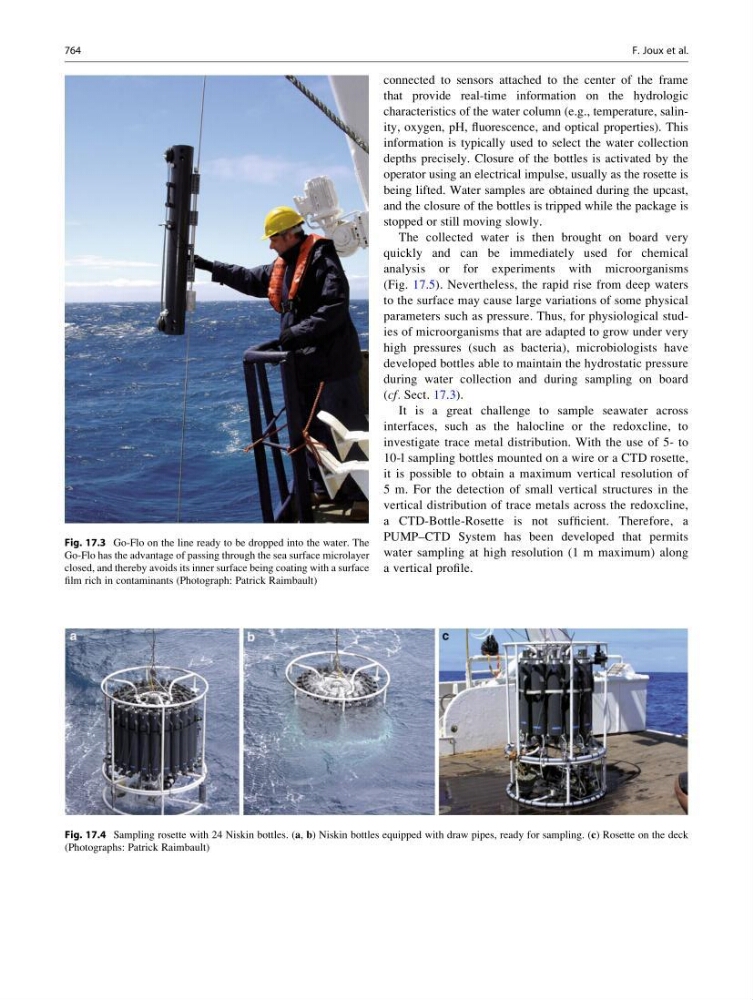
Fig. 17.3 Go-Flo on the line ready to be dropped into the water. The
Go-Flo has the advantage of passing through the sea surface microlayer
closed, and thereby avoids its inner surface being coating with a surface
film rich in contaminants (Photograph: Patrick Raimbault)
Fig. 17.4 Sampling rosette with 24 Niskin bottles. (a, b) Niskin bottles equipped with draw pipes, ready for sampling. (c) Rosette on the deck
(Photographs: Patrick Raimbault)
764
F. Joux et al.