

16.8.2.4 Natural Elimination of Petroleum
Hydrocarbons in the Marine Environment
As soon as released in the environment, the petroleum is
submitted to a natural elimination upon the joint action of
physical, chemical, and biological processes (Fig. 16.42).
The relative importance of these different processes depends
on the input chemical composition, the concerned environments (pelagic, coastal, or lagoon area), and their geographical location (Leahy and Colwell 1990; Harayama et al.
1999; Peters et al. 2005).
Physicochemical Processes
In a first time, after spread and dispersal of the oil spill, the
lightest compounds evaporate, prompting atmospheric
pollution. Compounds whose boiling point is < 150
C
(from C 1 to C 10 ) are eliminated within 2 h after their input
into the sea and those whose boiling point is < 250
C (from
C 10 to C 15 ) are lost in one day. In the Amoco Cadiz case, in 3
days, almost 40 % of the oil mass was transferred to the
atmosphere. Though petroleum is globally weakly soluble in
seawater, a non-negligible fraction that may represent 9–15 %
is dissolved and leave the oil spill (Fig. 16.42). In parallel,
petroleum is submitted to the action of photooxidation processes; there are oxygenation reactions that occur under the
combine action of dioxygen and sun radiations with wavelength > 290 nm. These reactions are grouped in two
categories: direct reactions where light is directly absorbed
by hydrocarbons (aromatics) induced reactions where
molecules qualified as photosensitizating (chlorophyll,
pheopigments, humic and fulvic acids, some quinones like
anthraquinone) absorb light and transfer the received energy
to hydrocarbons. Photooxidation essentially affects aromatic
compounds; among aliphatic compounds, the branched ones
are more easily oxidized than n-alkanes. Photooxidation
products (hydroperoxides, phenols, carboxylic acids, ketones,
aldehydes, etc.) are found in the polar fraction of petroleum.
The light action, very important at surface, is very quickly
attenuated with depth and is usually limited to the upper 25 m
of the water column. It is worth noting that photoproducts,
though often more toxic than the initial hydrocarbons, are
more soluble and thus more easily eliminated by bacteria
(Ni’Matuzahro et al. 1999). Another petroleum fraction is
also emulsified, producing emulsions of the types water in
oil and oil in water. The former, called “chocolate mousse”,
appear as a sticky mass, highly viscous, and more or less dark
brown: they contain 50–80 % water and are very difficult to
mechanically collect, treat, or burn. They increase the initial
petroleum volume (three- to fivefold), whereas its density
becomes higher than that of seawater which prompts its
sedimentation. Viscosity also increases, inducing the formation of a semisolid material, precursor of the tarry residues,
and/or to “tarballs” found on beaches. This kind of emulsion
reduces the petroleum product spreading, their evaporation,
their oxidation by photooxidation, the size of the hydrocarbon
exposed surface, and, consequently, their biodegradation.
Under the influence of turbulence, oil-in-water emulsions
are formed, resulting from the oil spill fragmentation leading
to build-up of a few μm to 100 μm microdroplets that favor
biodegradation processes. This process is enhanced by the
presence of emulsifying factors (biosurfactants). Petroleum
degradation by evaporation, dissolution, emulsification, photooxidation, and biodegradation contributes to increasing its
density and also causes its sedimentation that can be
accelerated by petroleum (hydrophobic) interaction with
water column suspended particles. Thus, about 20–30 %
petroleum may reach the water-sediment interface.
Biodegradation Processes
Under in vitro conditions, the degradation of the different
hydrocarbon classes involved in the petroleum composition
is relatively well known for most of the compounds (Atlas
1981; Bertrand et al. 1983; Leahy and Colwell 1990; van
Hamme et al. 2003; Peters et al. 2005; Timmis 2010). However, the degradation of several polyaromatic compounds and
the polar fraction is still incompletely cleared up, particularly
that of asphaltenes and resins; however, it was shown that
asphaltenes could be biotransformed (Rontani et al. 1985) and
even biodegraded (Pineda-Flores et al. 2004). In situ, within
the water column and sediments, the degradation by
microorganisms is a major process in the hydrocarbon elimination. However, taking into account the chemical petroleum
complexity, its biodegradation can only be achieved by bacterial communities with complementary metabolic capacities
and whose activity will depend on the following:
(i) The hydrocarbon chemical structure and concentration.
It comes out from all in situ studies, particularly
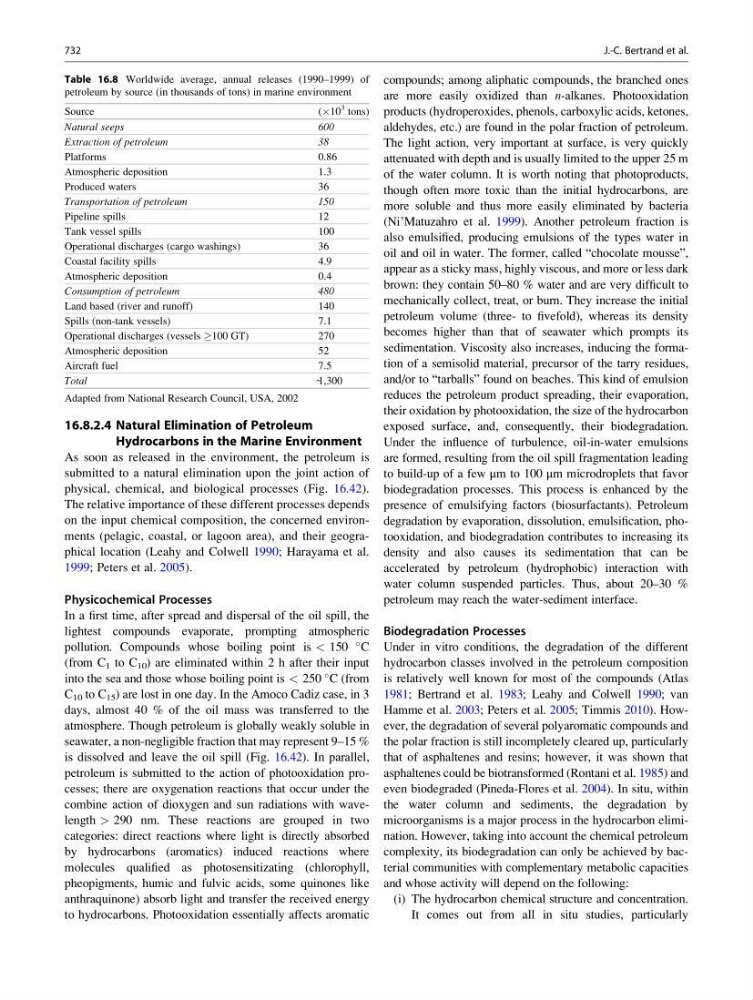
Table 16.8 Worldwide average, annual releases (1990–1999) of
petroleum by source (in thousands of tons) in marine environment
Source
(Â10
3 tons)
Natural seeps
600
Extraction of petroleum
38
Platforms
0.86
Atmospheric deposition
1.3
Produced waters
36
Transportation of petroleum
150
Pipeline spills
12
Tank vessel spills
100
Operational discharges (cargo washings)
36
Coastal facility spills
4.9
Atmospheric deposition
0.4
Consumption of petroleum
480
Land based (river and runoff)
140
Spills (non-tank vessels)
7.1
Operational discharges (vessels !100 GT)
270
Atmospheric deposition
52
Aircraft fuel
7.5
Total
̴ 1,300
Adapted from National Research Council, USA, 2002
732
J.-C. Bertrand et al.