

those addressing oil slicks, that most of petroleum
compounds are degraded except asphaltenes. In addition,
some molecules are very resistant (recalcitrant) to biodegradation, and their degradation only takes place
at the very end of hydrocarbon degradation (Head
et al. 2003). These molecules called “biomarkers”
are used as “internal conserved biodegradation
standards” to determine, in a relative way, the hydrocarbon degradation level of a crude oil by measuring
the disappearance of less recalcitrant compound
families (Fig. 16.38) (Prince et al. 1994; Le Dre ´au
et al. 1997). In a first time, isoprenoid alkanes (pristane and phytane) were used as biomarkers and the
time course of the ratios C 17 /pristane and C 18 /phytane
was considered as a good biodegradation indicator.
However, it was later shown that isoprenoids were
degraded in situ at the early stage of hydrocarbon
degradation (1–6 months) (Le Dre ´au et al. 1997).
Food webs
(Bioaccumulation)
Emulsions
Oil petroleum
hydrocarbons
Bioturbation
Neretic
province
Oceanic
province
Tarballs
Burying
trapping
Sediment
Dissolved
hydrocarbons
Emulsification
Adsorption
Aggregation
Dissolution
Sedimentation
Dispersion
Desorption
Evaporation
Photooxidation
Dispersion/Spreading/
Physical transport
Dispersion/Spreading/
Physical transport
W
a t e r
c o l u m
n
Upwelling
Biodegradation
Detritus
fecal pelets
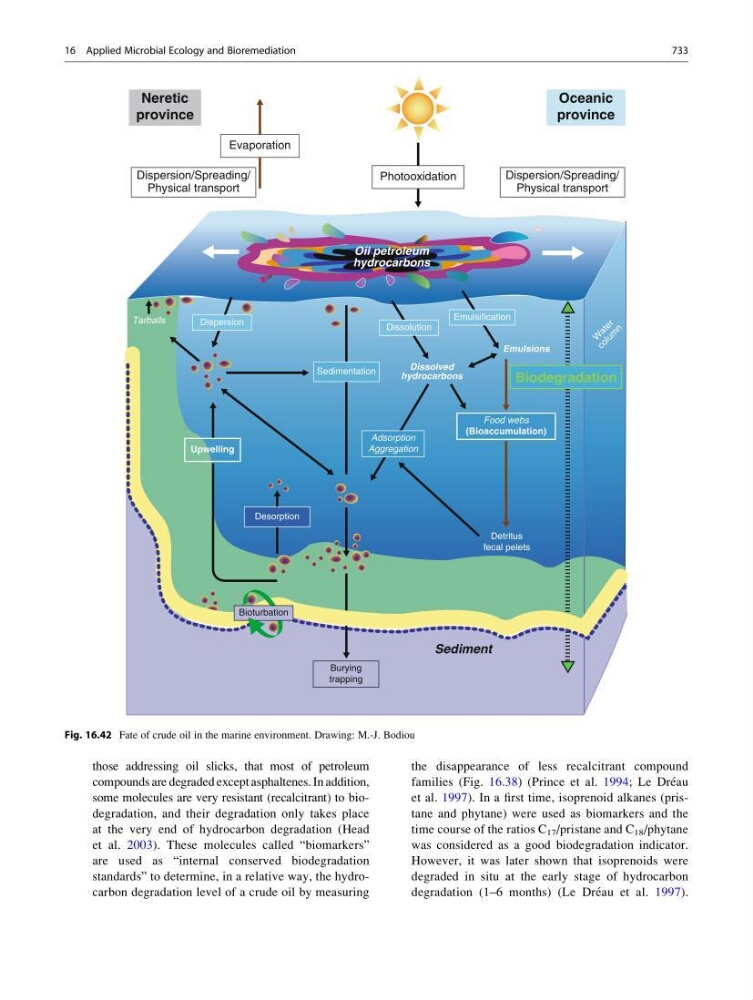
Fig. 16.42 Fate of crude oil in the marine environment. Drawing: M.-J. Bodiou
16 Applied Microbial Ecology and Bioremediation
733