

made up of organic matter; manure, for example, contains
nitrates, toxic garbages, etc.
World production of waste is about 4 billion tons
per year and only 1 billion is currently valued. The two
major degradation pathways and biological recovery of
waste, composting and methanogenesis, mainly provided
by microorganisms, tend to grow at the expense of
physicochemical treatment and disposal. Generally,
methanogenesis is called “solid” when the waste to be
treated has a dry matter content higher than 15–20 %.
Biological processes involved in the degradation
of organic waste are similar to processes that are
expressed in the natural environment during the degradation of organic matter; however they are enhanced and
controlled.
In this manual, the treatment of radioactive, industrial,
and hospital wastes will not be discussed. Readers can refer
to books published by Williams (2005); Woodard and
Curran, Inc (2006); and Degre ´mont (2008).
16.5.3 Aerobic Treatment or Composting
16.5.3.1 Definition
Composting is a biological process in which organic matter
is degraded by aerobic microbial communities whose
composition varies according to the different stages of transformation of organic matter and its maturity. All organic
wastes are biodegradable and compostable. This process
therefore applies to a wide spectrum of organic materials:
green waste (garden waste from the public and private
gardens), household organic wastes (a preliminary waste
sorting step mandatory to eliminate nonbiodegradable
components such as glass, metals, etc.), sludge from wastewater treatment plants which, because of their high moisture
content, are mixed with a structuring compound (chips,
sawdust wood, straw, bark, etc.) before being composted,
agro-food waste (waste from the sugar beet industry), animal
manure (compost is produced from cattle, sheep, pigs, and
poultry manure), etc.
The benefits of composting are numerous:
(i) The main benefit is the value of the resulting product,
called compost, which is sold and used as an organic
amendment resulting in the improvement of soil
fertility.
(ii) Composting will reduce the volume of the treated
organic biomass (about 50 %) by concentrating
minerals; this mass loss results from the mineralization* of organic matter (release of CO 2 and water).
(iii) The substantial rise in temperature during the
composting (which can reach 75
C) causes the destruction of most pathogenic microorganisms.
16.5.3.2 The Different Steps
The mechanisms involved in the composting process are
numerous and complex. They can be theoretically divided
into four phases (Fig. 16.16):
(i) A mesophilic stage in which the easily degradable
organic substances (sugars, amino acids) are mineralized by mesophilic microorganisms whose optimum
growth temperature ranges between from 20 to 45
C.
The activity of mesophiles markedly increases the
temperature within the compost, resulting in the inhibition of their metabolism.
(ii) The second phase, referred to as the thermophilic one,
corresponds to the development of heat-resistant
microorganisms whose activity continues the biodegradation of organic matter. The increase in temperature
can exceed 70
C, leading to the elimination of most
pathogens and to a drastic loss of water of the compost
with enhanced water evaporation. To overcome this
loss of water, a watering of compost is often done, the
optimum moisture for composting usually being
between 50 and 80 % of the total raw biomass.
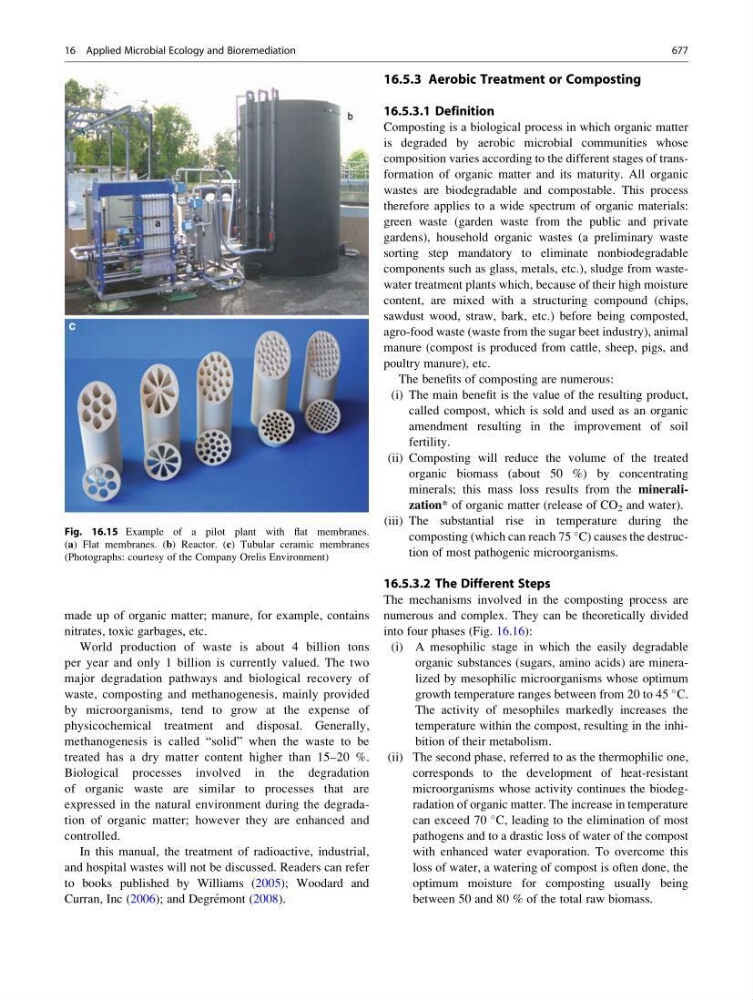
Fig. 16.15 Example of a pilot plant with flat membranes.
(a) Flat membranes. (b) Reactor. (c) Tubular ceramic membranes
(Photographs: courtesy of the Company Orelis Environment)
16 Applied Microbial Ecology and Bioremediation
677