

15.3.3.2 Endotoxins
Endotoxins are part of the membrane of Gram-negative
bacteria (i.e., the lipopolysaccharides or LPS) (cf. Sect. 3.1).
The toxin is composed of three parts: an O-specific chain, a
“core,” and the lipid A. The O-specific chain is highly variable
and composed of saccharides. It carries the antigenic
determinants responsible of their specificity. The “core” is
much less variable in its composition and is made of
saccharides. The lipid A consists of a framework of glucosamine with aliphatic chains and is responsible for the toxicity
of the molecule. The saccharide constituents of lipid A ensure
its solubility. Unlike exotoxins, endotoxins are heat resistant
and of low toxicity and remain attached to the cells. They
generally cause a high fever, diarrhea and vomiting, hypotension, and coagulation disorders. They can be lethal. This is the
case of Legionella pneumophila LPS, a pathogenic species
commonly found in aquatic systems, including hot water
systems, and is responsible for legionellosis.
Virulence can vary under the influence of these factors; it
may increase during an outbreak or decrease under the effect
of physicochemical agents or by subculturing on minimal
culture media.
15.3.4 Intercellular Communication
and Virulence
Contrary to what was long thought, several bacteria have a
collective behavior and are able to sense chemicals produce
by neighboring cells and migrate toward more favorable
environments. This intercellular communication named
“quorum sensing” is based on a density-dependent chemical
factor which could also be involved in controlling the
expression of virulence factors.
The chemical “language” used by bacteria is variable. The
best known system is the one of Proteobacteria, which can
secrete small “signal” molecules called “autoinducers.”
Through these molecules, in a concentration-dependent
manner, these bacteria can change their behavior. When the
bacterial density is high, concentration of these molecules
will become high. These high concentrations will favor
interactions with other cellular components and induce or
repress a number of target genes that will change the metabolic activities of these bacteria. Among Proteobacteria, these
autoinducers are part of the N-acylhomoserine lactones
(AHL). At high concentrations, these AHL will bind and
Table 15.3 Examples of diseases caused by the action of exotoxins
Bacteria
Toxins
Disease
Clostridium tetani
Neurotoxin
Tetanus
Clostridium botulinum
Neurotoxin
Botulism
Clostridium perfringens
Lecithinase, hemolysins, collagenases, proteases, etc.
Gas gangrene
Enterotoxin
Food poisoning
Corynebacterium diphtheriae
Inhibition of protein synthesis
Diphtheria
Staphylococcus aureus
Enterotoxins
Food poisoning
TSS toxins
Toxic shock syndrome
Exfoliative toxin (EF)
Streptococcus pyogenes
Erythrogenic toxin
Scarlet
SPE toxin
Toxic shock syndrome
Vibrio cholerae
Enterotoxin (activation of the AMP cyclase)
Cholera
Escherichia coli
Enterotoxins
Gastroenteritis
Pseudomonas aeruginosa
Exotoxin A and cytotoxins
Otitis, keratitis, opportunistic infections
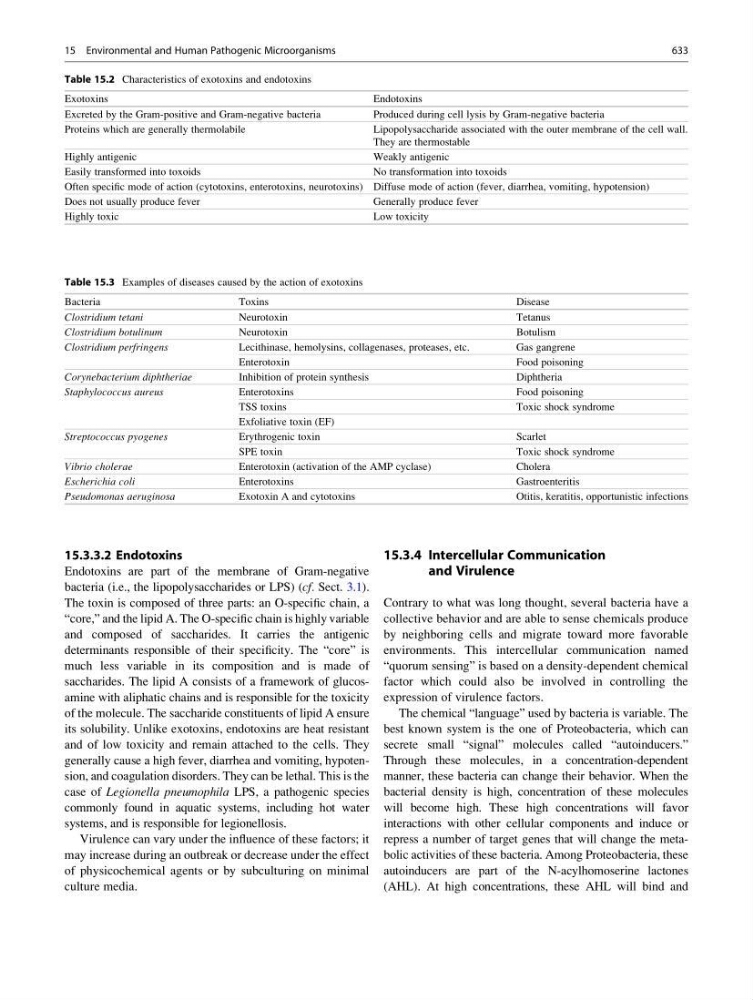
Table 15.2 Characteristics of exotoxins and endotoxins
Exotoxins
Endotoxins
Excreted by the Gram-positive and Gram-negative bacteria
Produced during cell lysis by Gram-negative bacteria
Proteins which are generally thermolabile
Lipopolysaccharide associated with the outer membrane of the cell wall.
They are thermostable
Highly antigenic
Weakly antigenic
Easily transformed into toxoids
No transformation into toxoids
Often specific mode of action (cytotoxins, enterotoxins, neurotoxins) Diffuse mode of action (fever, diarrhea, vomiting, hypotension)
Does not usually produce fever
Generally produce fever
Highly toxic
Low toxicity
15 Environmental and Human Pathogenic Microorganisms
633