

tetrathionate (S 4 O 6
2À ), and sulfite (SO 3
2À ), are used by
aerobic sulfur-oxidizing bacteria (or colorless sulfur-oxidizing
bacteria) described as colorless compared to the phototrophic
purple and green sulfur-oxidizing bacteria. Among aerobic
sulfur-oxidizing bacteria, some are obligate chemolithotrophs,
others are facultative chemolithotrophs, others are autotrophs,
others are heterotrophs, and even some are obligate
chemoorganotrophic heterotrophs (Table 3.5). Two major
c
Periplasmic
space
Cytoplasm
Cytoplasmic
membrane
Outer
membrane
P
Cyt
S o + HS
S - SH
SDO
SOR
H 2 O
H 2 O
+ O 2
2 H
+
SO 3
2SO 4
22 e
-
Outside
2 H
+
1/2 O 2
H 2 O
+ 2H
+
Cyt c
Cyt c
RC
Cyt
oxydase
H
+
1/4 O 2 + H
+
1/2 H 2 O
Fe
2+
Fe
3+
d
1 e
-
Periplasmic
space
Cytoplasm
Cytoplasmic
membrane
Outer
membrane
Outside
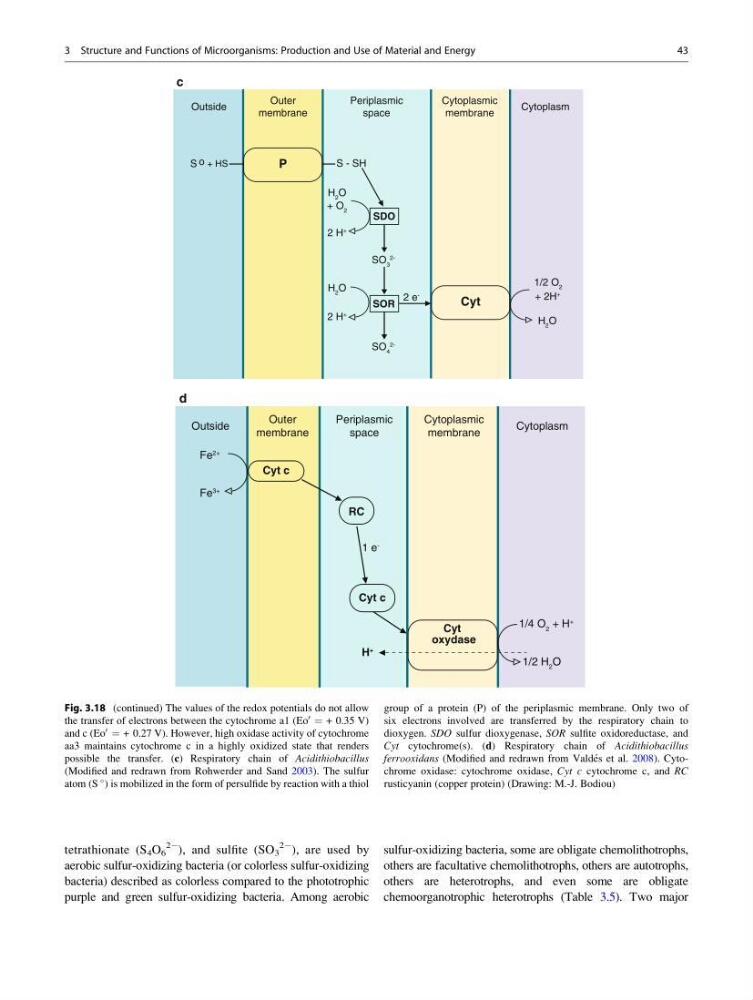
Fig. 3.18 (continued) The values of the redox potentials do not allow
the transfer of electrons between the cytochrome a1 (Eo
0 ¼ + 0.35 V)
and c (Eo
0 ¼ + 0.27 V). However, high oxidase activity of cytochrome
aa3 maintains cytochrome c in a highly oxidized state that renders
possible the transfer. (c) Respiratory chain of Acidithiobacillus
(Modified and redrawn from Rohwerder and Sand 2003). The sulfur
atom (S
) is mobilized in the form of persulfide by reaction with a thiol
group of a protein (P) of the periplasmic membrane. Only two of
six electrons involved are transferred by the respiratory chain to
dioxygen. SDO sulfur dioxygenase, SOR sulfite oxidoreductase, and
Cyt cytochrome(s). (d) Respiratory chain of Acidithiobacillus
ferrooxidans (Modified and redrawn from Valde ´s et al. 2008). Cytochrome oxidase: cytochrome oxidase, Cyt c cytochrome c, and RC
rusticyanin (copper protein) (Drawing: M.-J. Bodiou)
3 Structure and Functions of Microorganisms: Production and Use of Material and Energy
43
2À ), and sulfite (SO 3
2À ), are used by
aerobic sulfur-oxidizing bacteria (or colorless sulfur-oxidizing
bacteria) described as colorless compared to the phototrophic
purple and green sulfur-oxidizing bacteria. Among aerobic
sulfur-oxidizing bacteria, some are obligate chemolithotrophs,
others are facultative chemolithotrophs, others are autotrophs,
others are heterotrophs, and even some are obligate
chemoorganotrophic heterotrophs (Table 3.5). Two major
c
Periplasmic
space
Cytoplasm
Cytoplasmic
membrane
Outer
membrane
P
Cyt
S o + HS
S - SH
SDO
SOR
H 2 O
H 2 O
+ O 2
2 H
+
SO 3
2SO 4
22 e
-
Outside
2 H
+
1/2 O 2
H 2 O
+ 2H
+
Cyt c
Cyt c
RC
Cyt
oxydase
H
+
1/4 O 2 + H
+
1/2 H 2 O
Fe
2+
Fe
3+
d
1 e
-
Periplasmic
space
Cytoplasm
Cytoplasmic
membrane
Outer
membrane
Outside
Fig. 3.18 (continued) The values of the redox potentials do not allow
the transfer of electrons between the cytochrome a1 (Eo
0 ¼ + 0.35 V)
and c (Eo
0 ¼ + 0.27 V). However, high oxidase activity of cytochrome
aa3 maintains cytochrome c in a highly oxidized state that renders
possible the transfer. (c) Respiratory chain of Acidithiobacillus
(Modified and redrawn from Rohwerder and Sand 2003). The sulfur
atom (S
) is mobilized in the form of persulfide by reaction with a thiol
group of a protein (P) of the periplasmic membrane. Only two of
six electrons involved are transferred by the respiratory chain to
dioxygen. SDO sulfur dioxygenase, SOR sulfite oxidoreductase, and
Cyt cytochrome(s). (d) Respiratory chain of Acidithiobacillus
ferrooxidans (Modified and redrawn from Valde ´s et al. 2008). Cytochrome oxidase: cytochrome oxidase, Cyt c cytochrome c, and RC
rusticyanin (copper protein) (Drawing: M.-J. Bodiou)
3 Structure and Functions of Microorganisms: Production and Use of Material and Energy
43