

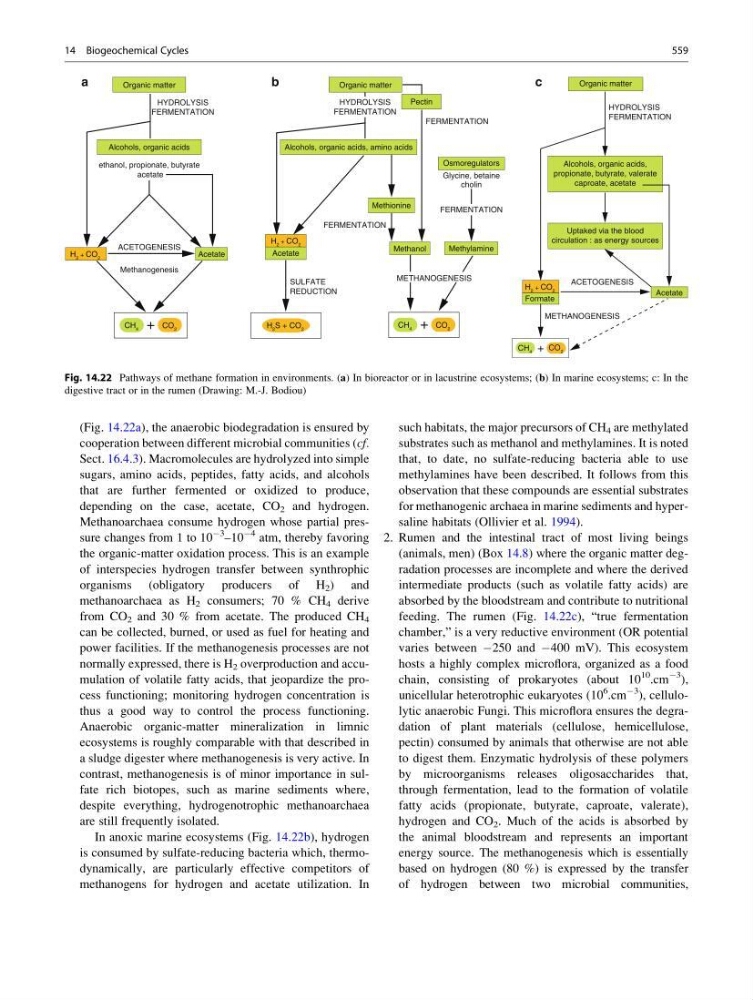
(Fig. 14.22a), the anaerobic biodegradation is ensured by
cooperation between different microbial communities (cf.
Sect. 16.4.3). Macromolecules are hydrolyzed into simple
sugars, amino acids, peptides, fatty acids, and alcohols
that are further fermented or oxidized to produce,
depending on the case, acetate, CO 2 and hydrogen.
Methanoarchaea consume hydrogen whose partial pressure changes from 1 to 10
À3 –10
À4 atm, thereby favoring
the organic-matter oxidation process. This is an example
of interspecies hydrogen transfer between synthrophic
organisms (obligatory producers of H 2 ) and
methanoarchaea as H 2 consumers; 70 % CH 4 derive
from CO 2 and 30 % from acetate. The produced CH 4
can be collected, burned, or used as fuel for heating and
power facilities. If the methanogenesis processes are not
normally expressed, there is H 2 overproduction and accumulation of volatile fatty acids, that jeopardize the process functioning; monitoring hydrogen concentration is
thus a good way to control the process functioning.
Anaerobic organic-matter mineralization in limnic
ecosystems is roughly comparable with that described in
a sludge digester where methanogenesis is very active. In
contrast, methanogenesis is of minor importance in sulfate rich biotopes, such as marine sediments where,
despite everything, hydrogenotrophic methanoarchaea
are still frequently isolated.
In anoxic marine ecosystems (Fig. 14.22b), hydrogen
is consumed by sulfate-reducing bacteria which, thermodynamically, are particularly effective competitors of
methanogens for hydrogen and acetate utilization. In
such habitats, the major precursors of CH 4 are methylated
substrates such as methanol and methylamines. It is noted
that, to date, no sulfate-reducing bacteria able to use
methylamines have been described. It follows from this
observation that these compounds are essential substrates
for methanogenic archaea in marine sediments and hypersaline habitats (Ollivier et al. 1994).
2. Rumen and the intestinal tract of most living beings
(animals, men) (Box 14.8) where the organic matter degradation processes are incomplete and where the derived
intermediate products (such as volatile fatty acids) are
absorbed by the bloodstream and contribute to nutritional
feeding. The rumen (Fig. 14.22c), “true fermentation
chamber,” is a very reductive environment (OR potential
varies between À250 and À400 mV). This ecosystem
hosts a highly complex microflora, organized as a food
chain, consisting of prokaryotes (about 10
10 .cm
À3 ),
unicellular heterotrophic eukaryotes (10
6 .cm
À3 ), cellulolytic anaerobic Fungi. This microflora ensures the degradation of plant materials (cellulose, hemicellulose,
pectin) consumed by animals that otherwise are not able
to digest them. Enzymatic hydrolysis of these polymers
by microorganisms releases oligosaccharides that,
through fermentation, lead to the formation of volatile
fatty acids (propionate, butyrate, caproate, valerate),
hydrogen and CO 2 . Much of the acids is absorbed by
the animal bloodstream and represents an important
energy source. The methanogenesis which is essentially
based on hydrogen (80 %) is expressed by the transfer
of hydrogen between two microbial communities,
Organic matter
a
b
c
HYDROLYSIS
FERMENTATION
Alcohols, organic acids
ethanol, propionate, butyrate
acetate
H 2 + CO 2
+
CH 4
CO 2
Acetate
ACETOGENESIS
Methanogenesis
Organic matter
HYDROLYSIS
FERMENTATION
FERMENTATION
FERMENTATION
FERMENTATION
Alcohols, organic acids, amino acids
Methionine
Pectin
H 2 + CO 2
H 2 S + CO 2
+
CH 4
CO 2
Acetate
Methanol
Osmoregulators
Methylamine
Glycine, betaine
cholin
METHANOGENESIS
SULFATE
REDUCTION
Organic matter
HYDROLYSIS
FERMENTATION
Alcohols, organic acids,
propionate, butyrate, valerate
caproate, acetate
Uptaked via the blood
circulation : as energy sources
ACETOGENESIS
Acetate
Formate
H 2 + CO 2
+
CH 4
CO 2
METHANOGENESIS
Fig. 14.22 Pathways of methane formation in environments. (a) In bioreactor or in lacustrine ecosystems; (b) In marine ecosystems; c: In the
digestive tract or in the rumen (Drawing: M.-J. Bodiou)
14 Biogeochemical Cycles
559
cooperation between different microbial communities (cf.
Sect. 16.4.3). Macromolecules are hydrolyzed into simple
sugars, amino acids, peptides, fatty acids, and alcohols
that are further fermented or oxidized to produce,
depending on the case, acetate, CO 2 and hydrogen.
Methanoarchaea consume hydrogen whose partial pressure changes from 1 to 10
À3 –10
À4 atm, thereby favoring
the organic-matter oxidation process. This is an example
of interspecies hydrogen transfer between synthrophic
organisms (obligatory producers of H 2 ) and
methanoarchaea as H 2 consumers; 70 % CH 4 derive
from CO 2 and 30 % from acetate. The produced CH 4
can be collected, burned, or used as fuel for heating and
power facilities. If the methanogenesis processes are not
normally expressed, there is H 2 overproduction and accumulation of volatile fatty acids, that jeopardize the process functioning; monitoring hydrogen concentration is
thus a good way to control the process functioning.
Anaerobic organic-matter mineralization in limnic
ecosystems is roughly comparable with that described in
a sludge digester where methanogenesis is very active. In
contrast, methanogenesis is of minor importance in sulfate rich biotopes, such as marine sediments where,
despite everything, hydrogenotrophic methanoarchaea
are still frequently isolated.
In anoxic marine ecosystems (Fig. 14.22b), hydrogen
is consumed by sulfate-reducing bacteria which, thermodynamically, are particularly effective competitors of
methanogens for hydrogen and acetate utilization. In
such habitats, the major precursors of CH 4 are methylated
substrates such as methanol and methylamines. It is noted
that, to date, no sulfate-reducing bacteria able to use
methylamines have been described. It follows from this
observation that these compounds are essential substrates
for methanogenic archaea in marine sediments and hypersaline habitats (Ollivier et al. 1994).
2. Rumen and the intestinal tract of most living beings
(animals, men) (Box 14.8) where the organic matter degradation processes are incomplete and where the derived
intermediate products (such as volatile fatty acids) are
absorbed by the bloodstream and contribute to nutritional
feeding. The rumen (Fig. 14.22c), “true fermentation
chamber,” is a very reductive environment (OR potential
varies between À250 and À400 mV). This ecosystem
hosts a highly complex microflora, organized as a food
chain, consisting of prokaryotes (about 10
10 .cm
À3 ),
unicellular heterotrophic eukaryotes (10
6 .cm
À3 ), cellulolytic anaerobic Fungi. This microflora ensures the degradation of plant materials (cellulose, hemicellulose,
pectin) consumed by animals that otherwise are not able
to digest them. Enzymatic hydrolysis of these polymers
by microorganisms releases oligosaccharides that,
through fermentation, lead to the formation of volatile
fatty acids (propionate, butyrate, caproate, valerate),
hydrogen and CO 2 . Much of the acids is absorbed by
the animal bloodstream and represents an important
energy source. The methanogenesis which is essentially
based on hydrogen (80 %) is expressed by the transfer
of hydrogen between two microbial communities,
Organic matter
a
b
c
HYDROLYSIS
FERMENTATION
Alcohols, organic acids
ethanol, propionate, butyrate
acetate
H 2 + CO 2
+
CH 4
CO 2
Acetate
ACETOGENESIS
Methanogenesis
Organic matter
HYDROLYSIS
FERMENTATION
FERMENTATION
FERMENTATION
FERMENTATION
Alcohols, organic acids, amino acids
Methionine
Pectin
H 2 + CO 2
H 2 S + CO 2
+
CH 4
CO 2
Acetate
Methanol
Osmoregulators
Methylamine
Glycine, betaine
cholin
METHANOGENESIS
SULFATE
REDUCTION
Organic matter
HYDROLYSIS
FERMENTATION
Alcohols, organic acids,
propionate, butyrate, valerate
caproate, acetate
Uptaked via the blood
circulation : as energy sources
ACETOGENESIS
Acetate
Formate
H 2 + CO 2
+
CH 4
CO 2
METHANOGENESIS
Fig. 14.22 Pathways of methane formation in environments. (a) In bioreactor or in lacustrine ecosystems; (b) In marine ecosystems; c: In the
digestive tract or in the rumen (Drawing: M.-J. Bodiou)
14 Biogeochemical Cycles
559