

than respiration. Conversely, in the aphotic layer where
primary production does not occur, respiration is largely
prevailing. However, the ocean is a perennial and spatially
constraint thermodynamic system, considered in equilibrium
at a given temporal scale (typically 1 year). In terms of
carbon budget, production and respiration should be in balance. But this is not the case; the comparison of NPP and
respiration in the open ocean reveals a major problem.
Indeed NPP, which is of the order of 47.5 Pg C year
À1
(Table 14.2), cannot sustain a respiration level of the order
of 108–144 Pg C year
À1 (Table 14.3). Allochthonous inputs
of organic carbon from continents (rivers), coastal zones
(soil washing), and atmosphere (rain, wind) are insufficient
to explain the imbalance between autochthonous production
(NPP) and community respiration. Consequently, one must
admit that NPP is underestimated and/or respiration is
overestimated. This discrepancy may be explained either
by an insufficient number of measurements of both
activities, or by the methods involved in their evaluation.
Regarding aerobic respiration, current measurement
methods are not sufficiently sensitive to accurately determined in situ activity (O 2 uptake or CO 2 release), the intensity
of which is often too low due to low cell concentrations. All
commonly used methods require an incubation phase, such as
the conventional Winkler method for determining dioxygen
concentration. These incubation-based techniques assume
that communities remain stable and respiration constant during incubation. In addition, the water column integrated respiratory activity is deduced from a limited number of small
volumes of samples isolated from their environment. We
must therefore take into account the bias generated by sampling (representativeness, environment modification, etc.),
and by the constraints linked to ex situ incubations.
It is thus likely that methodological limitations in respiration rate estimations may be responsible for significant
errors. It seems however that the main uncertainties are
related to primary-production determinations:
1. Photosynthesis is usually estimated by incorporation of
14 C, a radioactive carbon isotope (cf. Sect. 17.4.2).
Depending on the sampling conditions (light conditions),
this approach provides an estimation of carbon assimilation in between gross primary production and NPP. This
intermediate rate depends on incubation duration and
conditions (temperature, light). When incubation lasts
24 h, the method then estimates NPP. For a few hour
incubations, the value obtained corresponds to gross primary production. The maximum correction thus
corresponds to the respiration of autotrophic organisms
and amounts to approximately 40 %. This could raise the
open ocean NPP from 47.5 to 66.5 Pg C year
À1 ;
Continental shelf
Coastal
zone
Pelagic zone
Benthic zone
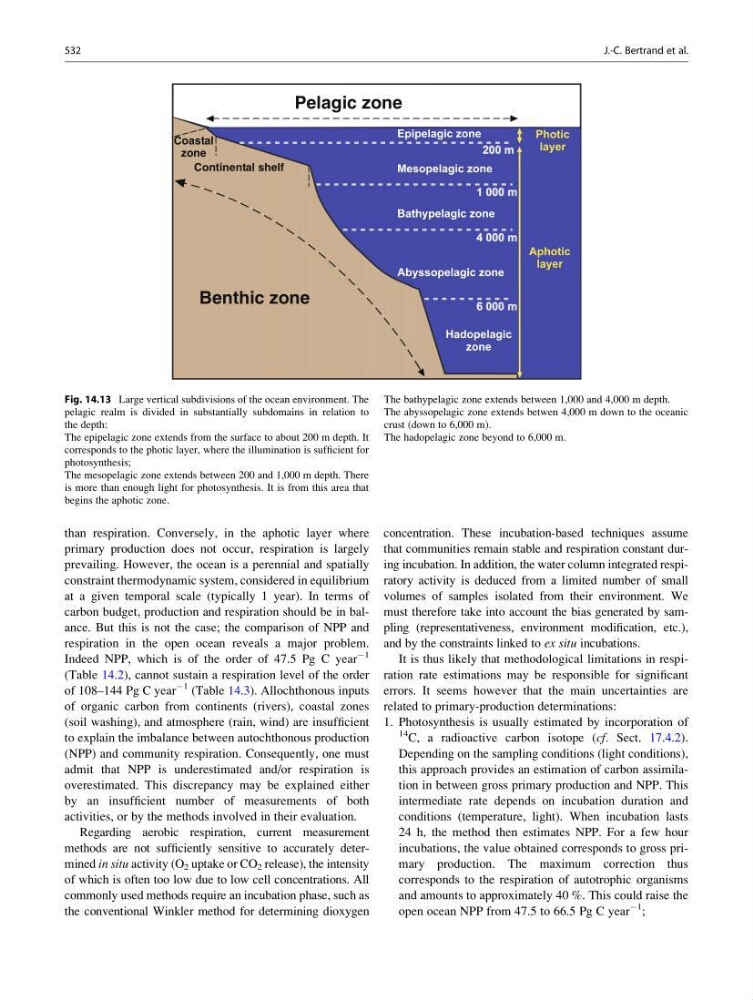
Fig. 14.13 Large vertical subdivisions of the ocean environment. The
pelagic realm is divided in substantially subdomains in relation to
the depth:
The epipelagic zone extends from the surface to about 200 m depth. It
corresponds to the photic layer, where the illumination is sufficient for
photosynthesis;
The mesopelagic zone extends between 200 and 1,000 m depth. There
is more than enough light for photosynthesis. It is from this area that
begins the aphotic zone.
The bathypelagic zone extends between 1,000 and 4,000 m depth.
The abyssopelagic zone extends betwen 4,000 m down to the oceanic
crust (down to 6,000 m).
The hadopelagic zone beyond to 6,000 m.
532
J.-C. Bertrand et al.
primary production does not occur, respiration is largely
prevailing. However, the ocean is a perennial and spatially
constraint thermodynamic system, considered in equilibrium
at a given temporal scale (typically 1 year). In terms of
carbon budget, production and respiration should be in balance. But this is not the case; the comparison of NPP and
respiration in the open ocean reveals a major problem.
Indeed NPP, which is of the order of 47.5 Pg C year
À1
(Table 14.2), cannot sustain a respiration level of the order
of 108–144 Pg C year
À1 (Table 14.3). Allochthonous inputs
of organic carbon from continents (rivers), coastal zones
(soil washing), and atmosphere (rain, wind) are insufficient
to explain the imbalance between autochthonous production
(NPP) and community respiration. Consequently, one must
admit that NPP is underestimated and/or respiration is
overestimated. This discrepancy may be explained either
by an insufficient number of measurements of both
activities, or by the methods involved in their evaluation.
Regarding aerobic respiration, current measurement
methods are not sufficiently sensitive to accurately determined in situ activity (O 2 uptake or CO 2 release), the intensity
of which is often too low due to low cell concentrations. All
commonly used methods require an incubation phase, such as
the conventional Winkler method for determining dioxygen
concentration. These incubation-based techniques assume
that communities remain stable and respiration constant during incubation. In addition, the water column integrated respiratory activity is deduced from a limited number of small
volumes of samples isolated from their environment. We
must therefore take into account the bias generated by sampling (representativeness, environment modification, etc.),
and by the constraints linked to ex situ incubations.
It is thus likely that methodological limitations in respiration rate estimations may be responsible for significant
errors. It seems however that the main uncertainties are
related to primary-production determinations:
1. Photosynthesis is usually estimated by incorporation of
14 C, a radioactive carbon isotope (cf. Sect. 17.4.2).
Depending on the sampling conditions (light conditions),
this approach provides an estimation of carbon assimilation in between gross primary production and NPP. This
intermediate rate depends on incubation duration and
conditions (temperature, light). When incubation lasts
24 h, the method then estimates NPP. For a few hour
incubations, the value obtained corresponds to gross primary production. The maximum correction thus
corresponds to the respiration of autotrophic organisms
and amounts to approximately 40 %. This could raise the
open ocean NPP from 47.5 to 66.5 Pg C year
À1 ;
Continental shelf
Coastal
zone
Pelagic zone
Benthic zone
Fig. 14.13 Large vertical subdivisions of the ocean environment. The
pelagic realm is divided in substantially subdomains in relation to
the depth:
The epipelagic zone extends from the surface to about 200 m depth. It
corresponds to the photic layer, where the illumination is sufficient for
photosynthesis;
The mesopelagic zone extends between 200 and 1,000 m depth. There
is more than enough light for photosynthesis. It is from this area that
begins the aphotic zone.
The bathypelagic zone extends between 1,000 and 4,000 m depth.
The abyssopelagic zone extends betwen 4,000 m down to the oceanic
crust (down to 6,000 m).
The hadopelagic zone beyond to 6,000 m.
532
J.-C. Bertrand et al.