

many soil organisms as omnivorous and capable of feeding
from different trophic levels.
Since the models of carbon, energy, and nutrient flows
throughout the food web of the soil are dominated by trophic
links between bacteria, fungi, protozoa, and nematodes (de
Ruiter et al. 1997), the analysis will be limited to these for
the rest of this section. They may be classed into primary and
secondary consumers.
13.2.3.1 Primary Consumers
Primary consumers play an essential role in the degradation
of complex organic substances. The first role of fungi
(oobiontes and fungi) is the decomposition of OM, due to
their capacity to produce a large range of extracellular
enzymes. In any ecosystem, the fungal biomass may greatly
exceed that of other biotic components (prokaryotes,
vegetables, animals). For example, in a prairie system, fungal hyphae may reach a dry matter biomass of 250 kg per ha
in the superficial soil layer (5 cm). It may be ten times
greater in acid forest soils. Besides their role in degrading
OM, fungi may be pathogenic for plants, promoting soil
structure and forming an abundant resource for the fauna
that consume microorganisms. Here, it is important to mention mycorrhizal fungi that are capable of forming a mutualistic association with plant roots: the fungi facilitate the
plant’s access to often scarce elements (N and P), and in
return the plant brings the fungi carbon-based products from
their roots and reduces competition (cf. Chap. 11).
The great abundance of bacteria in soil has been long
known. Molecular methods have enabled us to identify the
immense, and unexpected, diversity of telluric bacteria
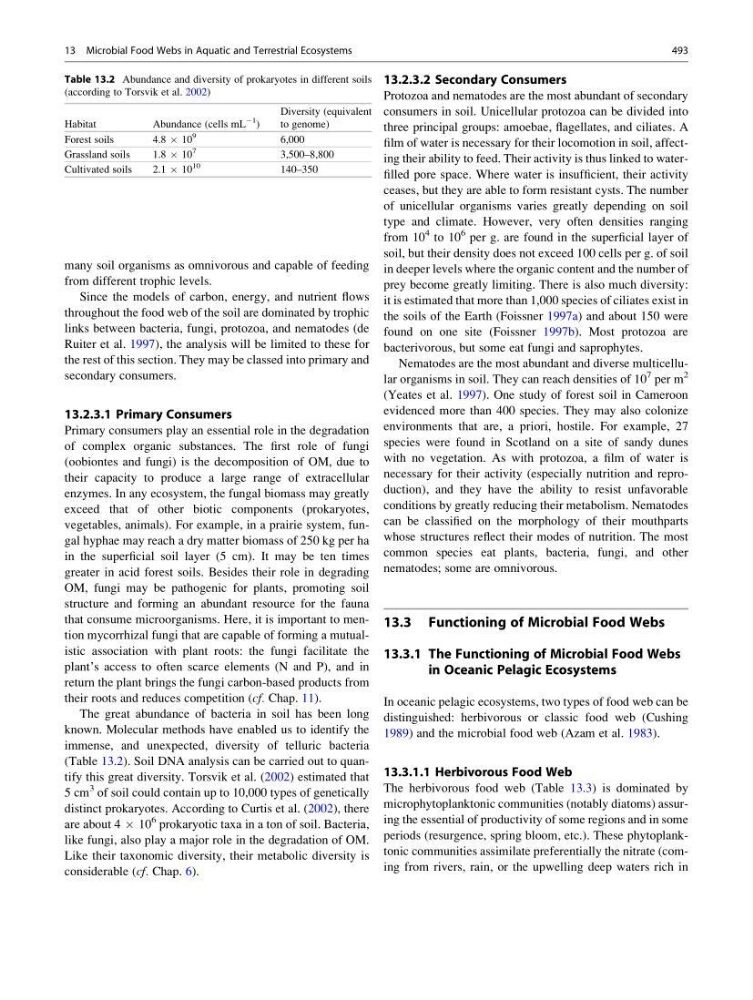
(Table 13.2). Soil DNA analysis can be carried out to quantify this great diversity. Torsvik et al. (2002) estimated that
5 cm
3 of soil could contain up to 10,000 types of genetically
distinct prokaryotes. According to Curtis et al. (2002), there
are about 4 Â 10
6 prokaryotic taxa in a ton of soil. Bacteria,
like fungi, also play a major role in the degradation of OM.
Like their taxonomic diversity, their metabolic diversity is
considerable (cf. Chap. 6).
13.2.3.2 Secondary Consumers
Protozoa and nematodes are the most abundant of secondary
consumers in soil. Unicellular protozoa can be divided into
three principal groups: amoebae, flagellates, and ciliates. A
film of water is necessary for their locomotion in soil, affecting their ability to feed. Their activity is thus linked to waterfilled pore space. Where water is insufficient, their activity
ceases, but they are able to form resistant cysts. The number
of unicellular organisms varies greatly depending on soil
type and climate. However, very often densities ranging
from 10
4 to 10
6 per g. are found in the superficial layer of
soil, but their density does not exceed 100 cells per g. of soil
in deeper levels where the organic content and the number of
prey become greatly limiting. There is also much diversity:
it is estimated that more than 1,000 species of ciliates exist in
the soils of the Earth (Foissner 1997a) and about 150 were
found on one site (Foissner 1997b). Most protozoa are
bacterivorous, but some eat fungi and saprophytes.
Nematodes are the most abundant and diverse multicellular organisms in soil. They can reach densities of 10
7 per m
2
(Yeates et al. 1997). One study of forest soil in Cameroon
evidenced more than 400 species. They may also colonize
environments that are, a priori, hostile. For example, 27
species were found in Scotland on a site of sandy dunes
with no vegetation. As with protozoa, a film of water is
necessary for their activity (especially nutrition and reproduction), and they have the ability to resist unfavorable
conditions by greatly reducing their metabolism. Nematodes
can be classified on the morphology of their mouthparts
whose structures reflect their modes of nutrition. The most
common species eat plants, bacteria, fungi, and other
nematodes; some are omnivorous.
13.3 Functioning of Microbial Food Webs
13.3.1 The Functioning of Microbial Food Webs
in Oceanic Pelagic Ecosystems
In oceanic pelagic ecosystems, two types of food web can be
distinguished: herbivorous or classic food web (Cushing
1989) and the microbial food web (Azam et al. 1983).
13.3.1.1 Herbivorous Food Web
The herbivorous food web (Table 13.3) is dominated by
microphytoplanktonic communities (notably diatoms) assuring the essential of productivity of some regions and in some
periods (resurgence, spring bloom, etc.). These phytoplanktonic communities assimilate preferentially the nitrate (coming from rivers, rain, or the upwelling deep waters rich in
Table 13.2 Abundance and diversity of prokaryotes in different soils
(according to Torsvik et al. 2002)
Habitat
Abundance (cells mL
À1
)
Diversity (equivalent
to genome)
Forest soils
4.8 Â 10
9
6,000
Grassland soils
1.8 Â 10
7
3,500–8,800
Cultivated soils
2.1 Â 10
10
140–350
13 Microbial Food Webs in Aquatic and Terrestrial Ecosystems
493
from different trophic levels.
Since the models of carbon, energy, and nutrient flows
throughout the food web of the soil are dominated by trophic
links between bacteria, fungi, protozoa, and nematodes (de
Ruiter et al. 1997), the analysis will be limited to these for
the rest of this section. They may be classed into primary and
secondary consumers.
13.2.3.1 Primary Consumers
Primary consumers play an essential role in the degradation
of complex organic substances. The first role of fungi
(oobiontes and fungi) is the decomposition of OM, due to
their capacity to produce a large range of extracellular
enzymes. In any ecosystem, the fungal biomass may greatly
exceed that of other biotic components (prokaryotes,
vegetables, animals). For example, in a prairie system, fungal hyphae may reach a dry matter biomass of 250 kg per ha
in the superficial soil layer (5 cm). It may be ten times
greater in acid forest soils. Besides their role in degrading
OM, fungi may be pathogenic for plants, promoting soil
structure and forming an abundant resource for the fauna
that consume microorganisms. Here, it is important to mention mycorrhizal fungi that are capable of forming a mutualistic association with plant roots: the fungi facilitate the
plant’s access to often scarce elements (N and P), and in
return the plant brings the fungi carbon-based products from
their roots and reduces competition (cf. Chap. 11).
The great abundance of bacteria in soil has been long
known. Molecular methods have enabled us to identify the
immense, and unexpected, diversity of telluric bacteria
(Table 13.2). Soil DNA analysis can be carried out to quantify this great diversity. Torsvik et al. (2002) estimated that
5 cm
3 of soil could contain up to 10,000 types of genetically
distinct prokaryotes. According to Curtis et al. (2002), there
are about 4 Â 10
6 prokaryotic taxa in a ton of soil. Bacteria,
like fungi, also play a major role in the degradation of OM.
Like their taxonomic diversity, their metabolic diversity is
considerable (cf. Chap. 6).
13.2.3.2 Secondary Consumers
Protozoa and nematodes are the most abundant of secondary
consumers in soil. Unicellular protozoa can be divided into
three principal groups: amoebae, flagellates, and ciliates. A
film of water is necessary for their locomotion in soil, affecting their ability to feed. Their activity is thus linked to waterfilled pore space. Where water is insufficient, their activity
ceases, but they are able to form resistant cysts. The number
of unicellular organisms varies greatly depending on soil
type and climate. However, very often densities ranging
from 10
4 to 10
6 per g. are found in the superficial layer of
soil, but their density does not exceed 100 cells per g. of soil
in deeper levels where the organic content and the number of
prey become greatly limiting. There is also much diversity:
it is estimated that more than 1,000 species of ciliates exist in
the soils of the Earth (Foissner 1997a) and about 150 were
found on one site (Foissner 1997b). Most protozoa are
bacterivorous, but some eat fungi and saprophytes.
Nematodes are the most abundant and diverse multicellular organisms in soil. They can reach densities of 10
7 per m
2
(Yeates et al. 1997). One study of forest soil in Cameroon
evidenced more than 400 species. They may also colonize
environments that are, a priori, hostile. For example, 27
species were found in Scotland on a site of sandy dunes
with no vegetation. As with protozoa, a film of water is
necessary for their activity (especially nutrition and reproduction), and they have the ability to resist unfavorable
conditions by greatly reducing their metabolism. Nematodes
can be classified on the morphology of their mouthparts
whose structures reflect their modes of nutrition. The most
common species eat plants, bacteria, fungi, and other
nematodes; some are omnivorous.
13.3 Functioning of Microbial Food Webs
13.3.1 The Functioning of Microbial Food Webs
in Oceanic Pelagic Ecosystems
In oceanic pelagic ecosystems, two types of food web can be
distinguished: herbivorous or classic food web (Cushing
1989) and the microbial food web (Azam et al. 1983).
13.3.1.1 Herbivorous Food Web
The herbivorous food web (Table 13.3) is dominated by
microphytoplanktonic communities (notably diatoms) assuring the essential of productivity of some regions and in some
periods (resurgence, spring bloom, etc.). These phytoplanktonic communities assimilate preferentially the nitrate (coming from rivers, rain, or the upwelling deep waters rich in
Table 13.2 Abundance and diversity of prokaryotes in different soils
(according to Torsvik et al. 2002)
Habitat
Abundance (cells mL
À1
)
Diversity (equivalent
to genome)
Forest soils
4.8 Â 10
9
6,000
Grassland soils
1.8 Â 10
7
3,500–8,800
Cultivated soils
2.1 Â 10
10
140–350
13 Microbial Food Webs in Aquatic and Terrestrial Ecosystems
493