

2002). While this proportion is significantly lower in hyperthermophilic or thermophilic archaea, similar trends are
observed in other mesophilic archaea (Halobacterium sp.,
Table 12.3).
As in the case of hyperthermophilic bacteria, the higher
fraction of genes more similar to bacterial than to archaeal
homologues was interpreted as the result of HGT, but in the
opposite direction, from mesophilic bacteria to mesophilic
archaea (Fig. 12.19b). Strengthening this hypothesis, among
the 1,043 genes displaying high similarity with genes found
in mesophilic bacteria, 544 have no homologues in archaeal
lineages other than Methanosarcinales, suggesting secondary acquisitions by HGT from bacteria (Deppenmeier et al.
2002). A more detailed analysis shows that most often the
donors are strict (e.g., Clostridium, Desulfitobacterium
hafniense) or facultative (e.g., Enterobacteria) anaerobes
living in environments similar to those occupied by
M. mazei. Another study shows that the majority of the 41
genes encoded on a large genomic fragment (33 kbp) from a
noncultivated thaumarchaeon belonging to Group I.1A had
been acquired by HGT from mesophilic bacterial and
archaeal donors (Lopez-Garcia et al. 2004). High frequency
of HGT in Thaumarchaeota has been confirmed by the largescale genomic analyses, which shows that members of
this phylum share an unusually high fraction of genes
with mesophilic euryarchaeota and mesophilic bacteria,
0.1
Pyrobaculum aerophilum
Sulfolobus tokodaii
Sulfolobus shibatae
Sulfolobus
solfataricus
Sulfolobus solfataricus
Sulfolobus
tokodaii
Sulfolobus
acidocaldarius
Aeropyrum pernix
Methanopyrus kandleri
Aeropyrum
pernix
Methanocaldococcus jannaschii
Nanoarchaeum equitans
Thermococcus kodakaraensis
Thermococcus gammatolerans[
Pyrococcus furiosus
Pyrococcus horikoshii
Pyrococcus abyssi
Thermodesulfobacterium
commune
Aquifex aeolicus
Thermus thermophilus
Sulfurihydrogenibium
azorense
Aquifex aeolicus
Dictyoglomus
thermophilum
Archaeoglobus
fulgidus
Thermoanaerobacter
tengcongensis
Thermotoga neapolitana
Thermotoga maritima
Thermococcales
Methanococcales
Nanoarchaea
Methanopyrales
Gram positive low G+C
Thermotogales
Thermoproteales
Sulfolobales
Desulfurococcales
Archaeoglobales
Aquificales
Aquificales
Aquificales
Dictyoglomales
Deinococcus - Thermus
Thermodesulfobacteria
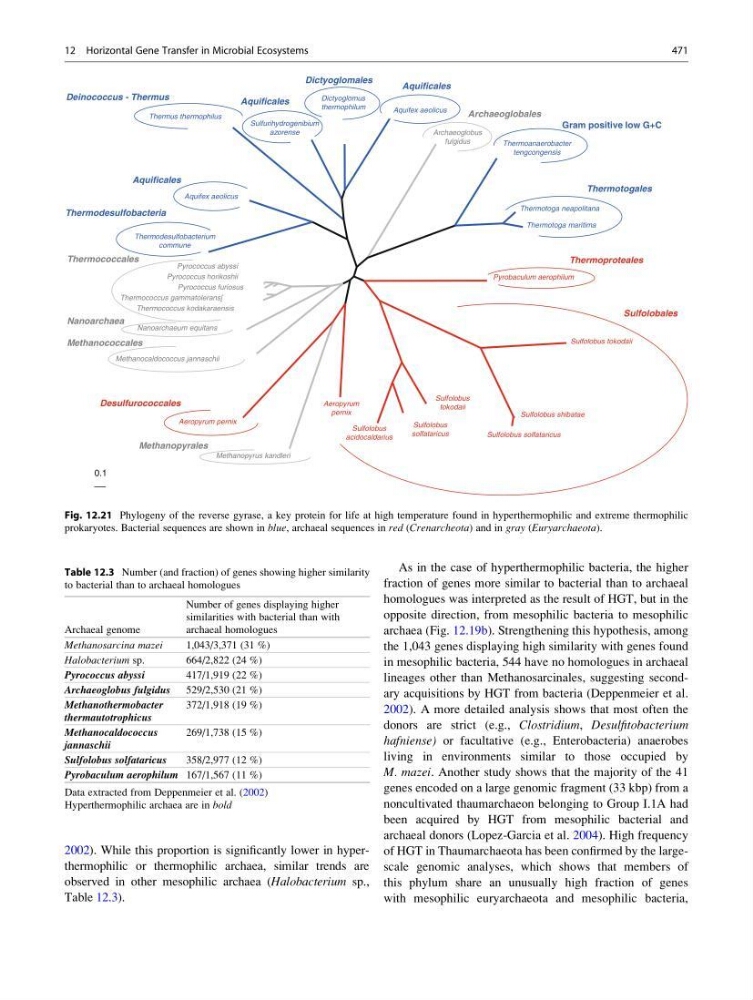
Fig. 12.21 Phylogeny of the reverse gyrase, a key protein for life at high temperature found in hyperthermophilic and extreme thermophilic
prokaryotes. Bacterial sequences are shown in blue, archaeal sequences in red (Crenarcheota) and in gray (Euryarchaeota).
Table 12.3 Number (and fraction) of genes showing higher similarity
to bacterial than to archaeal homologues
Archaeal genome
Number of genes displaying higher
similarities with bacterial than with
archaeal homologues
Methanosarcina mazei
1,043/3,371 (31 %)
Halobacterium sp.
664/2,822 (24 %)
Pyrococcus abyssi
417/1,919 (22 %)
Archaeoglobus fulgidus 529/2,530 (21 %)
Methanothermobacter
thermautotrophicus
372/1,918 (19 %)
Methanocaldococcus
jannaschii
269/1,738 (15 %)
Sulfolobus solfataricus
358/2,977 (12 %)
Pyrobaculum aerophilum 167/1,567 (11 %)
Data extracted from Deppenmeier et al. (2002)
Hyperthermophilic archaea are in bold
12 Horizontal Gene Transfer in Microbial Ecosystems
471
observed in other mesophilic archaea (Halobacterium sp.,
Table 12.3).
As in the case of hyperthermophilic bacteria, the higher
fraction of genes more similar to bacterial than to archaeal
homologues was interpreted as the result of HGT, but in the
opposite direction, from mesophilic bacteria to mesophilic
archaea (Fig. 12.19b). Strengthening this hypothesis, among
the 1,043 genes displaying high similarity with genes found
in mesophilic bacteria, 544 have no homologues in archaeal
lineages other than Methanosarcinales, suggesting secondary acquisitions by HGT from bacteria (Deppenmeier et al.
2002). A more detailed analysis shows that most often the
donors are strict (e.g., Clostridium, Desulfitobacterium
hafniense) or facultative (e.g., Enterobacteria) anaerobes
living in environments similar to those occupied by
M. mazei. Another study shows that the majority of the 41
genes encoded on a large genomic fragment (33 kbp) from a
noncultivated thaumarchaeon belonging to Group I.1A had
been acquired by HGT from mesophilic bacterial and
archaeal donors (Lopez-Garcia et al. 2004). High frequency
of HGT in Thaumarchaeota has been confirmed by the largescale genomic analyses, which shows that members of
this phylum share an unusually high fraction of genes
with mesophilic euryarchaeota and mesophilic bacteria,
0.1
Pyrobaculum aerophilum
Sulfolobus tokodaii
Sulfolobus shibatae
Sulfolobus
solfataricus
Sulfolobus solfataricus
Sulfolobus
tokodaii
Sulfolobus
acidocaldarius
Aeropyrum pernix
Methanopyrus kandleri
Aeropyrum
pernix
Methanocaldococcus jannaschii
Nanoarchaeum equitans
Thermococcus kodakaraensis
Thermococcus gammatolerans[
Pyrococcus furiosus
Pyrococcus horikoshii
Pyrococcus abyssi
Thermodesulfobacterium
commune
Aquifex aeolicus
Thermus thermophilus
Sulfurihydrogenibium
azorense
Aquifex aeolicus
Dictyoglomus
thermophilum
Archaeoglobus
fulgidus
Thermoanaerobacter
tengcongensis
Thermotoga neapolitana
Thermotoga maritima
Thermococcales
Methanococcales
Nanoarchaea
Methanopyrales
Gram positive low G+C
Thermotogales
Thermoproteales
Sulfolobales
Desulfurococcales
Archaeoglobales
Aquificales
Aquificales
Aquificales
Dictyoglomales
Deinococcus - Thermus
Thermodesulfobacteria
Fig. 12.21 Phylogeny of the reverse gyrase, a key protein for life at high temperature found in hyperthermophilic and extreme thermophilic
prokaryotes. Bacterial sequences are shown in blue, archaeal sequences in red (Crenarcheota) and in gray (Euryarchaeota).
Table 12.3 Number (and fraction) of genes showing higher similarity
to bacterial than to archaeal homologues
Archaeal genome
Number of genes displaying higher
similarities with bacterial than with
archaeal homologues
Methanosarcina mazei
1,043/3,371 (31 %)
Halobacterium sp.
664/2,822 (24 %)
Pyrococcus abyssi
417/1,919 (22 %)
Archaeoglobus fulgidus 529/2,530 (21 %)
Methanothermobacter
thermautotrophicus
372/1,918 (19 %)
Methanocaldococcus
jannaschii
269/1,738 (15 %)
Sulfolobus solfataricus
358/2,977 (12 %)
Pyrobaculum aerophilum 167/1,567 (11 %)
Data extracted from Deppenmeier et al. (2002)
Hyperthermophilic archaea are in bold
12 Horizontal Gene Transfer in Microbial Ecosystems
471