

then emitted on the seafloor at focused points forming hydrothermal vents. Hydrothermal fluid highly differs from seawater (cold, slightly alkaline, and oxygenated) by their
temperature that can reach 400
C and by their pH generally
acidic, being anoxic, and having high concentrations in
dissolved gasses (H 2 S, CH 4 , CO, CO 2 , H 2 ) and metals
(Mn
2+ , Fe
2+ , Si
+ , Zn
2+ ). Due to these physicochemical
characteristics, the contact between hydrothermal fluid and
seawater results in the precipitation of minerals and the
creation of metal-rich mineral structures, so called black
smokers. Black smokers are formed when the hydrothermal
fluid is not diluted by seawater while so-called white
smokers or diffuser result from seawater diluted hydrothermal fluids. They are the main observed hydrothermal
structures, but all intermediates can exist. Hydrothermal
fluid seepage does not always result in the formation of
mineral structures; indeed within “Pillow lava,” structures
with low-temperature fluid (6–23
C) can be emitted while
another particular hydrothermal seepage is the one observed
in the Guaymas Basin (Gulf of California) where superheated fluids are emitted through a thick organic-rich sediment layer. In these ecosystems, chemolithotrophic
microorganisms (free or living in symbiosis) are the first
level of the food web and allow the development of highdensity animal communities at the vicinity of the fluid
emissions despite conditions that look unfriendly for life.
10.3.2.3 Coastal Marine Hydrothermal Vents
Coastal marine hydrothermal vents are associated with
terrestrial volcanic activity as, for example, in Iceland,
Azores, and Italy (Vulcano, Aeolian Islands). Like in
deep-sea sites, they are characterized by small mineral
structures emitting hydrogen sulfide-rich fluids but also
by percolated sediments. Their temperatures are generally
close to 100
C.
10.3.2.4 Other Habitats: Petroleum Reservoirs
and Habitats Associated with Human
Activity
Both marine and continental oil reservoirs are habitats that
can be colonized by thermophilic or hyperthermophilic
prokaryotes. This is particularly true for oil reservoirs with
depths below the surface ranging from 1.5 to 4 km. Such
reservoirs exhibit not only high temperatures (between 60
and 130
C), but also high lithostatic pressure. The pH of the
oil-field waters is generally close to neutrality. These waters
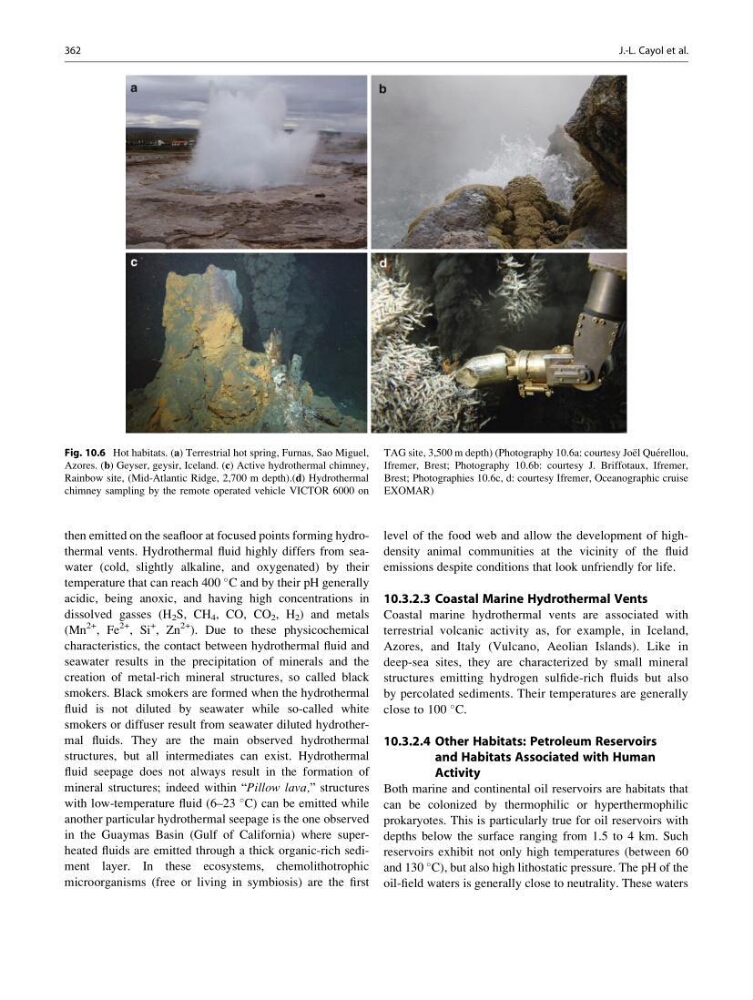
Fig. 10.6 Hot habitats. (a) Terrestrial hot spring, Furnas, Sao Miguel,
Azores. (b) Geyser, geysir, Iceland. (c) Active hydrothermal chimney,
Rainbow site, (Mid-Atlantic Ridge, 2,700 m depth).(d) Hydrothermal
chimney sampling by the remote operated vehicle VICTOR 6000 on
TAG site, 3,500 m depth) (Photography 10.6a: courtesy Joe ¨l Que ´rellou,
Ifremer, Brest; Photography 10.6b: courtesy J. Briffotaux, Ifremer,
Brest; Photographies 10.6c, d: courtesy Ifremer, Oceanographic cruise
EXOMAR)
362
J.-L. Cayol et al.
temperature that can reach 400
C and by their pH generally
acidic, being anoxic, and having high concentrations in
dissolved gasses (H 2 S, CH 4 , CO, CO 2 , H 2 ) and metals
(Mn
2+ , Fe
2+ , Si
+ , Zn
2+ ). Due to these physicochemical
characteristics, the contact between hydrothermal fluid and
seawater results in the precipitation of minerals and the
creation of metal-rich mineral structures, so called black
smokers. Black smokers are formed when the hydrothermal
fluid is not diluted by seawater while so-called white
smokers or diffuser result from seawater diluted hydrothermal fluids. They are the main observed hydrothermal
structures, but all intermediates can exist. Hydrothermal
fluid seepage does not always result in the formation of
mineral structures; indeed within “Pillow lava,” structures
with low-temperature fluid (6–23
C) can be emitted while
another particular hydrothermal seepage is the one observed
in the Guaymas Basin (Gulf of California) where superheated fluids are emitted through a thick organic-rich sediment layer. In these ecosystems, chemolithotrophic
microorganisms (free or living in symbiosis) are the first
level of the food web and allow the development of highdensity animal communities at the vicinity of the fluid
emissions despite conditions that look unfriendly for life.
10.3.2.3 Coastal Marine Hydrothermal Vents
Coastal marine hydrothermal vents are associated with
terrestrial volcanic activity as, for example, in Iceland,
Azores, and Italy (Vulcano, Aeolian Islands). Like in
deep-sea sites, they are characterized by small mineral
structures emitting hydrogen sulfide-rich fluids but also
by percolated sediments. Their temperatures are generally
close to 100
C.
10.3.2.4 Other Habitats: Petroleum Reservoirs
and Habitats Associated with Human
Activity
Both marine and continental oil reservoirs are habitats that
can be colonized by thermophilic or hyperthermophilic
prokaryotes. This is particularly true for oil reservoirs with
depths below the surface ranging from 1.5 to 4 km. Such
reservoirs exhibit not only high temperatures (between 60
and 130
C), but also high lithostatic pressure. The pH of the
oil-field waters is generally close to neutrality. These waters
Fig. 10.6 Hot habitats. (a) Terrestrial hot spring, Furnas, Sao Miguel,
Azores. (b) Geyser, geysir, Iceland. (c) Active hydrothermal chimney,
Rainbow site, (Mid-Atlantic Ridge, 2,700 m depth).(d) Hydrothermal
chimney sampling by the remote operated vehicle VICTOR 6000 on
TAG site, 3,500 m depth) (Photography 10.6a: courtesy Joe ¨l Que ´rellou,
Ifremer, Brest; Photography 10.6b: courtesy J. Briffotaux, Ifremer,
Brest; Photographies 10.6c, d: courtesy Ifremer, Oceanographic cruise
EXOMAR)
362
J.-L. Cayol et al.