

may contain various concentrations in sulfur compounds
(e.g., sulfate), metals, and dissolved gases such as H 2 , H 2 S,
CO 2 , and CH 4 as well as organic molecules (C 2 to C 7
compounds) such as acetate which can accumulate up to
20 mM in some oil reservoirs. The salinity varies from one
reservoir to another and most likely in a same reservoir. In
some cases (hypersaline oil-field waters), salinity saturation
may be observed.
Also there are some hot ecosystems that result from
human activities. Coal-refuse pile contains coal fragments,
pyrite (FeS), and organic compounds extracted from coals;
these mining wastes can be heated by spontaneous combustion that generate hot environment favorable for thermophilic prokaryotes. Some industrials activities are artificial
heat sources that can be also habitats for thermophilic
microorganisms: we can cite sugar refineries, paper mills,
power plants, hot water pipes, and domestic or industrial
boilers.
10.3.3 Metabolic and Phylogenetic Overview
of Thermophilic and Hyperthermophilic
Prokaryotes
The discovery of hyperthermophilic prokaryotes is contemporaneous of the discovery of the Archaea domain,
thanks to the pioneer work of Dr Karl Woese (Woese et al.
1990).
Thermophilic and hyperthermophilic prokaryotes that
were isolated from both continental and marine geothermal
areas belong to both the Bacteria and Archaea domains
(Stetter 2011). They exhibit highly diverse physiological
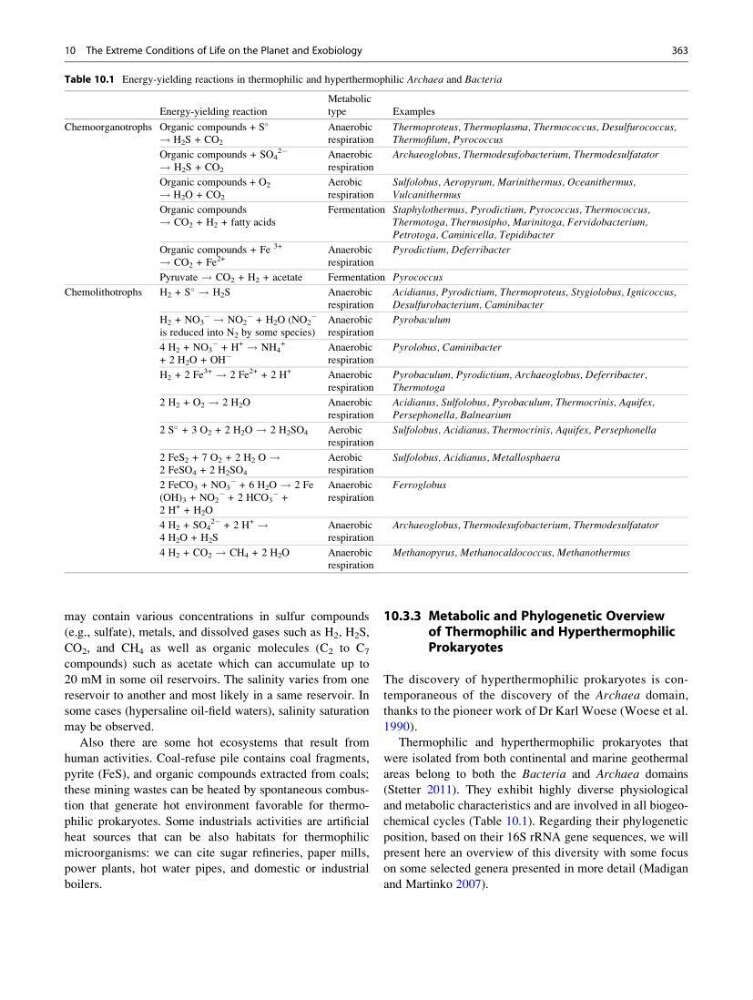
and metabolic characteristics and are involved in all biogeochemical cycles (Table 10.1). Regarding their phylogenetic
position, based on their 16S rRNA gene sequences, we will
present here an overview of this diversity with some focus
on some selected genera presented in more detail (Madigan
and Martinko 2007).
Table 10.1 Energy-yielding reactions in thermophilic and hyperthermophilic Archaea and Bacteria
Energy-yielding reaction
Metabolic
type
Examples
Chemoorganotrophs Organic compounds + S
! H 2 S + CO 2
Anaerobic
respiration
Thermoproteus, Thermoplasma, Thermococcus, Desulfurococcus,
Thermofilum, Pyrococcus
Organic compounds + SO 4
2À
! H 2 S + CO 2
Anaerobic
respiration
Archaeoglobus, Thermodesufobacterium, Thermodesulfatator
Organic compounds + O 2
! H 2 O + CO 2
Aerobic
respiration
Sulfolobus, Aeropyrum, Marinithermus, Oceanithermus,
Vulcanithermus
Organic compounds
! CO 2 + H 2 + fatty acids
Fermentation Staphylothermus, Pyrodictium, Pyrococcus, Thermococcus,
Thermotoga, Thermosipho, Marinitoga, Fervidobacterium,
Petrotoga, Caminicella, Tepidibacter
Organic compounds + Fe
3+
! CO 2 + Fe
2+
Anaerobic
respiration
Pyrodictium, Deferribacter
Pyruvate ! CO 2 + H 2 + acetate
Fermentation Pyrococcus
Chemolithotrophs
H 2 + S
! H 2 S
Anaerobic
respiration
Acidianus, Pyrodictium, Thermoproteus, Stygiolobus, Ignicoccus,
Desulfurobacterium, Caminibacter
H 2 + NO 3
À ! NO 2
À + H 2 O (NO 2
À
is reduced into N 2 by some species)
Anaerobic
respiration
Pyrobaculum
4 H 2 + NO 3
À + H
+ ! NH 4
+
+ 2 H 2 O + OH
À
Anaerobic
respiration
Pyrolobus, Caminibacter
H 2 + 2 Fe
3+ ! 2 Fe
2+ + 2 H
+
Anaerobic
respiration
Pyrobaculum, Pyrodictium, Archaeoglobus, Deferribacter,
Thermotoga
2 H 2 + O 2 ! 2 H 2 O
Anaerobic
respiration
Acidianus, Sulfolobus, Pyrobaculum, Thermocrinis, Aquifex,
Persephonella, Balnearium
2 S
+ 3 O 2 + 2 H 2 O ! 2 H 2 SO 4
Aerobic
respiration
Sulfolobus, Acidianus, Thermocrinis, Aquifex, Persephonella
2 FeS 2 + 7 O 2 + 2 H 2 O !
2 FeSO 4 + 2 H 2 SO 4
Aerobic
respiration
Sulfolobus, Acidianus, Metallosphaera
2 FeCO 3 + NO 3
À + 6 H 2 O ! 2 Fe
(OH) 3 + NO 2
À + 2 HCO 3
À +
2 H
+ + H 2 O
Anaerobic
respiration
Ferroglobus
4 H 2 + SO 4
2À + 2 H
+ !
4 H 2 O + H 2 S
Anaerobic
respiration
Archaeoglobus, Thermodesufobacterium, Thermodesulfatator
4 H 2 + CO 2 ! CH 4 + 2 H 2 O
Anaerobic
respiration
Methanopyrus, Methanocaldococcus, Methanothermus
10 The Extreme Conditions of Life on the Planet and Exobiology
363
(e.g., sulfate), metals, and dissolved gases such as H 2 , H 2 S,
CO 2 , and CH 4 as well as organic molecules (C 2 to C 7
compounds) such as acetate which can accumulate up to
20 mM in some oil reservoirs. The salinity varies from one
reservoir to another and most likely in a same reservoir. In
some cases (hypersaline oil-field waters), salinity saturation
may be observed.
Also there are some hot ecosystems that result from
human activities. Coal-refuse pile contains coal fragments,
pyrite (FeS), and organic compounds extracted from coals;
these mining wastes can be heated by spontaneous combustion that generate hot environment favorable for thermophilic prokaryotes. Some industrials activities are artificial
heat sources that can be also habitats for thermophilic
microorganisms: we can cite sugar refineries, paper mills,
power plants, hot water pipes, and domestic or industrial
boilers.
10.3.3 Metabolic and Phylogenetic Overview
of Thermophilic and Hyperthermophilic
Prokaryotes
The discovery of hyperthermophilic prokaryotes is contemporaneous of the discovery of the Archaea domain,
thanks to the pioneer work of Dr Karl Woese (Woese et al.
1990).
Thermophilic and hyperthermophilic prokaryotes that
were isolated from both continental and marine geothermal
areas belong to both the Bacteria and Archaea domains
(Stetter 2011). They exhibit highly diverse physiological
and metabolic characteristics and are involved in all biogeochemical cycles (Table 10.1). Regarding their phylogenetic
position, based on their 16S rRNA gene sequences, we will
present here an overview of this diversity with some focus
on some selected genera presented in more detail (Madigan
and Martinko 2007).
Table 10.1 Energy-yielding reactions in thermophilic and hyperthermophilic Archaea and Bacteria
Energy-yielding reaction
Metabolic
type
Examples
Chemoorganotrophs Organic compounds + S
! H 2 S + CO 2
Anaerobic
respiration
Thermoproteus, Thermoplasma, Thermococcus, Desulfurococcus,
Thermofilum, Pyrococcus
Organic compounds + SO 4
2À
! H 2 S + CO 2
Anaerobic
respiration
Archaeoglobus, Thermodesufobacterium, Thermodesulfatator
Organic compounds + O 2
! H 2 O + CO 2
Aerobic
respiration
Sulfolobus, Aeropyrum, Marinithermus, Oceanithermus,
Vulcanithermus
Organic compounds
! CO 2 + H 2 + fatty acids
Fermentation Staphylothermus, Pyrodictium, Pyrococcus, Thermococcus,
Thermotoga, Thermosipho, Marinitoga, Fervidobacterium,
Petrotoga, Caminicella, Tepidibacter
Organic compounds + Fe
3+
! CO 2 + Fe
2+
Anaerobic
respiration
Pyrodictium, Deferribacter
Pyruvate ! CO 2 + H 2 + acetate
Fermentation Pyrococcus
Chemolithotrophs
H 2 + S
! H 2 S
Anaerobic
respiration
Acidianus, Pyrodictium, Thermoproteus, Stygiolobus, Ignicoccus,
Desulfurobacterium, Caminibacter
H 2 + NO 3
À ! NO 2
À + H 2 O (NO 2
À
is reduced into N 2 by some species)
Anaerobic
respiration
Pyrobaculum
4 H 2 + NO 3
À + H
+ ! NH 4
+
+ 2 H 2 O + OH
À
Anaerobic
respiration
Pyrolobus, Caminibacter
H 2 + 2 Fe
3+ ! 2 Fe
2+ + 2 H
+
Anaerobic
respiration
Pyrobaculum, Pyrodictium, Archaeoglobus, Deferribacter,
Thermotoga
2 H 2 + O 2 ! 2 H 2 O
Anaerobic
respiration
Acidianus, Sulfolobus, Pyrobaculum, Thermocrinis, Aquifex,
Persephonella, Balnearium
2 S
+ 3 O 2 + 2 H 2 O ! 2 H 2 SO 4
Aerobic
respiration
Sulfolobus, Acidianus, Thermocrinis, Aquifex, Persephonella
2 FeS 2 + 7 O 2 + 2 H 2 O !
2 FeSO 4 + 2 H 2 SO 4
Aerobic
respiration
Sulfolobus, Acidianus, Metallosphaera
2 FeCO 3 + NO 3
À + 6 H 2 O ! 2 Fe
(OH) 3 + NO 2
À + 2 HCO 3
À +
2 H
+ + H 2 O
Anaerobic
respiration
Ferroglobus
4 H 2 + SO 4
2À + 2 H
+ !
4 H 2 O + H 2 S
Anaerobic
respiration
Archaeoglobus, Thermodesufobacterium, Thermodesulfatator
4 H 2 + CO 2 ! CH 4 + 2 H 2 O
Anaerobic
respiration
Methanopyrus, Methanocaldococcus, Methanothermus
10 The Extreme Conditions of Life on the Planet and Exobiology
363