

and must be supplied to the prokaryotes, at concentrations
suitable for their development. The minimum concentration
of each salt required for maximum growth rate must in
general be defined (Fig. 9.24a).
Metabolism-Dependent Sodium
It has been shown that in halophilic bacteria, protons (H
+
)
are exchanged with sodium ions (Na
+
) using a Na
+ /H
+
anti-port system. This system is necessary to reduce the rate
of intracellular sodium and allows at the same time the production of a gradient that generates a sodium membrane
potential, a “sodium motive force” similar to the proton motive
force (cf. Sect. 3.3.1), and results in the return of sodium
ions into the cell where they are continuously exchanged
with protons. This Na
+ motive force allows activation of
symports causing penetration of substrates accompanied by
sodium and activation of flagella by the flow of sodium. It has
even been shown that sodium ions can also be excreted
through the activity of the respiratory chain in the same way
as protons, thus increasing sodium motive force (Fig. 9.24b).
Resistance to Salt and Osmoregulation
• Accumulation of inorganic compounds in organic
divalent ions (Mg
++ , Ca
++
) act at lower concentrations
than monovalent ions (K
+
) and are therefore more effective. They have a role in maintaining the integrity of the
cell envelope forming bridges between the hydrophilic
poles of phospholipids or between the carbonyl groups of
membrane proteins.
In extremely halophilic archaea (Halobacterium, etc.),
there are Na
+
/K
+ anti-ports that are very active and can
replace the sodium with potassium, which in turn
accumulates in the cytoplasm. This accumulation of
potassium compensates the osmotic pressure due to
the extreme salinity. The cell wall is stabilized by the
Na
+ ions that bind to negatively charged amino acids
(aspartate, glutamate) glycoproteins. Thus, the cell is
surrounded by sodium ions binding to the outside of the
wall. When the sodium concentration decreases, the wall
breaks because of the negative charge of the proteins, and
the cell is lysed. The cytoplasmic proteins are also very
acidic and Na
+ and K
+ are required to maintain the
internal pH. Similarly, K
+ ions stabilize the ribosomes.
• Accumulation of organic compounds (cf. Sect. 10.4.2)
In halophilic bacteria, osmotic pressure compensation is
effected mainly through the accumulation of organic
compounds in the cytoplasm. These osmoregulatory
compounds are accumulated and do not interfere with
the cellular metabolism; they are called “compatible
solutes,” that is to say that their accumulation is neutral
and compatible with cell life. They are generally sugars
or disaccharides especially betaines which are organic
compounds derived from amino acids (Fig. 9.25). The
most frequently observed compound is glycine betaine.
This compound is present in many halophilic or salttolerant bacteria and in many organisms or animals
where it plays an osmoregulatory role. Glycine betaine
has been detected and analyzed in aerobic heterotrophic
bacteria submitted to salt stress (Pseudomonas,
Escherichia coli) (Galinski and Tru ¨per 1982; Le Rudulier
and Bouillard 1983; Imhoff 1988; Moune ´ et al. 1999).
10
20
30
10
20
30
Salt tolerant microorganisms
Halophilic microorganisms
no
low
moderate
extreme
no
low
moderate
extreme
% NaCl
% NaCl
a
b
Growth rate
Growth rate
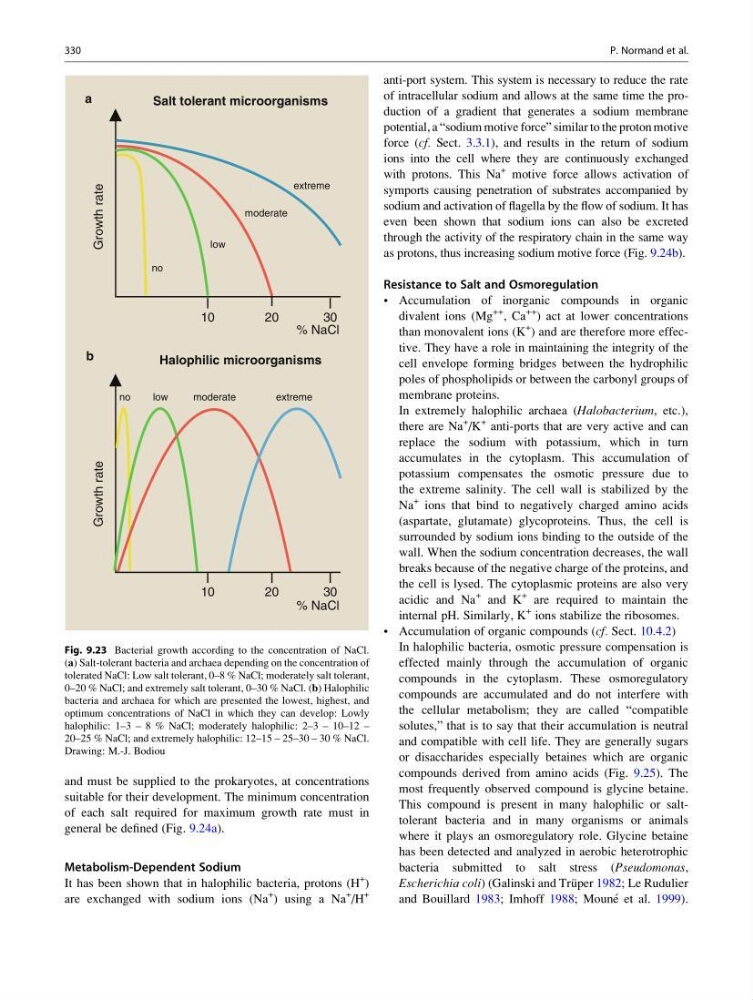
Fig. 9.23 Bacterial growth according to the concentration of NaCl.
(a) Salt-tolerant bacteria and archaea depending on the concentration of
tolerated NaCl: Low salt tolerant, 0–8 % NaCl; moderately salt tolerant,
0–20 % NaCl; and extremely salt tolerant, 0–30 % NaCl. (b) Halophilic
bacteria and archaea for which are presented the lowest, highest, and
optimum concentrations of NaCl in which they can develop: Lowly
halophilic: 1–3 – 8 % NaCl; moderately halophilic: 2–3 – 10–12 –
20–25 % NaCl; and extremely halophilic: 12–15 – 25–30 – 30 % NaCl.
Drawing: M.-J. Bodiou
330
P. Normand et al.
suitable for their development. The minimum concentration
of each salt required for maximum growth rate must in
general be defined (Fig. 9.24a).
Metabolism-Dependent Sodium
It has been shown that in halophilic bacteria, protons (H
+
)
are exchanged with sodium ions (Na
+
) using a Na
+ /H
+
anti-port system. This system is necessary to reduce the rate
of intracellular sodium and allows at the same time the production of a gradient that generates a sodium membrane
potential, a “sodium motive force” similar to the proton motive
force (cf. Sect. 3.3.1), and results in the return of sodium
ions into the cell where they are continuously exchanged
with protons. This Na
+ motive force allows activation of
symports causing penetration of substrates accompanied by
sodium and activation of flagella by the flow of sodium. It has
even been shown that sodium ions can also be excreted
through the activity of the respiratory chain in the same way
as protons, thus increasing sodium motive force (Fig. 9.24b).
Resistance to Salt and Osmoregulation
• Accumulation of inorganic compounds in organic
divalent ions (Mg
++ , Ca
++
) act at lower concentrations
than monovalent ions (K
+
) and are therefore more effective. They have a role in maintaining the integrity of the
cell envelope forming bridges between the hydrophilic
poles of phospholipids or between the carbonyl groups of
membrane proteins.
In extremely halophilic archaea (Halobacterium, etc.),
there are Na
+
/K
+ anti-ports that are very active and can
replace the sodium with potassium, which in turn
accumulates in the cytoplasm. This accumulation of
potassium compensates the osmotic pressure due to
the extreme salinity. The cell wall is stabilized by the
Na
+ ions that bind to negatively charged amino acids
(aspartate, glutamate) glycoproteins. Thus, the cell is
surrounded by sodium ions binding to the outside of the
wall. When the sodium concentration decreases, the wall
breaks because of the negative charge of the proteins, and
the cell is lysed. The cytoplasmic proteins are also very
acidic and Na
+ and K
+ are required to maintain the
internal pH. Similarly, K
+ ions stabilize the ribosomes.
• Accumulation of organic compounds (cf. Sect. 10.4.2)
In halophilic bacteria, osmotic pressure compensation is
effected mainly through the accumulation of organic
compounds in the cytoplasm. These osmoregulatory
compounds are accumulated and do not interfere with
the cellular metabolism; they are called “compatible
solutes,” that is to say that their accumulation is neutral
and compatible with cell life. They are generally sugars
or disaccharides especially betaines which are organic
compounds derived from amino acids (Fig. 9.25). The
most frequently observed compound is glycine betaine.
This compound is present in many halophilic or salttolerant bacteria and in many organisms or animals
where it plays an osmoregulatory role. Glycine betaine
has been detected and analyzed in aerobic heterotrophic
bacteria submitted to salt stress (Pseudomonas,
Escherichia coli) (Galinski and Tru ¨per 1982; Le Rudulier
and Bouillard 1983; Imhoff 1988; Moune ´ et al. 1999).
10
20
30
10
20
30
Salt tolerant microorganisms
Halophilic microorganisms
no
low
moderate
extreme
no
low
moderate
extreme
% NaCl
% NaCl
a
b
Growth rate
Growth rate
Fig. 9.23 Bacterial growth according to the concentration of NaCl.
(a) Salt-tolerant bacteria and archaea depending on the concentration of
tolerated NaCl: Low salt tolerant, 0–8 % NaCl; moderately salt tolerant,
0–20 % NaCl; and extremely salt tolerant, 0–30 % NaCl. (b) Halophilic
bacteria and archaea for which are presented the lowest, highest, and
optimum concentrations of NaCl in which they can develop: Lowly
halophilic: 1–3 – 8 % NaCl; moderately halophilic: 2–3 – 10–12 –
20–25 % NaCl; and extremely halophilic: 12–15 – 25–30 – 30 % NaCl.
Drawing: M.-J. Bodiou
330
P. Normand et al.