

the presence of oxygen by realizing fermentation and
thus not using oxygen for respiration. This is the case
of lactic acid bacteria (Lactobacillus) that do not have a
respiratory transport system and can only ferment (lactic
acid fermentation), but possess the detoxification
systems for the reactive forms of oxygen and therefore
can live in the presence of oxygen without using it.
(iii) The bacterium is microaerophilic*, that is to say, it
can live only in an environment containing low
concentrations of oxygen. It realizes aerobic respiration, but its detoxification system is not efficient enough
to resist the normal atmospheric pressure of oxygen.
(iv) The bacterium is strictly anaerobic*: it realizes the
anaerobic respirations or fermentation. It cannot live in
the presence of oxygen because it does not possess the
necessary enzymes and regulation systems to respond to
oxidative stress. However, some strictly anaerobic bacteria can tolerate traces of oxygen, others do not.
9.6.3 Chemical Stress
9.6.3.1 Responses to Salinity
Bacterial growth is influenced by the presence or absence
of salt (NaCl), which exerts an osmotic pressure, making
homeostasis difficult. Some bacteria and archaea are not able
to develop in the presence of NaCl or at very low
concentrations of NaCl. They are sensitive to and inhibited
by salt and are called non-halotolerant or halophobic
prokaryotes. It is generally the case of prokaryotes living
in freshwater or in some soils. Most bacteria and archaea are
capable of living in the presence of NaCl concentrations
higher or lower. There are salt-tolerant microorganisms
that can develop in the absence of salt and can tolerate the
presence of NaCl. Depending on the tolerated concentration,
these bacteria and archaea are called slightly, moderately, or
extremely salt tolerant. Among them, some bacteria and
archaea cannot live in the absence of NaCl. They are called
halophiles. They therefore require the presence of NaCl in
their environment and are called slightly, moderately, or
extremely halophilic depending on their NaCl needs
(Fig. 9.23) (cf. Sect. 10.4).
Influence of Inorganic Ions on Growth
We must distinguish the needs and requirements in salts and
in NaCl. A bacterium is called halophilic when it needs NaCl
for growth. According to the NaCl concentration tolerated
and needed, the bacterium is known as slightly, moderately,
or extremely halophilic. However, at maximum concentration of NaCl, the bacterium cannot develop in the absence of
other salts. Growth rate may be affected by monovalent (K
+
)
or divalent (Mg
++
, Ca
++
) ions. These ions are required
a
b
c
d
Bacterial
culture
Agar medium
Oxic
conditions
Anoxic
conditions
Oxygen gradient
O 2
O 2
O 2
O 2
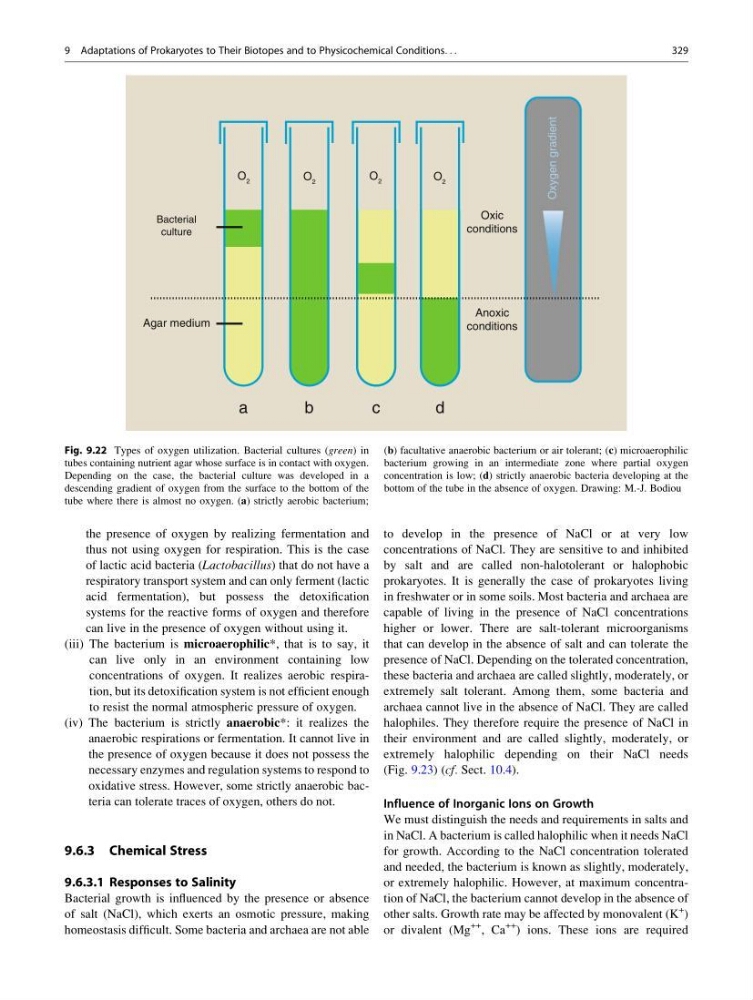
Fig. 9.22 Types of oxygen utilization. Bacterial cultures (green) in
tubes containing nutrient agar whose surface is in contact with oxygen.
Depending on the case, the bacterial culture was developed in a
descending gradient of oxygen from the surface to the bottom of the
tube where there is almost no oxygen. (a) strictly aerobic bacterium;
(b) facultative anaerobic bacterium or air tolerant; (c) microaerophilic
bacterium growing in an intermediate zone where partial oxygen
concentration is low; (d) strictly anaerobic bacteria developing at the
bottom of the tube in the absence of oxygen. Drawing: M.-J. Bodiou
9 Adaptations of Prokaryotes to Their Biotopes and to Physicochemical Conditions. . .
329
thus not using oxygen for respiration. This is the case
of lactic acid bacteria (Lactobacillus) that do not have a
respiratory transport system and can only ferment (lactic
acid fermentation), but possess the detoxification
systems for the reactive forms of oxygen and therefore
can live in the presence of oxygen without using it.
(iii) The bacterium is microaerophilic*, that is to say, it
can live only in an environment containing low
concentrations of oxygen. It realizes aerobic respiration, but its detoxification system is not efficient enough
to resist the normal atmospheric pressure of oxygen.
(iv) The bacterium is strictly anaerobic*: it realizes the
anaerobic respirations or fermentation. It cannot live in
the presence of oxygen because it does not possess the
necessary enzymes and regulation systems to respond to
oxidative stress. However, some strictly anaerobic bacteria can tolerate traces of oxygen, others do not.
9.6.3 Chemical Stress
9.6.3.1 Responses to Salinity
Bacterial growth is influenced by the presence or absence
of salt (NaCl), which exerts an osmotic pressure, making
homeostasis difficult. Some bacteria and archaea are not able
to develop in the presence of NaCl or at very low
concentrations of NaCl. They are sensitive to and inhibited
by salt and are called non-halotolerant or halophobic
prokaryotes. It is generally the case of prokaryotes living
in freshwater or in some soils. Most bacteria and archaea are
capable of living in the presence of NaCl concentrations
higher or lower. There are salt-tolerant microorganisms
that can develop in the absence of salt and can tolerate the
presence of NaCl. Depending on the tolerated concentration,
these bacteria and archaea are called slightly, moderately, or
extremely salt tolerant. Among them, some bacteria and
archaea cannot live in the absence of NaCl. They are called
halophiles. They therefore require the presence of NaCl in
their environment and are called slightly, moderately, or
extremely halophilic depending on their NaCl needs
(Fig. 9.23) (cf. Sect. 10.4).
Influence of Inorganic Ions on Growth
We must distinguish the needs and requirements in salts and
in NaCl. A bacterium is called halophilic when it needs NaCl
for growth. According to the NaCl concentration tolerated
and needed, the bacterium is known as slightly, moderately,
or extremely halophilic. However, at maximum concentration of NaCl, the bacterium cannot develop in the absence of
other salts. Growth rate may be affected by monovalent (K
+
)
or divalent (Mg
++
, Ca
++
) ions. These ions are required
a
b
c
d
Bacterial
culture
Agar medium
Oxic
conditions
Anoxic
conditions
Oxygen gradient
O 2
O 2
O 2
O 2
Fig. 9.22 Types of oxygen utilization. Bacterial cultures (green) in
tubes containing nutrient agar whose surface is in contact with oxygen.
Depending on the case, the bacterial culture was developed in a
descending gradient of oxygen from the surface to the bottom of the
tube where there is almost no oxygen. (a) strictly aerobic bacterium;
(b) facultative anaerobic bacterium or air tolerant; (c) microaerophilic
bacterium growing in an intermediate zone where partial oxygen
concentration is low; (d) strictly anaerobic bacteria developing at the
bottom of the tube in the absence of oxygen. Drawing: M.-J. Bodiou
9 Adaptations of Prokaryotes to Their Biotopes and to Physicochemical Conditions. . .
329